
Home decorator Lara Winter is one of Ideal Home's new Open House contributors, sharing her thoughts on revamping a 200 year old cottage to make it right for modern family life. See the rest of her articles here.
What happens when you finally tackle a job you’ve been putting off for seven years? In my case, sanding the wooden floor in the one room you have to walk through to reach almost every other part of the house. It wasn’t that I didn’t want beautifully light, fresh floorboards. I absolutely did. I just dreaded the chaos. How do you sand a walkthrough space without turning your entire home into a dust-coated obstacle course? For seven years, the answer was: you don’t. You avoid it, complain about it, and promise yourself you’ll deal with it “next spring.”
But eventually, even I had to admit defeat. The floor was dark. Very dark. Decades of stain, layers upon layers, sucking up every bit of light the room tried to offer. And once I decided this was finally the year, there was no going back. It wasn’t spring though, it was November. Nothing better than a full room renovation just before Christmas, right?
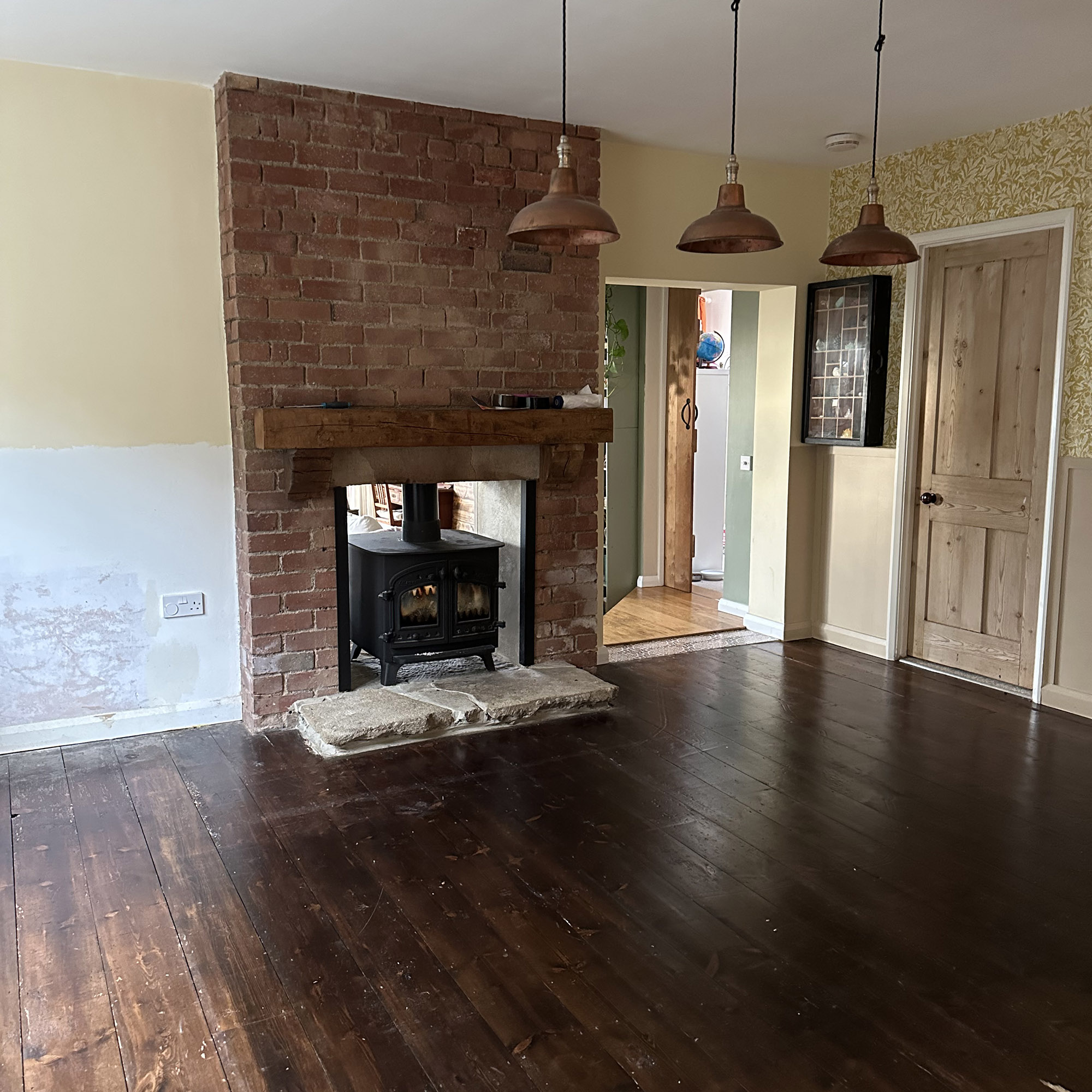
Step one was emptying the room, which was an event in itself. We moved furniture, plants, baskets and the odd sock and long lost lego pieces. And then came the piano. My husband and I stared at it like two people who suddenly regretted all their life choices. But with a lot of grunting, sliding, awkward angles, and one near miss that I swear aged me by five years, we managed to shift it out of the room. Only then did I feel like the project had truly begun.
Next came the part no one shows you in those picture perfect before and afters: preparation. If there is one thing I learned from this process, it’s that prep makes or breaks a floor-sanding job. I started by cleaning the boards thoroughly – and I mean thoroughly. I swept, hoovered, scraped out mysterious grime from between boards, then hoovered again. Any tiny grit left on the floor becomes a sanding nightmare later, so it’s worth the extra effort.
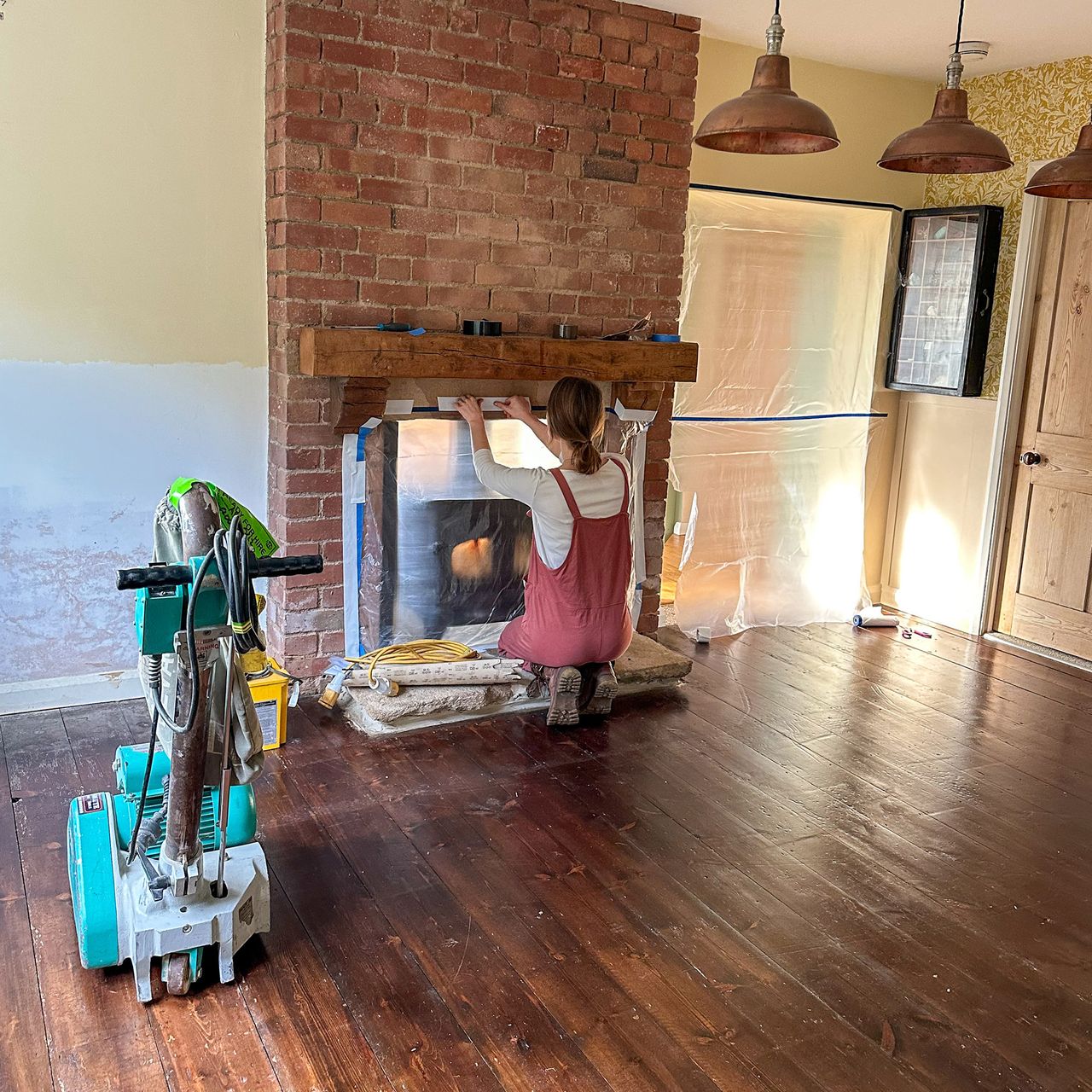
Once the floor was spotless, I covered the rest of the house like a crime scene. I rolled out decorators’ sheeting, the kind with tape already attached at the top – a total game changer! (mine was from B&Q) and stuck it along every doorway, around our double log burner and as best as I could around the stairs. It drops down like a plastic curtain and instantly makes you feel both extremely prepared and extremely aware of how much dust is about to happen.
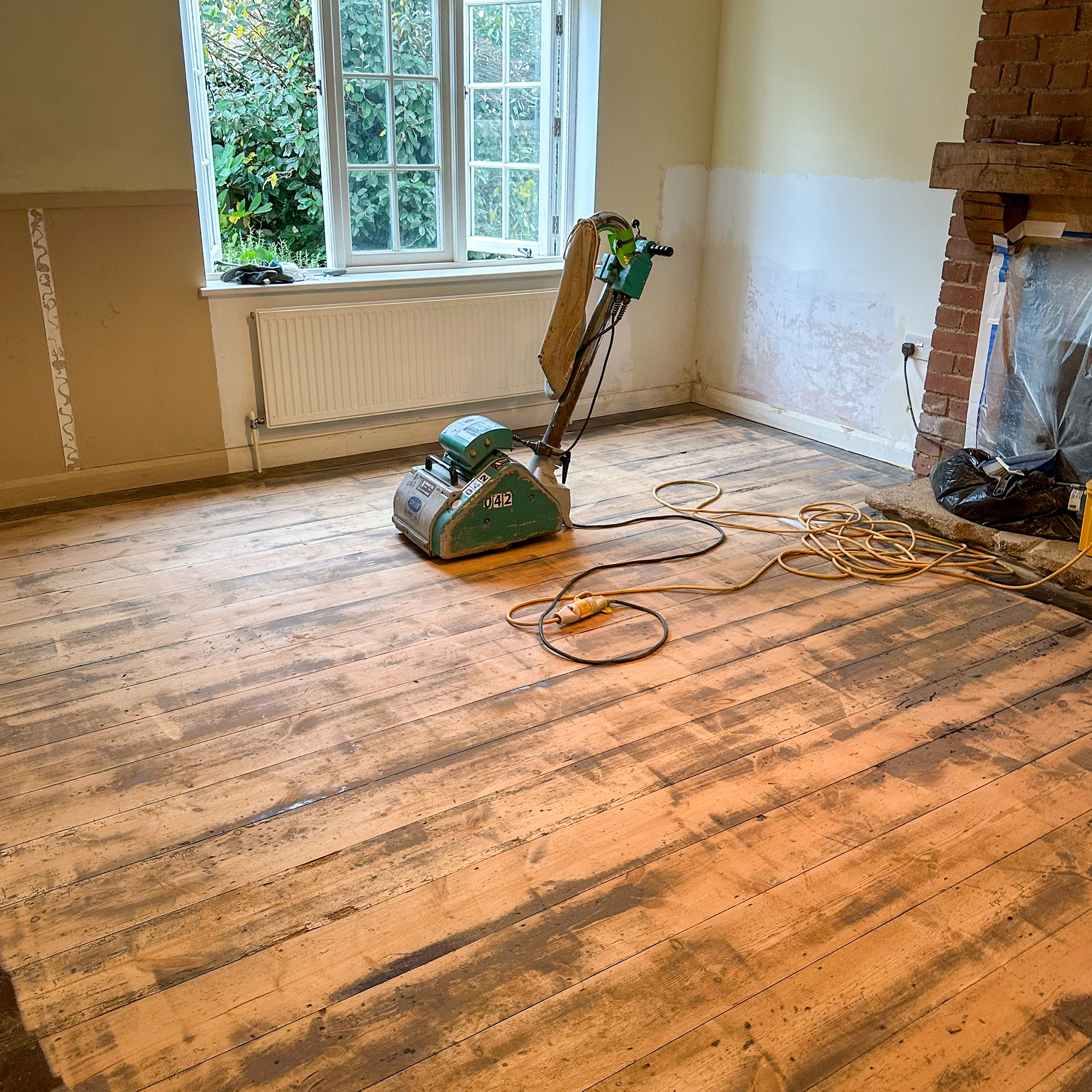
For the actual sanding, I hired a machine from our local DIY store. I picked up plenty of sanding sheets in different grits - more than I thought I’d need, and still somehow not enough, because old stain chews through them at an alarming rate. I also gathered the essentials: dust mask, ear protectors, goggles, and our ancient hoover, which sounded like it might give up the ghost at any moment.
Then came the sanding itself and… I made a rookie mistake right away. I started too gently. Our floors are well over a century old and had been stained so dark that the original wood seemed impossible to reach. My first pass didn’t do nearly as much as I had hoped. After watching a few very enthusiastic people on youtube I found out that I had messed up from the start.
What I should have done - and eventually did - was start by sanding diagonally at a 45-degree angle. Going across the boards cuts through old finishes much more effectively and levels out any unevenness. Once I committed to the diagonal method, the machine finally got to work. The stain lifted. The boards lightened. I stopped crying.
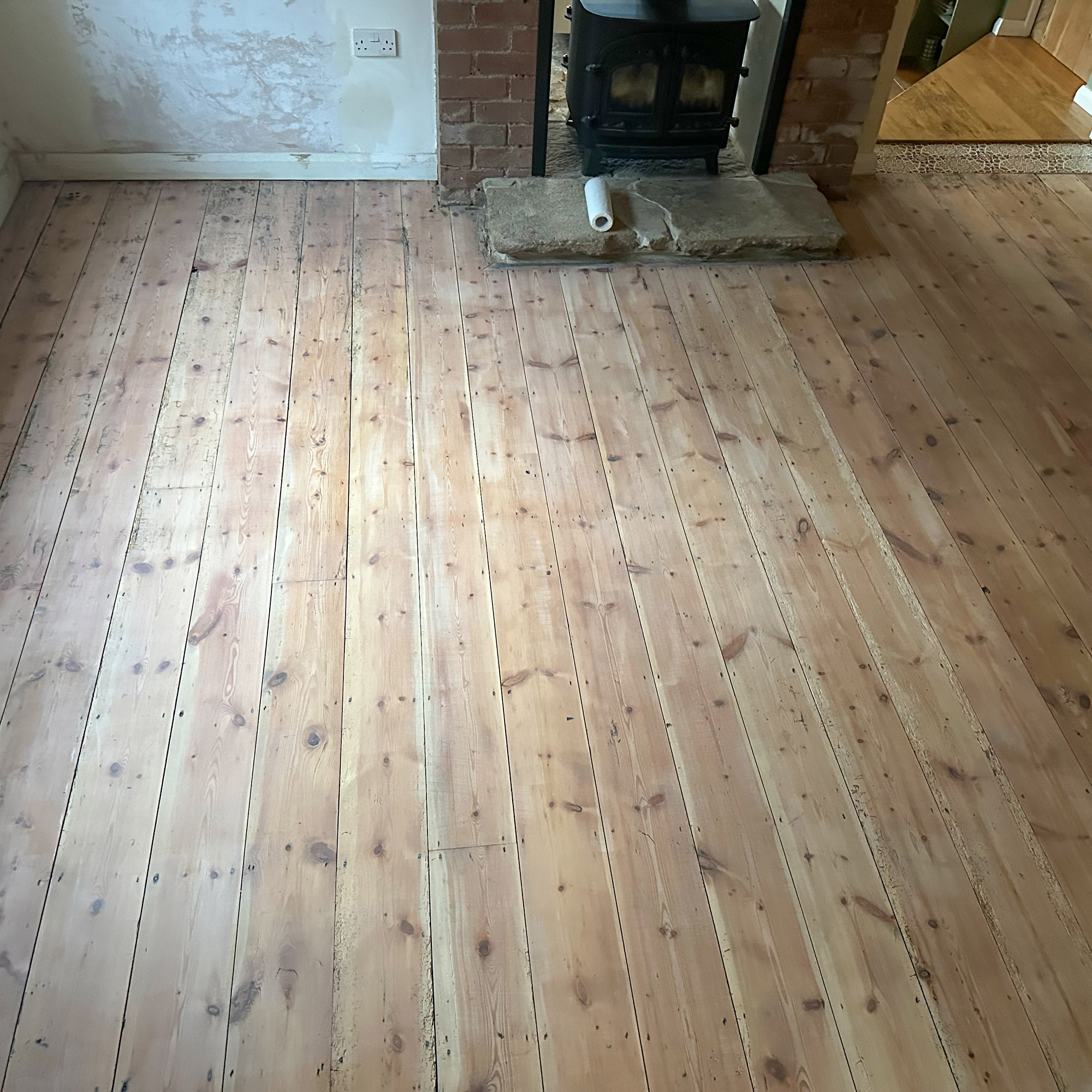
After working through the grits and hoovering between each pass, the floor looked brighter, softer, and so much more modern. To finish it, I used Osmo floor oil in “Raw,” which keeps the wood as light and natural as possible. No orange, no yellow. Just fresh, pale boards that feel like new without looking fake.
Seven years of dread, one weekend of chaos, and a lot of dust later, the room finally looks the way I always imagined it.