I have worked with children for around 15 years, in both education and health services. Four years ago I decided to combine my personal and professional knowledge to set up Inspired Foundations, a company dedicated to raising awareness of the needs of looked after, adopted and vulnerable children.
What started off as a training company, focusing on educational professionals, has developed to include training for foster carers, adoptive parents and social workers, as well as educational consultancy, specialist child mentoring and family support services.
My day starts at around 6:30am. After getting ready and having a much-needed coffee, I wake my three children and help them get ready. I drop them off at their grandparents’ house and drive to the day’s training destination, which can be anywhere in the Midlands. Today it is Birmingham – thankfully not too far away.
When I arrive I quickly check the screen, projector, laptop and sound system. My training is interactive so until I know all the technical stuff is working I can’t relax. When this is sorted out I can focus on seating arrangements, refreshments and resource displays.
At 9am participants start to arrive. Today this includes 10 teachers, eight teaching assistants, two counsellors and one clinical psychologist. For the next three hours I talk about attachment and trauma difficulties in looked after, adopted and vulnerable children. I explain how brain development can be severely affected in children who have been exposed to repetitive trauma in their early years, and how children who have not had their needs met as babies can develop insecure attachment styles. I also provide some strategies to support children with these difficulties.
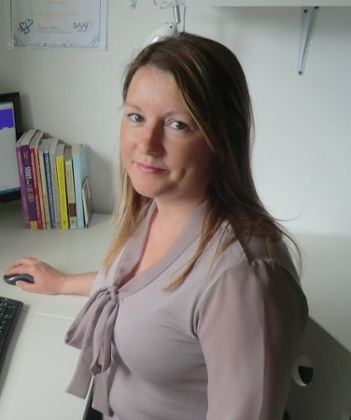
This is a subject that is close to my heart. My own three children are adopted and I have seen first-hand just how much damage is caused when children are deprived of their basic needs. My children are amazing and I love them unconditionally, but their early trauma has caused them to have a range of challenging behaviours. These can easily be misinterpreted as naughtiness, whereas in reality they come from a place of fear and are an integral part of their survival instinct.
After my training session I go to the office, check my emails and return any missed calls. One email is from a special educational needs coordinator from a local school. She wants me to attend an upcoming meeting about a child I am working with at the school and asks for an up-to-date report on his progress. I make a note to respond to this later as I try to keep lots of the admin side of things until after the children are in bed.
I also have a missed call from an adoption support social worker asking for advice to pass on to a family whose child has started lying and stealing. Such behaviour can be common in children who have experienced abuse and neglect, so I phone the social worker back and arrange to visit the family next week to talk things through and provide some strategies.
Then it is time to collect the children from school. As I didn’t take them to school this morning they will be anxious as all three suffer from separation anxiety. It is for this reason that I have to carefully plan my working hours and limit my time away from them as much as possible. I frequently talk to parents and carers about bonding, attachment and reducing separation anxiety and very much believe in the “practise what you preach” approach.
After the children are in bed I go to my home office and check my to-do list, which often includes things like preparing handouts for future training sessions, updating my Facebook and Twitter pages and reading the day’s news articles or government announcements relating to adoption or fostering.
Sometimes my work does take me further afield, such as my recent appointment to the expert advisory group for the Adoption Support Fund (ASF), or the occasional trip to London for meetings. Despite some initial reservations about this role (mainly around the distance and additional time away from my children), I decided that I needed to take the opportunity to speak up for adoptive parents and help to shape the ASF into something that will make a difference to families. I am hopeful that this will happen.
I absolutely love the job I do and enjoy how varied it is. At the same time it is also hard work and I sometimes find that living and working in the world of attachment and trauma can be overwhelming. However, I know that by doing the work I do I am helping looked after, adopted and vulnerable children to be better understood – and that makes it all worthwhile.
If you would like to feature in our Day in the Life series, or know someone who would, email socialcare@theguardian.com.