
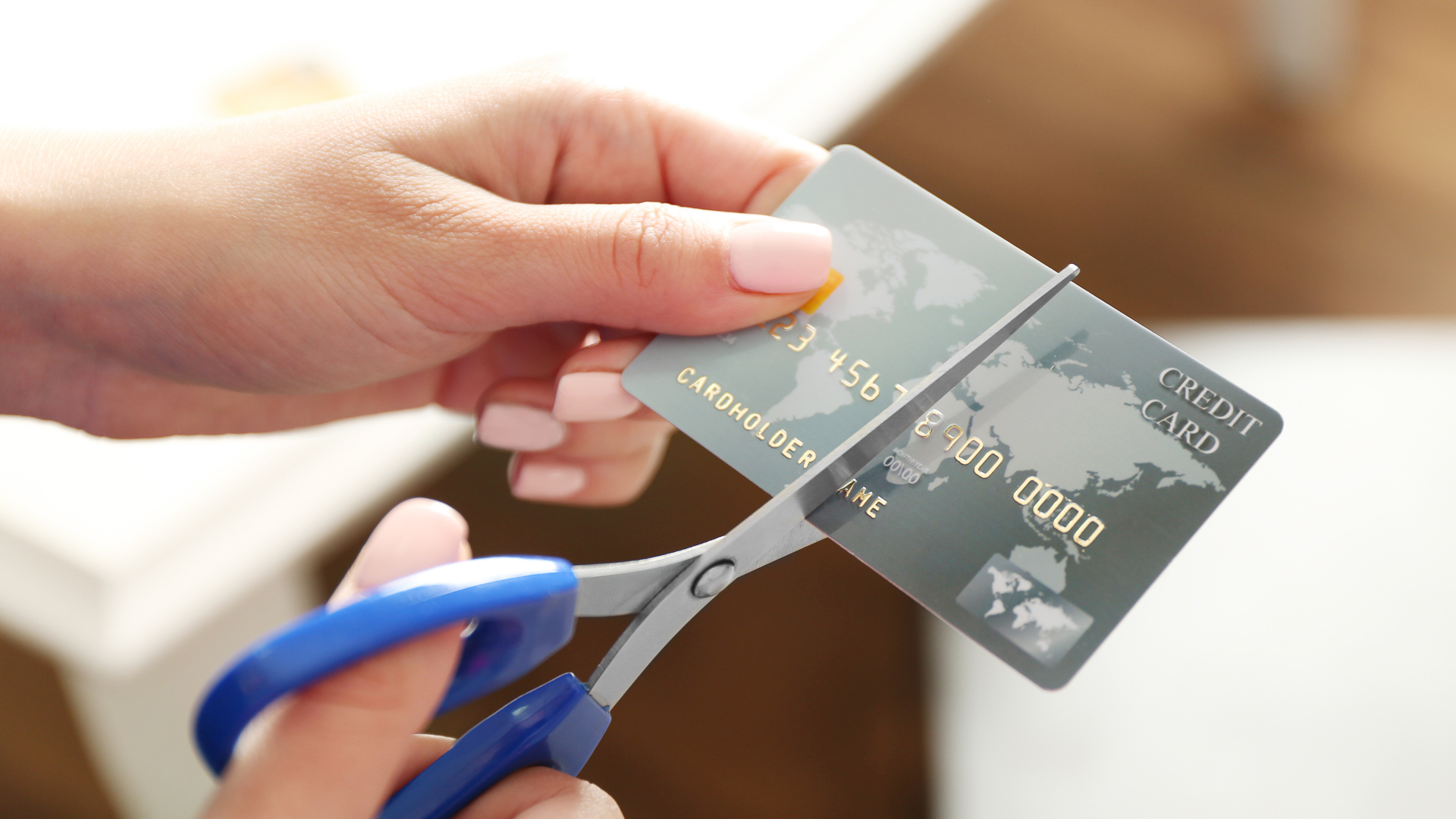
Major life events can have a major impact on your finances. When one GOBankingRates reader moved from Michigan to North Carolina, they learned that lesson the hard way. Although the sale of their home allowed them to pay off all their credit cards, they kept one card for everyday purchases. Now, they’re carrying $10,000 in debt on that card.
The reader wrote in with a question: Should they throw all their extra funds toward that high-interest balance, or should they switch to a card with a lower rate? Raising the stakes, they also have an excellent credit score they’re determined to protect.
To help find the fastest and smartest solution, GOBankingRates turned to Jackson Allen, CFP, a senior financial planner at Janney Montgomery Scott.
General Words of Advice
First, Allen encourages the reader not to feel defeated about their debt. That mindset, he says, is counterproductive — especially since credit card debt has unfortunately become all too common.
For You: Suze Orman Reveals the No. 1 Bill You Should Pay First Each Month
Find Out: How You Could Pocket an Extra $2K* — Just for Signing Up for This All-in-One Finance App
“Life happens, and with the ubiquity of available credit today, it’s completely understandable for credit card debt to creep up on us,” he said.
That said, Allen adds an important note of caution: Credit card debt should be avoided more than any other type of debt.
“With most credit cards charging more than 20% interest, credit card debt can become a silent killer for wealth creation,” he said.
His general advice to clients is simple: Avoid credit card debt when possible. When it is unavoidable, having a clear, time-bound strategy is critical.
Open a Separate Credit Card
To answer the reader’s question directly, Allen recommends opening a separate credit card with a 0% introductory APR (annual percentage rate) and transferring the balance.
“Depending on the card, this can provide a runway of up to 21 months to pay down the debt at 0% interest,” he said. “That time can also be used to build an emergency savings fund and create a strategic plan to pay off the $10,000.”
This strategy can significantly speed up payoff by ensuring that every dollar goes toward principal instead of interest.
In the meantime, Allen advises the reader to avoid putting new purchases on credit cards and instead use a debit card or cash, reducing the risk that their credit card balance continues to grow.
Create a Detailed Budget
Next, Allen recommends getting back to basics by creating a detailed, realistic budget. That budget should outline take-home pay and essential expenses, giving the reader a clear sense of how much they can put toward debt each month.
Even relatively small payments — such as $100 a month — can help build momentum, especially when paired with a 0% interest period. Automation makes the process easier.
“Once your detailed budget is created, I recommend setting up automatic payments to the new 0% interest credit card where the balance was transferred,” Allen said.
Automating payments turns debt repayment from a chore into a habit — one that can encourage better financial behaviors over time.
Track Progress and Celebrate Wins
As the reader works toward paying down the full $10,000, Allen reminds them that smaller victories along the way are worth celebrating. Marking milestones can help maintain motivation.
“As you closely track your progress, I highly recommend celebrating it,” he said. “Thresholds such as $7,500, $5,000 and $2,500 are worth recognizing, and you should reward yourself for good habits.”
Celebrations don’t need to be expensive. The reader could take a day to relax and watch movies, visit a park or museum with free admission, attend a free community event or enjoy a low-cost treat.
Moving Forward
After implementing Allen’s suggestions, the reader should be well positioned to pay down their debt. Allen also offers guidance to help them stay out of debt once the balance is gone.
“Make sure your credit card autopay is set to pay the full statement balance, not just the minimum payment,” he said. “Climbing out of debt is one thing, but staying out of debt is another. If possible, redirect former debt payments toward savings or investments.”
Allen acknowledges that getting out of debt isn’t easy, but he says these positive habits can deliver lasting financial stability.
The Bottom Line
Big life changes — such as an interstate move — can sometimes push even financially responsible people to take on credit card debt. With Allen’s advice, this GOBankingRates reader can protect their strong credit score while paying down their $10,000 balance — and build money habits that last long after the debt is gone.
Need a little extra breathing room in your budget? MoneyLion, a sister company of GOBankingRates, is giving away $2,000 a day through Jan. 24, 2026. Sign up here and see if a cash boost is in your future.
More From GOBankingRates
- The $20 Dollar Tree Haul That Looks Like Williams-Sonoma
- The Nuclear Savings Rule: 10 Frugal Living Tips From the 1950s Era
- 9 Low-Effort Ways To Make Passive Income (You Can Start This Week)
- 6 Safe Accounts Proven to Grow Your Money Up to 13x Faster
This article originally appeared on GOBankingRates.com: ‘I Have $10K in Credit Card Debt. What’s the Fastest Way To Pay It Down?’ — a CFP Answers