A lot of things might happen when you come into a large sum of money suddenly. It’s not uncommon for family members to start pressuring you, as they might feel entitled to a portion of that money. Like what happened to this young woman who won a court case against a drunk driver and now had a considerably large sum on her hands.
As she was planning to spend it on her education, her mother came to her with an interesting request. Because she gave birth to her and raised her, she felt entitled to have this money. The daughter disagreed, so she went on to ask people whether she was a jerk for considering cutting ties with her mom.
Coming into a large sum of money as a college student can really change your life

Image credits: Element5 Digital/Unsplash (not the actual photo)
This young woman wanted to use the money she won in a lawsuit for college, but her mother disagreed
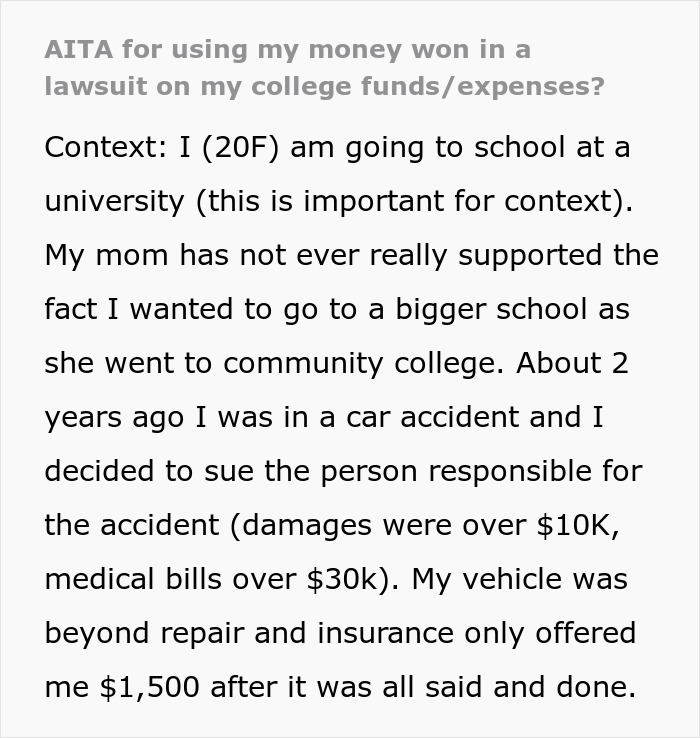
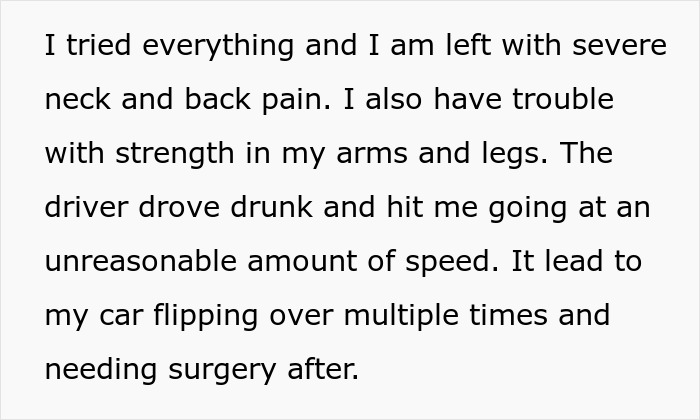


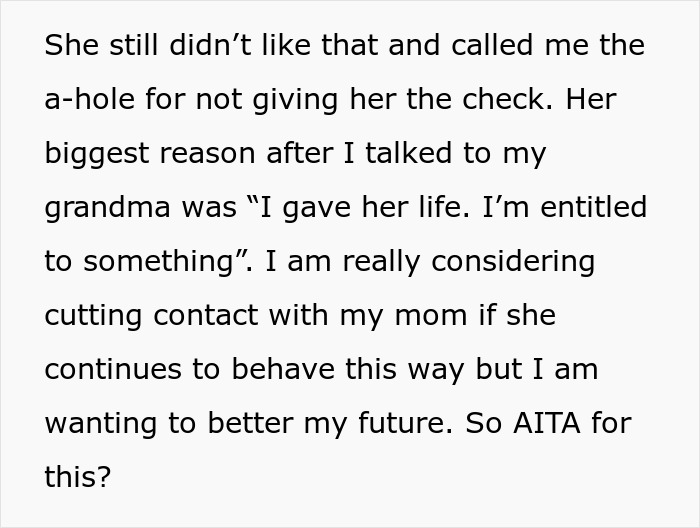

Image credits: cottonbro studio/Pexels (not the actual photo)
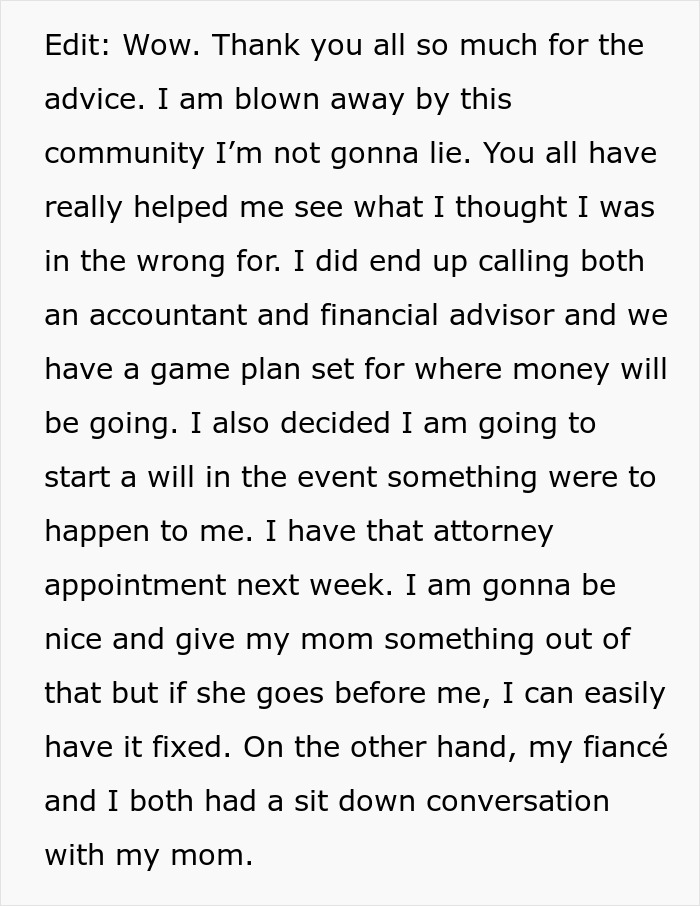

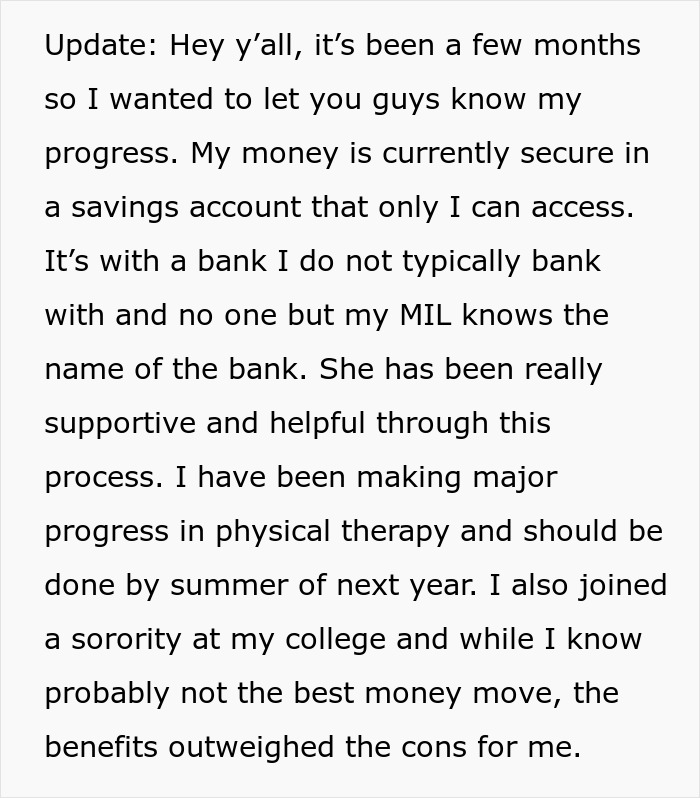
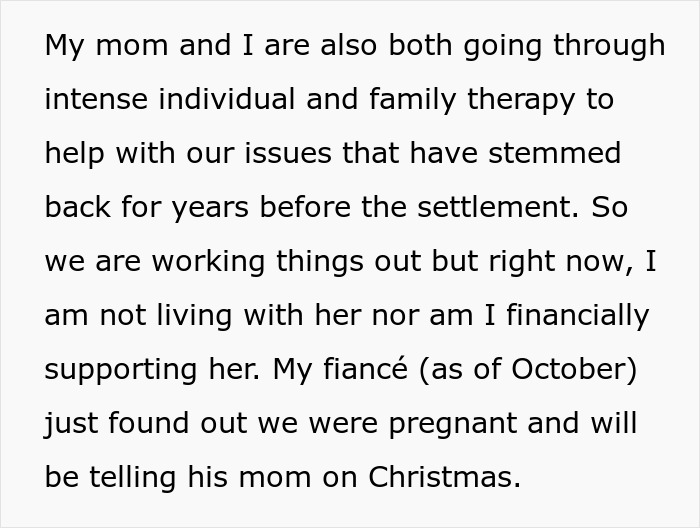

Image credits: LSouthRanger7084

Image credits: LinkedIn Sales Solutions/Unsplash (not the actual photo)
Whether children feel like they owe their parents money or gratitude depends on their culture and their upbringing
Navigating boundaries around money with parents can be difficult. Some parents might feel they’re owed financial assistance from their kids because they provided for their children growing up. But experts say that it’s important to set financial boundaries with all family members, including parents.
Making children feel like they owe their parents a debt for raising them is not only selfish but unhealthy as well. An associate professor of philosophy at the University of Colorado, Boulder, Iskra Fileva, writes that it’s not okay, even when it’s not among family members. “The cost of paying a debt of gratitude must not be a burden that makes the other wish you’d never done anything for them to begin with,” she claims.
Of course, this also depends on cultural and social aspects. Every family is different, and what’s appropriate to some may seem overboard to others. Yet, according to Money Digest, children shouldn’t feel pressure to give their parents money. They should express gratitude in ways that feel appropriate to them.
Ultimately, whether the child wants to help their parents when they’re an adult depends on what their childhood was like. “As an adult child, how much you feel you owe your parents depends on how you were raised,” Social Psychologist Dr. Susan Newman, author of Under One Roof Again: All Grown Up and (Re)learning to Live Together Happily, told Fatherly. “If you had an absent dad, you’re going to feel quite differently and may be reluctant to feel you owe him anything, versus a mom who was always there.”

Image credits: CDC/Unsplash (not the actual photo)
Setting financial boundaries with family members is important for preserving a healthy relationship
Never mind that old-age debate of whether children are in debt to their parents, as the more effective way to react in such situations is trying to set boundaries instead of hoping that the other person will change.
Clinical Psychologist Michele Goss, Ph.D. has some advice on how to talk to family members about finances. Especially in cases when they demand a portion of your money. She recommends assessing the situation and identifying whether the family member is in a dire financial situation.
They may be going through a rough period and need some real help. This applies to situations where the other person might be going through a period of unemployment, a divorce settlement, home foreclosure, or any other unplanned life event.
Certified Financial Therapist and Marriage and Family Therapist Nathan Astle told Bored Panda in a previous interview that there’s nothing wrong with asking family members for financial help.
“Never let shame, guilt, or embarrassment [stop you] from seeking help. Even if your family doesn’t respond in the way you hope, you’re never in the wrong for seeking help. We aren’t supposed to do everything alone!” However, he says that these conversations have to be brutally honest and explicit.
And however sensitive they can be, it’s important to stand your ground. “Learn to respectfully say ‘no’ without feeling the need to justify your actions,” Goss explains. “If your family member appears offended or becomes angry when you deny their request, explain that you don’t believe this is healthy for your relationship and that you are not trying to hurt them.”
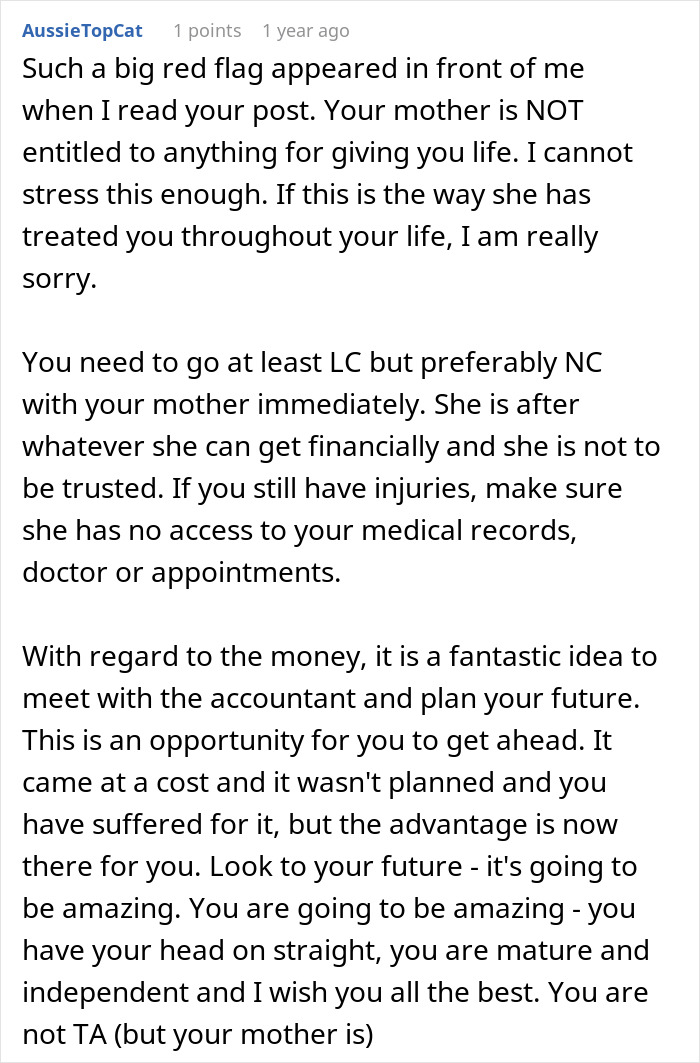
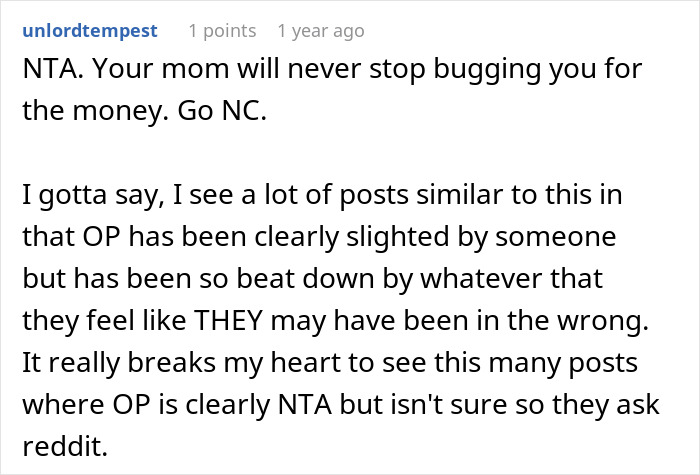
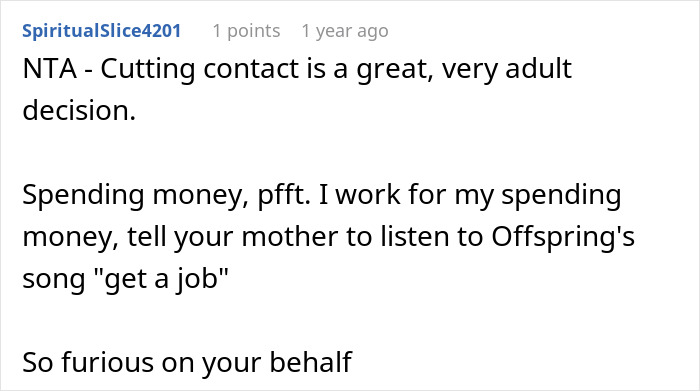
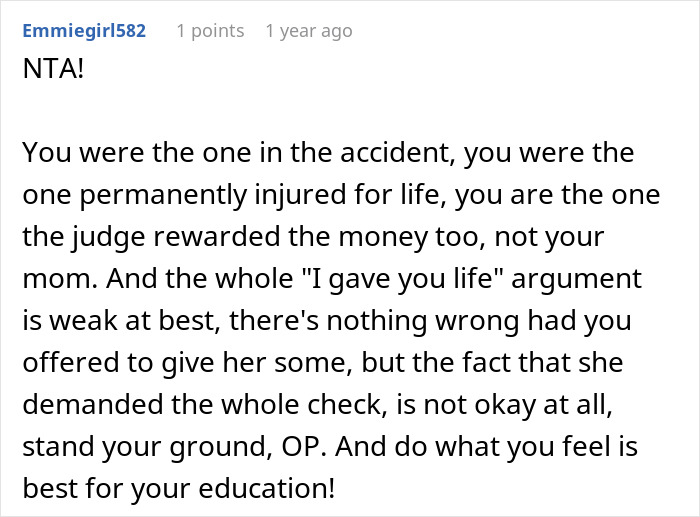
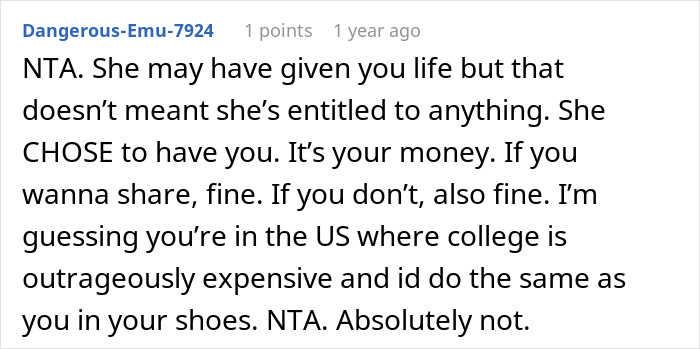
People encouraged the young woman and told her she was not the jerk in this situation