I knew my life had changed for ever the day my daughter took me to the theatre. Years before, I had led her to believe we were off to a father and daughter learning-to-dance course. It was worth the secret just to see the relief on her face as I pirouetted her into the foyer of the Dominion theatre to watch We Will Rock You.
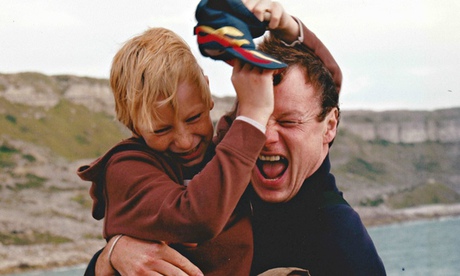
From then on, each birthday and Christmas, and once for the hell of it, we traipsed into London to sit in the gods. Then on the day Margaret Thatcher died, she had paid for tickets for us to see Billy Elliot. And although there was a hoo-hah about whether the cast really should have sung Merry Christmas, Maggie Thatcher that night I couldn’t help thinking, what am I going to do now?
For years, the theatre had been my domain. I buy the tickets. I arrange the evening. That’s my job. But that night another role bites the dust.
My youngest is on the verge of leaving home, and I now have no more teenage rooms to paint in iridescent star-flecked blue. My midnight rescue runs to the depths of some vibrating underworld have ended as my children reached adulthood, and the days of pocket money have been replaced with loans. The truth is, although my kids still occasionally need me for the practical things, the day-to-day mundanity of doing stuff that made my role clear has gone.
Soon, three times a year, I will ferry my son to university, wave goodbye and await his return, watching the screen on my phone in case he deigns to call. Meanwhile, my working daughter can’t afford to buy her own place in London so she’s moving again into rented accommodation. The curtain poles are already up and wall colours decided.
Before I married at 30, I was following a well-worn path. I was in the single’s club. It meant I could wear green luminous socks and roll my jeans up, push the sleeves on my jacket to my elbows and wear braces and a thin red leather tie with no sense of irony.
It was so obvious to my younger self that life and relationships progressed in an orderly fashion. All I had to do was join my other single friends as they went down like ninepins into marriage. It became a simple matter of moving clubs. This one involved a mortgage and a sofa with cushions.
This was my destiny. We were all doing it, so it seemed logical. You can’t beat simplicity, and as a bloke I saw no reason to question what was obvious. During this period I was a best man three times. I said very little that made any sense, but it didn’t seem to matter. My major contribution was finding how to lean enigmatically on a table.
I discovered a joy and security in the collectiveness of shared experiences. These pivotal moments bonded and gave purpose. And boy, did I laugh.
When my children arrived, small and defenceless, I galloped into the dads’ club. Quickly followed by the no-sleep, have-you-changed-a-nappy club. Without thinking, I was working my way up to the top of the chain of command.
As a man and father, I gathered my tiny tribe around me and watched them grow. It was proof of my existence writ large. I was passing on my genes and creating small people that looked a little like me. I discovered that the power of family is not just the bonding, but also its exclusivity.
At the time, each phase of their growing up seemed so slow. I wanted them to roll over, speak, feed themselves and walk unaided – anything that showed they were becoming more independent. All the time I placated myself with the thought that I was making my way in the world.
I was completely absorbed by the certainty of family life. There were schools to view, homes to find, careers to forge, jobs to do. Even the stuff I didn’t enjoy – gardening and watching goddam Pingu – were part of the fabric of every day in my family unit.
I was there for the sensible things in life. I was the doer, the organiser, the form-filling, holiday-arranging, bedroom-painting, driving-lesson-giving dad who yelled from the sidelines during sporting events. I’d interrupt and ask those annoying questions during parents’ evenings, knowingly nod and later say sensible things like: “It’s time you had your own bank account.”
Damn, I was so on it.
Fast forward 20 years and there’s the unexpected dawning that this slowly but surely slips away. All I had been aiming for and so nonchalantly accepted as family life turned out to be just another phase.
Today, my understanding of family life with all its snazzy buttons and downloads is very different. But try as I might, it’s a struggle to get the volume right. I didn’t think it would be like this. Shouldn’t I be driving a low-mileage Volvo and arranging trips to Center Parcs?
Instead, it feels like the rug has been taken from under my feet and thrown in the bin.
Bringing up children has brought different challenges to my generation of men who tread a fine line between emulating our fathers while wishing for something more. Wanting to be a hands-on dad, not some distant figure, is an emotional and physical commitment – and I would never have it any other way.
Yet as life flips once again, and without access to women’s emotional articulateness, my armoury of defences is being stretched thin. We acknowledge the loss mums feel as children leave home, whereas blokes come to terms with these feelings alone by disappearing into a shed at the bottom of the garden.
Like many, my marriage failed, and although that never stopped us being a mum and dad to the kids, it introduced an awkwardness that was never there before. An unnatural politeness, a barrier that stops the flow of normal family chitter-chatter. My parents are growing older and instead of meals out, we do meals in, and compare how bad our knees ache. And friends have gone, not just through growing apart but because of that dreadful disease – cancer.
When life hits you, it’s always the withdrawal of stuff that was taken for granted that hurts the most. And it’s never if, but when.
So instead of being at the peak of my powers and reaching the pinnacle of contentedness, my family is starting to fragment, and the work and home I took for granted is losing its roots.
Seeing my confusion, friends have started asking how I feel. If I could work that one out, I would probably not be walking round in circles.
I guess I just want to break free of this no man’s land before I’m sucked in and left staring at my own impenetrable stiff upper lip.
Some people write themselves a bucket list, as if big gestures fulfil a need and make you feel more complete. Although these grand experiences make for a few “likes” on Facebook and satisfy the sense of adventure, it’s the little things with no bragging rights that count more for me. The talk, the walk and the being there. It’s the ongoingness of family I want to reclaim.
Rather aptly, last month my daughter took me to the theatre again – and this time bought me lunch with wine before we tottered in to see Sunny Afternoon, a musical about the Kinks.
In the afterglow of Waterloo Sunset, I realised that even though I find myself unprepared for what I thought would be my own paradise, change isn’t all bad.
Lucky enough to be in a relationship, I am now staring at cardigans and corduroy jackets in a way that once would have seriously worried me. And chickens have become interesting.
This week I’ve planted two dozen potatoes, enrolled on a charity bike ride to Brighton and professed an interest in MasterChef.
Like each phase that has passed, this one will be different. It may not be as all-encompassing, or as defined, but it will be more personal. While that is difficult to admit, it is rather freeing. And only time will tell if freedom is something I cope with well.