In October 2023, The Cut’s financial-advice columnist Charlotte Cowles was working from her Brooklyn apartment when she received a phone call.
A woman on the line said she was from Amazon and was inquiring about suspicious activity on Cowles’ account, including thousands of dollars of charges in electronic equipment opened under business accounts in her name.
At first, Cowles was grateful to the caller, who told her that she would be put in touch with the Federal Trade Commission, an agency that protects American consumers from fraud.
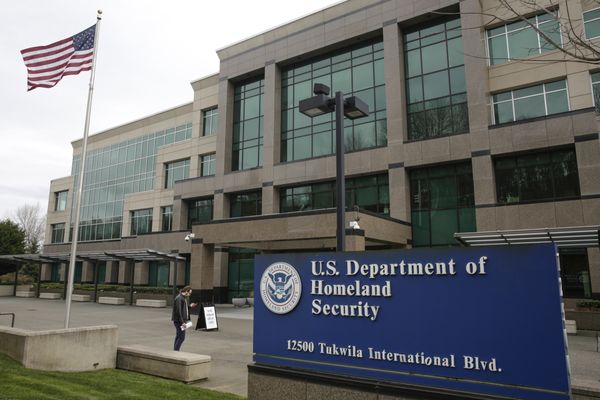
When a man called from the FTC, he knew Cowles’ address and social security number as well as the names of her family members. Then he told her that she was being investigated for fraud and money laundering. He told Cowles that she had 22 bank accounts, nine vehicles and four properties registered in her name. Worst of all, he said, her family was in danger and being watched by criminals.
“It seemed crazy,” Cowles told The Independent via email this week. “But no one came out of the gate asking for money. That part didn’t actually come until hours and hours and hours later.”
The man warned that if Cowles talked to her husband, he could be implicated in the investigation. He then passed her on to someone he claimed was an agent of the Central Intelligence Agency.
That person convinced the journalist to withdraw $50,000 from her bank account so they could freeze her assets. When she got home with the cash, a man showed up, and had her put the money in the back seat of a Mercedes SUV.
She was told that she would then receive a Treasury check for $50,000 and a new Social Security number. She couldn’t just use the cash because all of her assets were part of the investigation, they claimed.
Cowles was still on the phone six hours later. But it was Halloween. She went trick-or-treating with her son, remaining on the line with her cell in her pocket.
At one point, she checked to see if the man on the phone was still there and a female colleague answered that he would be back soon. When she got home, the call had been disconnected.
Cowles, now panicked, called back and the woman told her that the man was “busy” and would get back to her about an appointment for a new Social Security number in the morning.
In a sudden, crystalizing moment, Cowles realized that she had been swindled.
“I don't think I can overstate how terrified I was,” she wrote. “By implying that my child was in danger and that the safety of my family was under threat, the scammers truly made me feel that I had no option but to follow their instructions.”
“They managed to find my most vulnerable point and press on it,” she added. Cowles reported the scam to the police but she never got her money back.
Fake scheme, real problem
There’s a reason that the MTV show Catfish ran for nine seasons. Even the smartest people can get duped – and the scams are getting more sophisticated.
A record $16.6 billion in losses was reported to the FBI last year, and some 73 percent of U.S. adults have been the victim of an online scam or attack, including credit card fraud or ransomware, according to the Pew Research Center.
Bad actors are using an increasing number of diverse strategies to take advantage of your parents, grandparents, neighbors and best friends.
From fake phone calls pretending to be federal agents to AI deepfakes of political leaders and texts asking for money during elections, it’s hard to know what’s real. In some cases, victims have lost hundreds of thousands of dollars.
A costly mistake
A common misconception about scams could make you even more vulnerable, experts told The Independent.
While it may appear that older Americans are more impacted by scams and fraud, young people are just as vulnerable. A recent report from the FTC found that Gen Z, millennials and Gen X are 34 percent more likely to report losing money to fraud compared to those over 60.
“One reason is that they are online more, but also they face tremendous economic uncertainty,” said Lana Swartz, a University of Virginia media studies professor writing a book about scams. “It can be very difficult to see the difference between a scam job ad and a real job ad, especially when jobs are scarce.”
Those in precarious financial situations are the most vulnerable including gig workers, immigrants, people without bank accounts and those undergoing big life changes.
But, anyone can find themselves caught up due to extreme situations or time pressure.
“In those moments, even well-informed individuals can fall victim — not because they lack awareness, but because the context shifts and the cues they usually rely on no longer apply,” said Sebastian Schuetz, an assistant professor at the University of Colorado Boulder who studies human behavior and cybersecurity.

A good grift
Bad actors want money, power, control and to abuse. Some will stop at nothing to get it. But, what makes a “good” scam?
It often comes down to biology, tapping into powerful human emotions like fear. That can actually make it harder for people to problem solve, Mary Poffenroth, an author and bio-psychologist at San Jose State University, said.
The prefrontal cortex, the part of the brain responsible for decision-making, shuts down, and the brain’s fear center, the amygdala, gets fired up.
“Once we are in fear mode, we are more likely to act reflexively than reflectively. Add the manufactured urgency that these criminals employ and the unprepared victim barely has a chance,” she explained.
“In essence, scams succeed by getting people to think with their hearts rather than their heads,” Schuetz added.
People are often duped because they are overconfident in their ability to identify what’s suspect and don’t disengage, even if they know it’s a scam.
All experts say that one of the worst mistakes that people can make is engaging, because scams rely on the victims to work.
“Even I gave my credit card information away to a scammer who caught me when I had just arrived home from the hospital after giving birth to my daughter,” Swartz recalled. “I had put the hospital bill on a credit card that had good rewards for large transactions, and the scammer was asking to verify unusual payment activity.”
“They reached me when I was totally exhausted with a plausible story,” she said.

How to stay safe
When in doubt, no action is the safest action and Schuetz says there are very few cases where inaction would have serious consequences.
Report the scam to your bank, the social media platform, or law enforcement.
“Practice cognitive rehearsals, like asking yourself: ‘If my next call was someone saying my daughter would be killed if I didn’t wire them money, what would I say, what would be my exact next step?’” Poffenroth explained.
Unfortunately, AI may be a real “game-changer” – and not in a good way - creating new kinds of scams and supercharging existing ones with scale, speed and by adding familiar voices and realistic video.
In new romance scams, trafficked workers use AI faces for "pig butchering" schemes, when fraudsters gain the romantic interest and trust of victims over time before deceiving them into making fraudulent investments.
It also eliminates well-known red flags, like bad grammar and recycled messages.
As a result, it’s becoming harder for even the most cautious to recognize AI – even in clips using a person’s own voice, Poffenroth said.
“The time of only trusting our instincts is gone in these types of situations, so we all need to make sure we are constantly updating our digital literacy, understanding what AI can/can’t do, teach/share these scammers tactics, use verification tactics, and elevate your fear mastery,” she said.