

I recently got back off the road with my band Black Country Communion, which features Jason Bonham on drums, Glenn Hughes on bass and vocals – the “Voice of Rock!”– and the master of the keyboards, Derek Sherinian.
The conversation came up about the difference between what I do in my “day job” with my regular band versus when playing and writing for Black Country Communion. BCC is a “heavy” band; the songs are in a hard rock style, as opposed to the bluesier context of my normal band. Much of the difference, guitar playing-wise, comes down to the approach.
Contrary to what one might assume, with the heavier music and chordal work with this band, I don’t need tons of gain on my guitar because everyone else is distorted!
Glenn’s bass is distorted, and Derek’s Hammond organ sound is very overdriven, too (à la Deep Purple organist Jon Lord’s, which was routed into a Marshall amp). So my job is to find the spot in the middle and play cleaner, which results in a big, heavy band sound that also maintains clarity between the instruments.
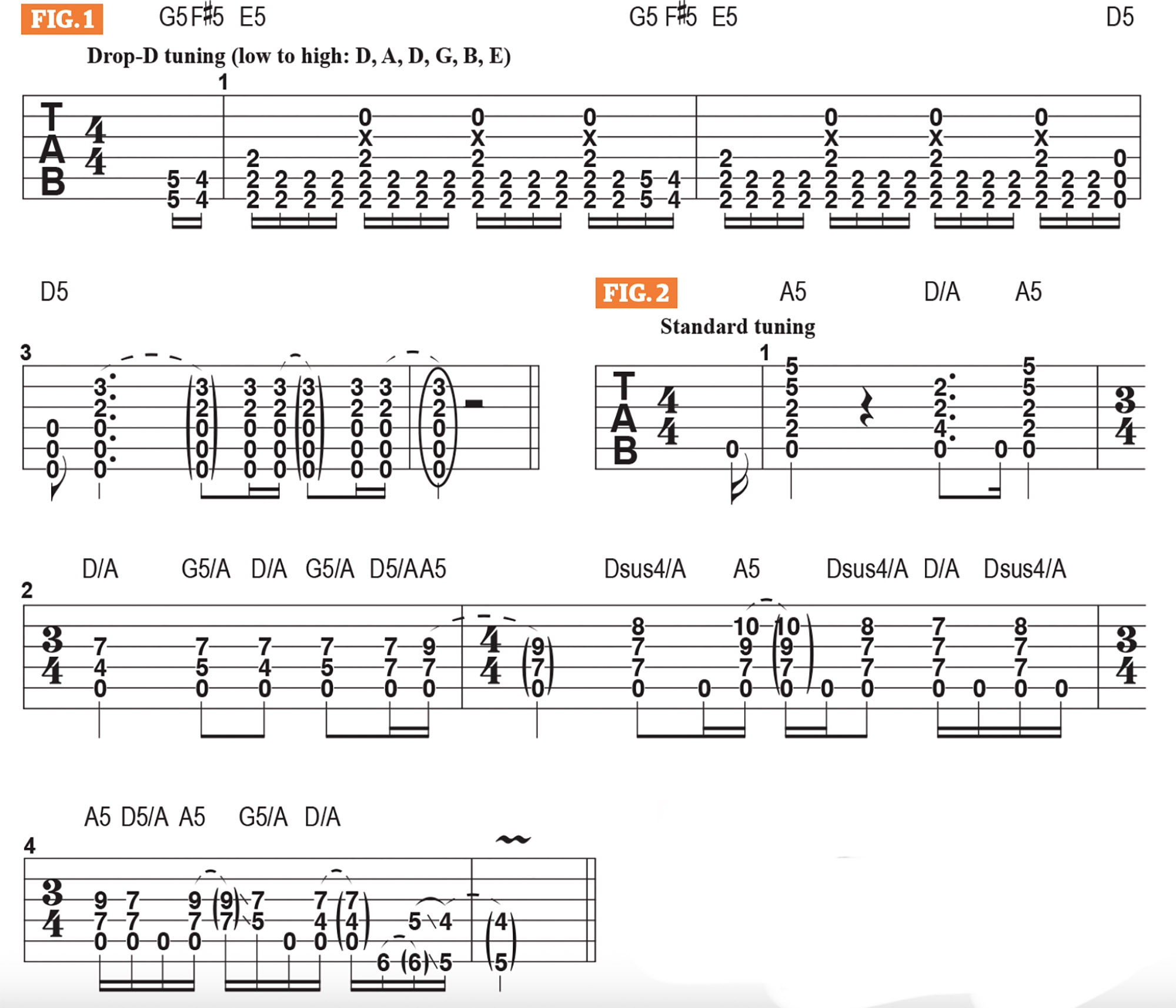
A good example of this is the song One Last Soul. Figure 1 is played along the lines of the tune’s main riff, which is built primarily from power chords played on the bottom three strings in drop-D tuning (low to high: D, A, D, G, B, E).
In the realm of “heavy rock” guitar, I was very influenced by Paul Kossoff’s sound and playing with the band Free.
Figure 2 offers an example of this that moves through a series of chord voicings sounded on the middle four strings, shifting between A5, D/A, G5/A and Dsus4/A voicings in a manner akin to how Kossoff would craft his rhythm parts.
As you can see, just moving one note in the voicing “tells the story” as I move from chord to chord. I’ve discovered that the music will sound heavier and deeper if I scale back the voicings.
Leslie West’s riffs with Mountain, which are some of the heaviest ever, were often either single-note lines or two- and three-note chord voicings.
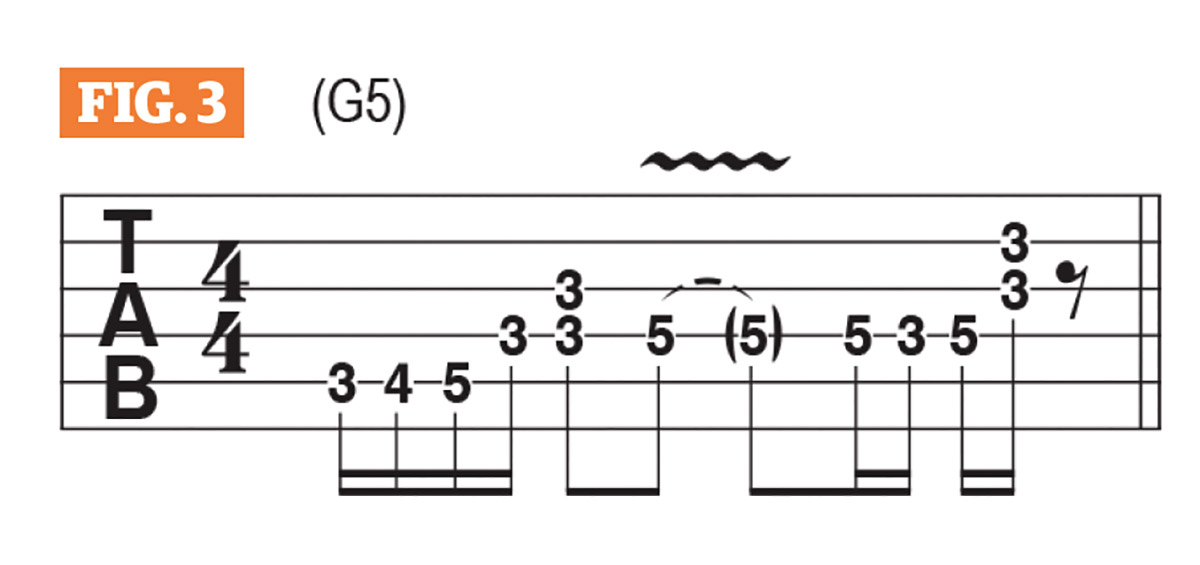
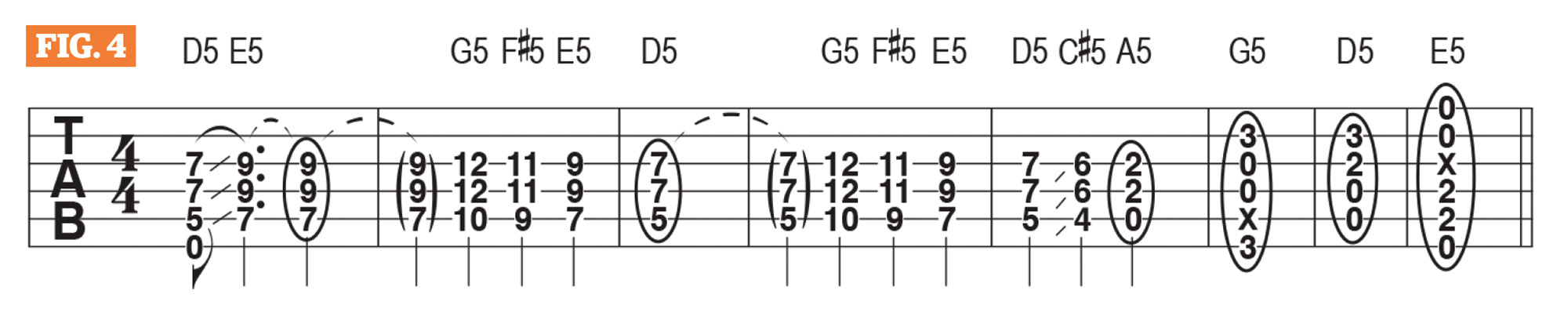
Figures 3 and 4 offer two examples of riffs played in Leslie’s inimitable style, exemplified by Mountain classics like Never in My Life and Nantucket Sleighride.
All of these types of chord voicings are really important in making the band sound a certain way. When writing this kind of music, I try to subtract from the chord voicings and eliminate any unneeded notes.
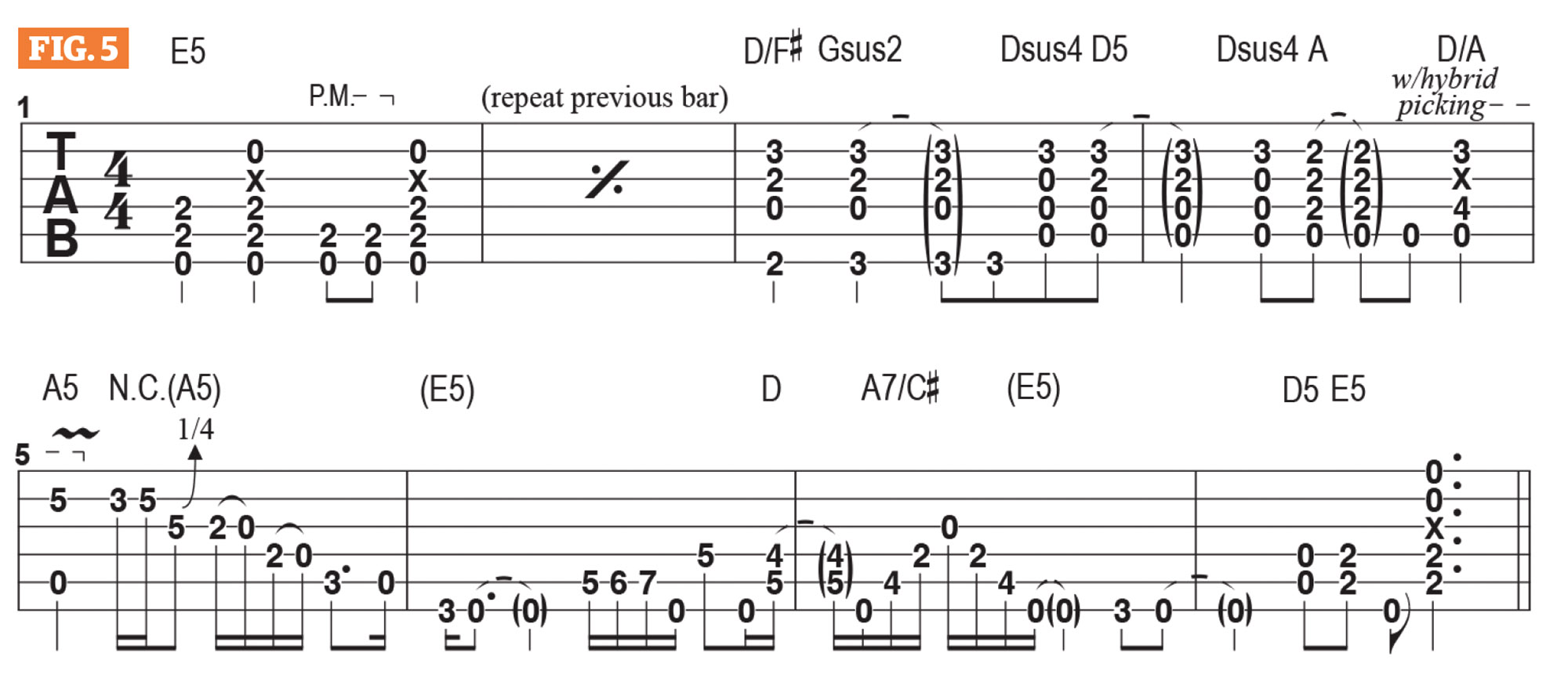
As shown in Figure 5, I mute the 3rd string when playing a low E5 chord, and also mute the 5th string on D/F# and Gsus2. You’ll find that your riffs can sound heavier if you approach your guitar parts from this point of view.
- This article first appeared in Guitar World. Subscribe and save.