This week heralds a potential game-changer for working parents: if your child is born on or after 5 April, new legislation means that parents can now split parental leave for the first year of the child’s life.
The latest government statistics suggest this will be a welcome change for many. Figures show that seven in 10 fathers regret missing key milestones of their child’s life due to work, while a third say they regret not taking any, or enough, leave after the birth of their child.
Nearly a third of fathers say they would have taken up the right to shared parental leave if it had been available to them at the time. Deputy prime minister Nick Clegg believes that the legislation marks the start of a new era, “relegating these out-dated assumptions that women will always be the parents at home while fathers go out to work”.
Is a change in legislation enough to shift traditional childcare roles for good? We spoke to two fathers about their experience of parental leave and why they hope more men will take the opportunity to play a bigger role in early childcare.
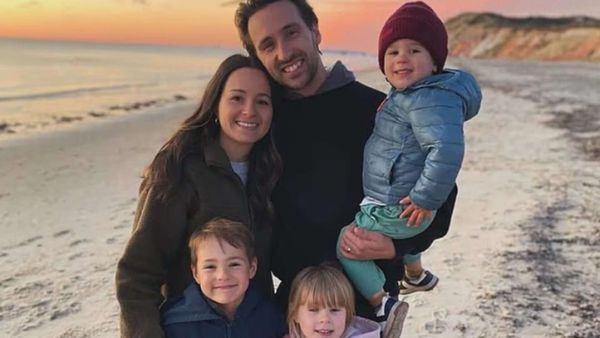
Adrian Dyer, 40, is a trade manager for a shipping company. His wife Katariina works in HR and they have two children, Thomas, five and Anna-Sofia, two.
Nic Stevenson, 31, works in policy for the Civil Aviation Authority. He is married to civil servant Katharine and they have a baby boy called Eddy, born last September.
Tell us about how you and your other half divide the childcare.
Adrian: When our son was born in 2009, I only took two weeks’ paternity leave after which I went back to work full time, with my wife doing the rest of her maternity leave alone. The law changed in 2011, allowing dads to take half of their wife’s maternity leave as additional paternity leave (after the first six months), so when my daughter was born in 2012 I took four months off to look after her, while my wife went back to work full time.
With our first child I felt I wasn’t really pulling my weight, so I decided to take advantage of the changing regulations to be a more hands-on dad with our second child. In addition, my wife was actually the main breadwinner so it made financial sense for her to go back to work after her enhanced maternity pay ended.
Nic: We try our best to split things as equally as possible between us. For the first six months of Eddy’s life I was at work while Katy stayed at home to look after him. Then recently, just after he turned six months, we switched round: Katy went back to work and I started six months off to care for him. At the weekends the person who has been at work spends more time looking after Eddy so we both get to spend as much time as possible with him. I grew up without my dad around and I think I lost out on some things as a result of that. I want to make sure Eddy doesn’t feel like this, but I also think my dad missed out on hugely important things, which I don’t want to miss as Eddy grows up.
What did your company think when you asked for paternity leave?
Adrian: They were a little taken aback initially, as I was the first, and so far only, dad in the company to request this. My boss even wondered what it might do to my career, but I persuaded him that four months out of a career that might last another 30 years was nothing. Now I’m back everyone has forgotten I even took the time off as it goes so quickly, but I haven’t forgotten. My HR department has been very supportive and encouraging.
Nic: I have been lucky as I have experienced nothing but support from my organisation and the people who work there. I work in the public sector and work-life balance and flexibility for employees is a part of our culture, so although I think men taking extended leave to care for children is still rare in the organisation, flexible working arrangements are less so. From my colleagues, right up through the management, the reaction has been extremely positive, supportive and enabling.
Did you worry about how this would affect your career? If so, why?
Adrian: I did, but I was quite confident that four months out was a very small amount of time in the grand scheme of things and I would be back before they had even noticed. This proved to be the case and when I went back, I made sure I showed everyone I was just as committed as I had always been.
When I went back I actually went back flexibly, meaning I now have every Wednesday afternoon off to spend with the kids. This works out great too. In other words – yes, I worried about it, but decided time with my family was a once in a lifetime opportunity that I couldn’t afford to miss.
Nic: Actually no, not at all. As I said, the organisation has been supportive. We have already discussed how I will keep in touch during my time off (which has been very much my choice), what I can expect to return to, and even development opportunities when I return. I really don’t think this will harm my career.
What effect do you think the shared parental leave changes will have?
Adrian: It gives the family great flexibility. For example, if the dad wants to spend, say, six weeks at home with the wife to help out after the birth he can do. Or if the wife is working on something important at work and has to go back for a certain period then the dad can take over at any time. It’s also great that both parents can take some time off together with the kids, something that wasn’t really possible before.
Nic: I think there are a lot of men who would like to do what I have done but have been unable to because of restrictions at work – they will now have this fantastic opportunity. I hope that it will start to normalise more fathers taking more time with their children, which is something almost every dad I have talked to about this has said they would like to do. In the long term, I think that men and women splitting the care of children more equally has the potential to transform society for the better.
How do we encourage more men to split early years childcare?
Adrian: Role models can play a big part here. If dads that have taken time out show others how good it’s been, without any negative side effects, then this will hopefully encourage others. I loved it. It was the most rewarding thing I’ve ever done and the kids really enjoyed having dad at home. It hasn’t harmed my career in the slightest and it really shouldn’t: it’s been a win-win for everyone.
Nic: I think there is potentially a bit of a snowballing effect: as more men start to take leave, others will see it is more normal and think harder about doing it themselves. But ironically, I think one of the big problems for many couples is that the men are earning more than the women in the relationship, so see it as impossible to lose their salary for an extended period. One of the things that over time would help to equalise pay would be men taking time off to look after children, so it is a bit of catch 22 situation.