

What you need to know
- A recent report from Omdia states that global tablet shipments have grown by more than 5% over the past year.
- Chromebooks are also said to have seen steady growth, with the report claiming a 3% increase in shipments.
- Lenovo is largely leading the charge, seeing 23% growth in tablets and almost 55% growth in Chromebooks.
Tablets and Chromebooks are reportedly continuing to rise in popularity, as a report from Omdia in early November suggests. Global tablet shipments have grown by an estimated 5.1%, with Lenovo seeing the most growth at 23%, followed by Huawei (11.5%), and "Others" (9.6%).
Apple and Samsung remain at the top of the leaderboards when it comes to overall market share. However, both companies saw their overall market share drop a few percentage points, as Lenovo and Huawei started chipping away at the leaders.
-
Black Friday Chromebook deal of the day
Acer Chromebook Plus 515:$429.99$299.99 at Amazon now
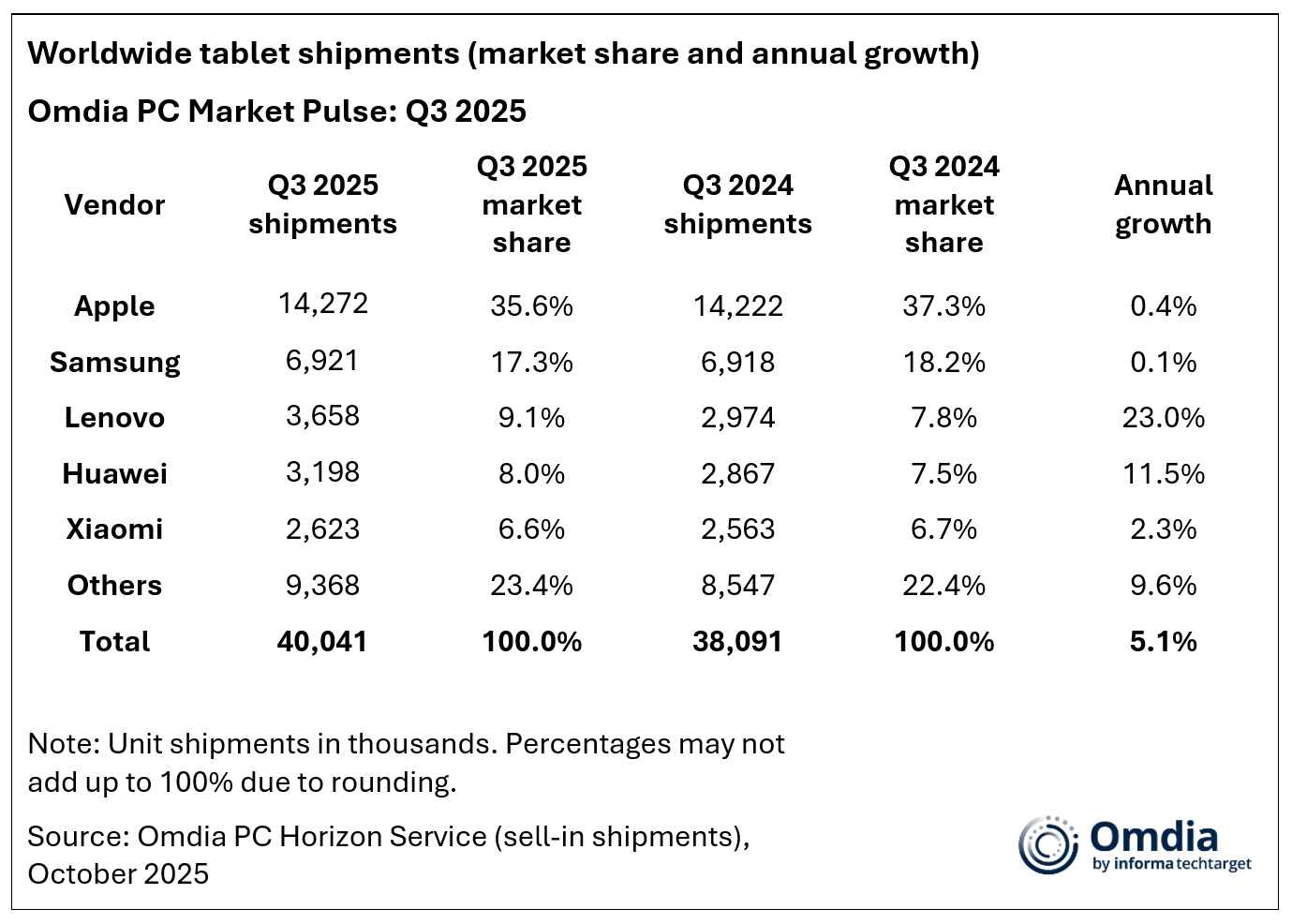
Perhaps just as impressive is that Q3 2025 marks the "seventh consecutive quarter of growth" for tablets, a trend that many likely didn't expect. As for why this trend has been continuing, it's really a multitude of reasons.
In the report, Himani Mukka, Omdia Research Manager says: "Consumer demand has been driven by factors such as frequent new product launches, government subsidies, increased appetite for kids’ and gaming tablets, competitive pricing, promotional campaigns, and seasonal back-to-school buying, which varies across regions depending on academic calendars."
It's surprising to see that there hasn't been a singular driving force behind the continued growth in tablets. However, the same can't be said for Chromebooks, which saw an increase in global shipments by 3.1%.
Of the companies listed in the report, only Lenovo and ASUS shipped more units over the course of the past year. Acer saw the steepest drop, with its annual growth down almost 35% and more than a 10% drop in market share, with Dell (-23%) and HP (-15.3%) also seeing substantial losses over the same time frame.
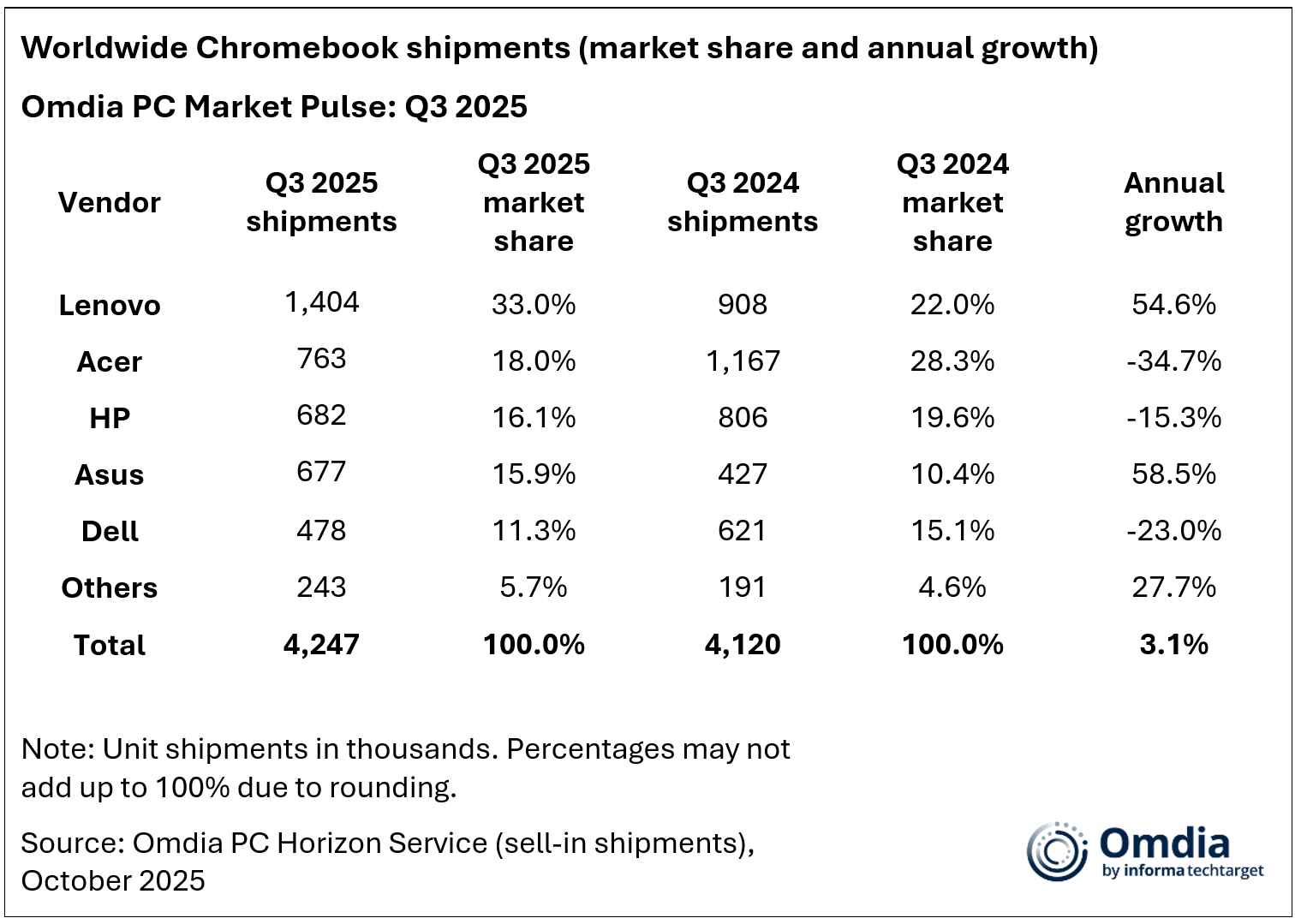
Unlike tablets, there is one major reason why Chromebooks saw a rise in popularity, and it's because of Japan's GIGA 2.0 initiative. This project aims to ensure that every student in "compulsory education" is provided with a tablet or computer, and what better way to do so than with a Chromebook.
This came at the right time for the Chromebook market, as there was an almost 25% drop in global market share in North America. However, this could quickly change according to Kieren Jessop, Research Manager at Omdia, as they "expect education funding in the US to increasingly come from state or local rather than federal sources, which could provide a steady boost to Chromebook shipments in the region."
It will be interesting to see how these numbers look this time next year. We already have a pretty good idea that Google is gearing up to release Qualcomm-powered laptops running Android sometime in 2026. However, it's still unclear what that looks like, and whether they will replace Chromebooks or live alongside them.
Power in a smaller form factor
Perhaps Lenovo has seen such a rise in tablet shipments thanks to the recent trend of releasing smaller flagship tablets such as the Legion Tab Gen 3. In other regions, it's known as the Y700, and is a popular option for both productivity and gaming.