The European Union is poised to drop its much-debated sales ban on new cars with combustion engines. Vehicles with conventional drivetrains will still be allowed beyond 2035, provided the new regulation is approved. However, Hyundai isn’t backing down from its electric offensive on the continent. In January, it will introduce its largest EV ever, although details remain shrouded in mystery.
By European standards, the Ioniq 9 is already a massive vehicle. The three-row SUV stretches over five meters (nearly 200 inches), which raises the question of what Hyundai is planning next. The company cryptically says its upcoming EV “supplements the brand’s existing lineup” of electric models. That doesn’t offer much to go on, but logic suggests it won’t be yet another jumbo-sized SUV.
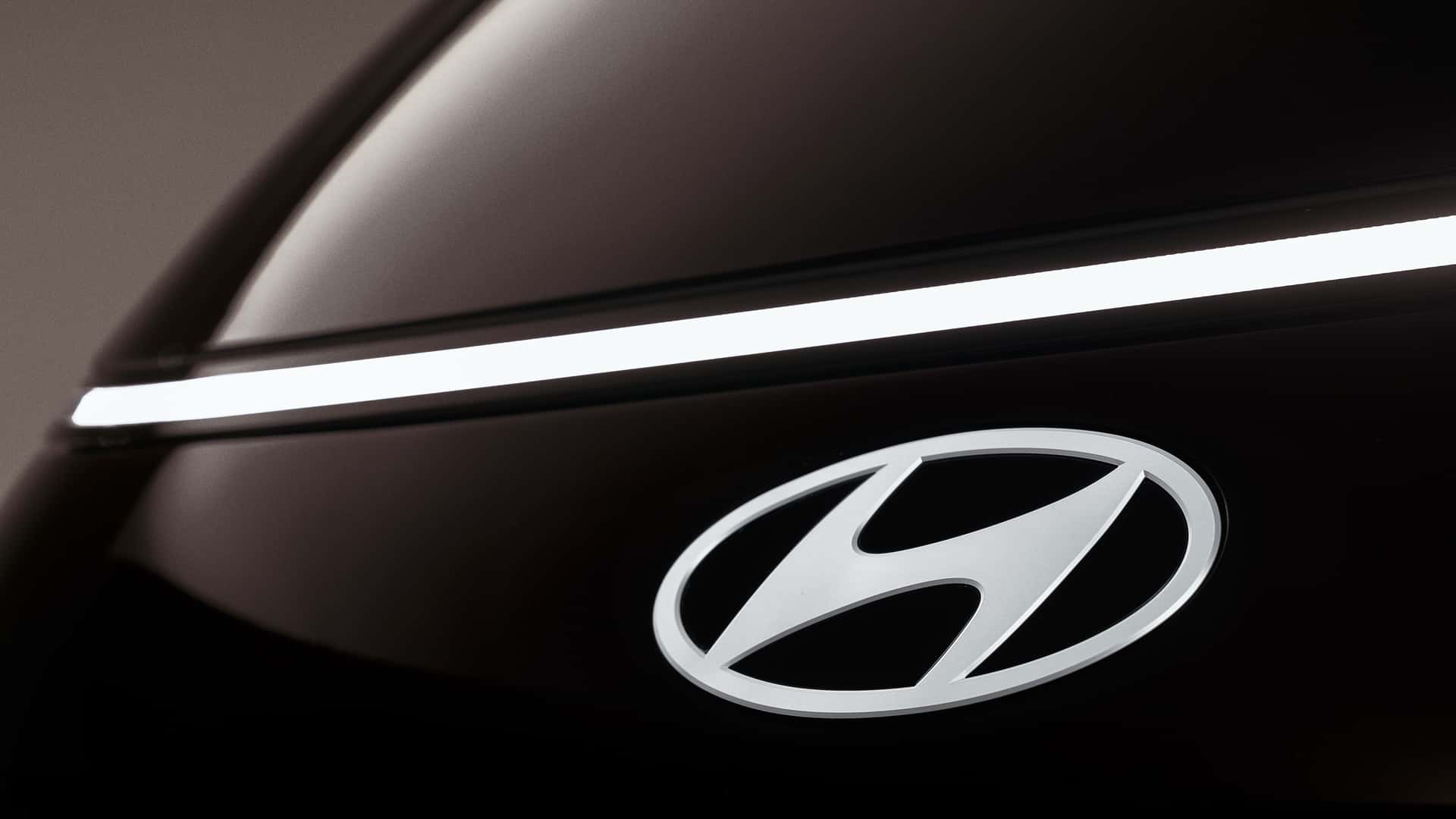
Hyundai’s confirmation of 800-volt charging and “state-of-the-art electric technology” does little to solve the puzzle. The fact that it’s described as a model rather than a concept indicates it will be production-ready. The sole teaser image shows a full-width LED light bar, which may already be enough to piece things together.
From what we can see so far, Hyundai appears ready to remove the gas engine from its futuristic-looking Staria. That would make sense, considering the people mover is even larger than the Ioniq 9, measuring 5.25 meters (206.9 inches) in length. Reports of a purely electric derivative first surfaced in mid-2024, when The Korea Economic Daily claimed it would launch in 2026.

That report listed Europe as one of the most important markets for the electric van, alongside Australia and Thailand. Hyundai has been selling the Staria since 2021 with gasoline, diesel, and hybrid powertrains. A fully electric version is projected to generate up to 20,000 global sales annually.
While Hyundai is bringing its largest electric vehicle to the Brussels Motor Show, sister brand Kia will unveil its smallest electric car. The production-ready EV2 will be joined by hot GT variants of the EV3, EV4, and EV5. Hyundai and Kia are among the 64 automotive brands attending the upcoming show, which opens on January 9.
Although minivans aren’t the most exciting vehicles around, it’s encouraging to see that traditional auto shows aren’t completely dead. Between Hyundai and Kia, hosting a couple of world premieres shows that some automakers still believe these events remain relevant in the age of TikTok.
2021 Hyundai Staria