As Washington and Tehran remain locked in an unresolved conflict over Iran's nuclear programme, US President Donald Trump has reportedly approved a landmark agreement granting Saudi Arabia uranium enrichment capability of its own, a decision critics say exposes one of the starkest double standards in recent US foreign policy.
Rosemary Kelanic, head of the Middle East programme at the Washington-based think tank Defense Priorities, was among the most outspoken critics of the deal. Writing on social media, she branded the decision 'especially idiotic' to pursue in the middle of a war rooted in Iran's nuclear programme, warning that it could carry serious consequences.
Giving Saudi Arabia uranium enrichment technology is a terrible idea on many counts.
— Rosemary Kelanic (@RKelanic) July 22, 2026
But it’s especially idiotic to do it *in the middle of a war over Iran’s nuclear program.* https://t.co/FcUnYVjzYT
Kelanic argued that Washington's position is difficult to sustain: taking military action against one nation over uranium enrichment while granting that same capability to Saudi Arabia, a country Iran has long viewed as a regional rival.
She also cautioned that the move could push Iran further towards pursuing nuclear weapons of its own, particularly as Tehran watched its chief regional rival being granted enrichment rights it had long been denied.
A Deal Facing an Uncertain Path Through Congress
The agreement, described as a civilian nuclear programme, is expected to run for at least 30 years and involve major US firms such as Westinghouse. President Trump is reportedly set to ask Congress to approve the pact, although the timing has drawn criticism given that the conflict between Washington and Tehran remains far from resolved.
Many lawmakers remain wary that enabling Saudi Arabia's long-standing ambition to enrich uranium domestically could trigger a new wave of nuclear proliferation, undermining decades of non-proliferation efforts across the Middle East.
Before the current conflict erupted, nuclear negotiations were held in Geneva in February, where the US demanded that Iran commit to a 10 to 20-year suspension of domestic enrichment. Tehran was willing to offer only a three-year pause. Saudi Arabia, for its part, has previously stated it would seek a nuclear weapon should Iran acquire one, an intention Tehran has consistently denied.
Adding to the controversy, the emerging US-Saudi agreement is unlikely to include the enhanced monitoring measures set out in the International Atomic Energy Agency's (IAEA) 'additional protocol', the very safeguards Iran was subject to under the 2015 nuclear deal.
By contrast, the United Arab Emirates' earlier '123 agreement' with Washington to build its Barakah nuclear plant, developed with South Korean assistance, notably excluded enrichment rights. Non-proliferation experts have long regarded that model as the 'gold standard' for civil nuclear cooperation, making the reported Saudi deal's terms all the more contentious.
Fears of Deepening Regional Tensions
Washington appears to be framing the agreement as recognition of Saudi Arabia's maturing ambitions to diversify its energy mix away from oil. Yet the prospect of the kingdom developing latent nuclear weapons capability amid its enduring rivalry with Tehran remains a key concern for critics.
Iran has yet to formally respond to the deal, but criticism from Tehran is widely expected. Domestic debate within Iran over its own refusal to pursue nuclear weapons remains highly contentious, and many Iranians are likely to resent Riyadh being permitted to enrich uranium domestically while Tehran faces sanctions for doing the same.
Regional tensions have also been escalating on other fronts. Saudi Arabia recently signed a mutual defence pact with nuclear-armed Pakistan following Israel's strike on Hamas officials in Qatar. Pakistan's Defence Minister, Khawaja Muhammad Asif, declared that Islamabad's nuclear programme would be 'made available' to Riyadh if required, a statement widely interpreted as a warning to Israel, long regarded as the region's sole nuclear-armed state.
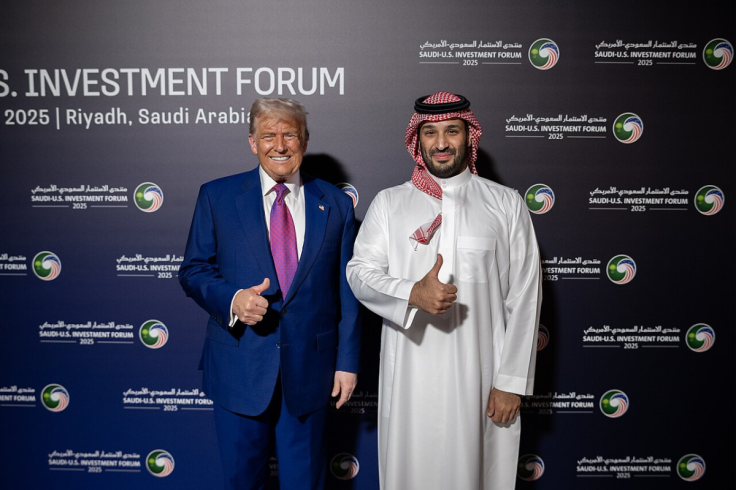
The nuclear framework was first announced during Saudi Crown Prince Mohammed bin Salman's November visit to Washington, with US officials describing it as the legal foundation for a 'decades-long, multi-billion-dollar' partnership consistent with 'strong nonproliferation standards'.
A subsequent report to Congress urged lawmakers to support the deal, warning that it was essential to prevent 'strategic competition' from undermining long-term US security interests while reasserting American leadership in the global civil nuclear market.