The current Japan-U.S. Security Treaty took effect 60 years ago Tuesday. The forward deployment of U.S. forces based on this treaty and other pacts has been the foundation of stability in the Indo-Pacific region. The urgency to respond to growing threats, including China's development of missiles that are difficult to intercept, however, is pushing the Japan-U.S. alliance toward a turning point.
--New reality
"The Japan-U.S. alliance has been the foundation of our country's foreign and security policy," Chief Cabinet Secretary Yoshihide Suga said at a press conference on Monday. "It serves as a cornerstone for peace and stability of the international community."
The current security treaty came into effect in 1960 through the revision of a previous treaty under which the United States had no obligation to defend Japan. Article 5 of the treaty obliges the United States to defend Japan, while Article 6 refers to Japan's obligation to grant the United States the use of bases in Japan. The treaty calls for the two countries to fulfill different obligations.
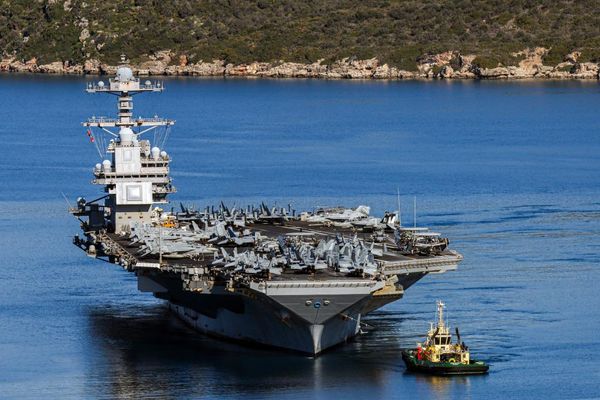
Under the bilateral alliance, Japan played the role of the so-called unsinkable aircraft carrier as a foothold against the former Soviet Union during the Cold War.
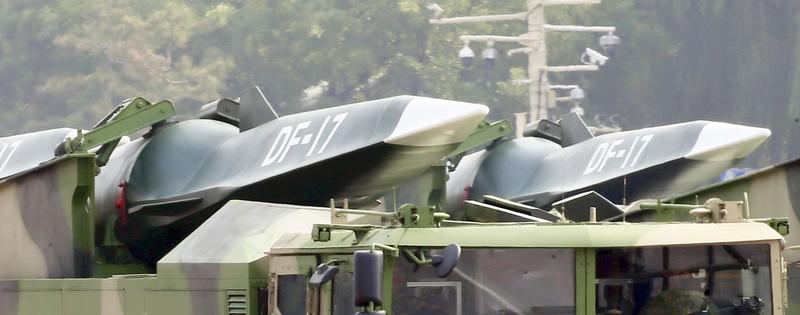
In recent years, the advent of weapons such as China's hypersonic glide vehicles and North Korea's missiles that take irregular flight paths, are posing threats to conventional missile defense systems for U.S. bases in the western Pacific region, including Japan. In addition, the increased ability by such countries to carry out surprise attacks or saturation attacks, in which many missiles are launched simultaneously, means the Japan-U.S. alliance is facing the need to deal with a new reality.
--U.S. vision
The United States is rapidly advancing a vision called dynamic force employment. This is intended to disperse U.S. forces and deploy them more flexibly to respond as needed. It is also aimed at making it difficult for enemies to predict the moves of U.S. forces.
Under this concept, there have been changes to the forward deployment of U.S. forces. In April, the U.S. military changed its operation of strategic bombers, such as the B-52 and B-1 that had been stationed in Guam by turns, to operate from the U.S. mainland.
Based on its force design initiatives announced in March, the U.S. Marine Corps has also set a target of reducing the number of marines by about 12,000 by 2030 and plans to reorganize the third Marine Expeditionary Force in Okinawa Prefecture, through such steps as establishing Marine Littoral Regiments, which are smaller and have enhanced readiness.
--Wrong message
Coordination between Japan and the United States is crucial for such a review of the military reorganization, which could affect the Japan-U.S. alliance. However, the administration of U.S. President Donald Trump has taken a stance of making light of its allies. For example, Trump has called for the reduction of U.S. forces stationed overseas from the standpoint of "America first."
On June 15, the Trump administration unveiled a plan to slash the number of U.S. troops in Germany, citing insufficient defense spending by Berlin. Former U.S. Ambassador to Germany Richard Grenell, who is said to have affected Trump to make such a decision, said during an interview with the German newspaper Bild, "We want to bring troops from Syria, Afghanistan, Iraq, from South Korea, Japan and from Germany."
A senior source of the Self-Defense Forces was cautious about the stance of the Trump administration, saying, "It could send the wrong message that a review of the forward deployment shows the United States' weak commitment."
Amid the spread of the novel coronavirus, the U.S. defense budget is unlikely to increase, and moves to review the U.S. military organization could accelerate from cost aspects.
During discussions for a review of its National Security Strategy, which will start soon, the Japanese government is expected to consider enhancing the nation's deterrent power by acquiring the ability to attack enemy bases, with China and North Korea in mind.
A review of a security strategy is usually supposed to provide a good opportunity for Japan and the United States to discuss new strategies and each other's roles. However, a senior government official said, "Not only with the presidential election scheduled for November, but also amid the coronavirus pandemic, the two countries aren't in a situation to calmly discuss strategies."
--Tough talks
In the second half of this year, negotiations to revise a special agreement stipulating Japan's share of the costs of stationing U.S. forces in Japan are expected to put the bilateral alliance in a difficult position.
The current agreement obliges Japan to cover such expenses as labor costs and utilities in U.S. military bases. In the budget for this fiscal year, the Japanese government included 199.3 billion yen for the expenses.
As the current agreement will expire at the end of March 2021, the Japanese and U.S. governments will start negotiations on a new special accord.
The negotiations on the cost of stationing U.S. troops in South Korea, which started ahead of talks with Japan, have been in deadlock as the United States demanded a significant increase in the amount for South Korea to shoulder, reflecting Trump's stance. Seoul is said to have proposed at least a 13% increase from the previous year, but Washington has rejected the proposal and called for it to shoulder more.
Former U.S. Defense Secretary Jim Mattis and others who place importance on the alliances, once served to put a brake on excessive calls within the Trump administration for increased burdens. At present, there seem to be no high-ranking officials who play such a role. In January, U.S. Secretary of State Mike Pompeo and Defense Secretary Mark Esper jointly contributed an opinion piece to The Wall Street Journal with the headline, "South Korea is an ally, not a dependent."
Former U.S. national security adviser John Bolton wrote in his memoir published Tuesday that, when visiting Japan in July last year, he had told senior Japanese government officials that Trump was looking for Tokyo to shoulder about 8 billion dollars a year in the cost of stationing U.S. troops.
Japan bears a large share of the costs even outside the special agreement, but if only the agreement is considered, the demanded amount is more than four times the current burden on Japan.
Suga denied the conversation took place during the Monday press conference: "It is not a fact that Japan received that demand from the U.S. government for increasing the amount to cover stationing costs."
The Japanese government speculates that Washington's hard-line stance may change if Trump loses the November presidential election to former Vice President Joe Biden, the presumptive Democratic nominee, so Tokyo intends to push back full-fledged negotiations with Washington until after the election.
"Even if Biden wins the election, the U.S. position of asking allies to shoulder more of the burden wouldn't change," a senior government source said, "but it wouldn't be as one-sided as Trump's."
Read more from The Japan News at https://japannews.yomiuri.co.jp/