Whatever England said among themselves in the changing room at half-time, it will be worth remembering. Cherishing even. If somebody in the camp had the good sense to record it – they seem to make a record of everything nowadays, even the most humdrum of training sessions – they should take the difficult collective decision not to put it on sale immediately, but store it for future reference.
In the late stages of the World Cup, when good sense and cool heads seem to vanish, it may be worth pulling out of the archive. Whatever was said was inspired.
Until the half-time rethink, England had responded a little too frenetically to the charged – perhaps overcharged – atmosphere of the Millennium Stadium. It seemed to be general knowledge beforehand – Wales is not a great place to keep a secret – that the home team would keep England waiting in the cold before the anthems. England had demanded that the roof remain open, so let them enjoy the fresh air for as long as possible.
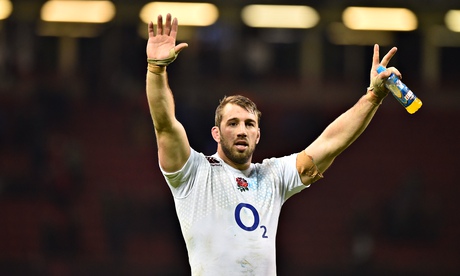
Chris Robshaw saw through the ploy, insisting on waiting in the comparative warmth of the pre-tunnel corridor until Sam Warburton at least poked his nose out of the Welsh changing room. It was a good stab at counter-kidology, but it meant that there was no letup in the noise outside, the din that tends to make thinking difficult.
Doing a Martin Johnson – he led England’s 2003 vintage team to the Irish side of the presidential carpet in Dublin and would not move – was a dramatic gesture and not without a certain sense of just cause, but it only truly works if the drama extends to the field. Wales won a penalty from the kick-off, when Taulupe Faletau, who had one of the most inspired first halves of his life, caught Dan Biggar’s kick-off and forced an error.
Leigh Halfpenny banged it over, as he did the conversion of the try set up by Faletau’s outrageous pick-up from the front row of the scrum, his hand-off on James Haskell and his pass out of the tackle to Rhys Webb. Faletau’s whole half was brilliant, but these opening seven minutes were rugby heaven for the Wales No8.
His one-man brilliance helped make England look a little bit off the pace for a quarter of an hour. They had decided to play mind games and were coming off second best. That they recovered and strung together the links that led to the try for Anthony Watson proved that they would not give up easily. But that was hardly a discovery of anything new. To be dogged goes with England duty.
It was no surprise that they trailed by eight points at the interval. Halfpenny – and this was a major shock – missed a relatively simple penalty. Fortunately for Wales, Dan Biggar at the same time was playing nearly as well as Faletau: catching his own kicks and tackling without flinching even when he’d clashed heads with the hardest nut in his own team, Gethin “Melon” Jenkins. He ended the half by dropping a goal that made up for Halfpenny’s miss. Wales had every reason to be pleased and England had grounds for concern.
And then came the half-time rethink. The interval of wisdom. Whoever said what, the input worked. The forwards drove with a new ferocity, individually and in greater numbers. They upped the pressure on the scrum that had been their single source of satisfaction in the first period. They attacked the breakdown more aggressively and kept their discipline. Dan Cole stopped being penalised.
Wales scored not a single point in the second half. Jonathan Joseph by way of contrast scored a beauty of a try, dancing with agility and then powering through the tackles of Biggar and George North. The entire England team were so different now and so much on the front foot that they felt confident enough to have a second go at the mind game thing. James Haskell tried to persuade the referee, Jérôme Garcès, that he had touched the ball against the bottom of the post at the end of a seriously good collection of assaults on the Welsh line.The referee went with the request, only to have it confirmed that the noble Haskell had missed the base of the post by a good two feet.
It didn’t matter. England and Haskell were soon surging forward again. Alex Cuthbert was sent to the bin – not that it mattered much because passes had long since dried up for the Welsh wings. The pack simply couldn’t lay a hand on the ball. George Ford, growing more assured with every passing minute of this revival in a hostile environment, kicked the penalty that put England ahead.
Another effort – by the estimable Dave Attwood – was ruled out on replay; Nick Easter was adjudged to have overrun the ball and obstructed Biggar. But Ford sealed the win with a penalty and England had completed a startling about-turn: from slightly self-conscious visitors to travellers in full control. There are worse ways to start the year of years.