KAKOGAWA, Hyogo -- What went through the mind of a bookish 19-year-old man when he was caught up in the spiral of war?
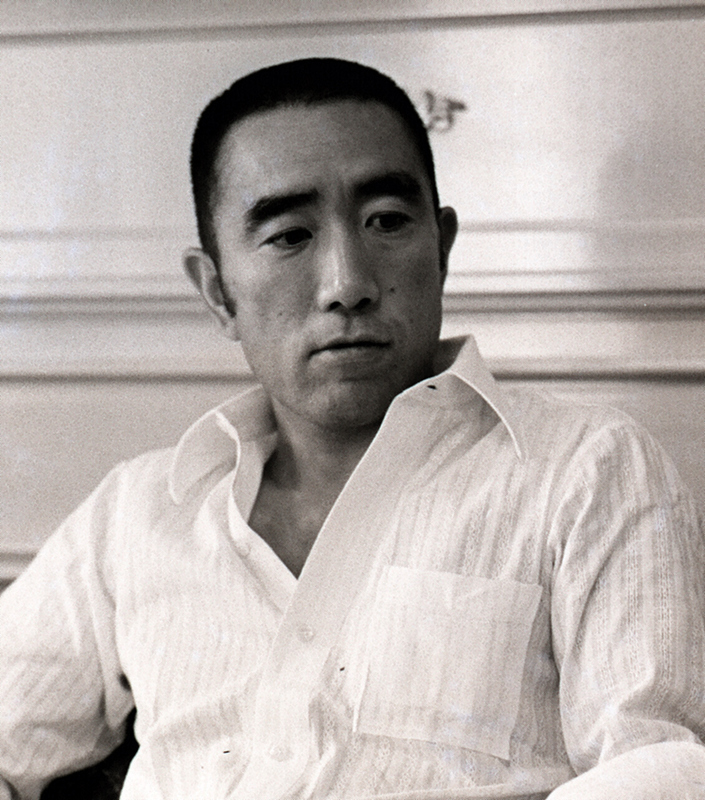
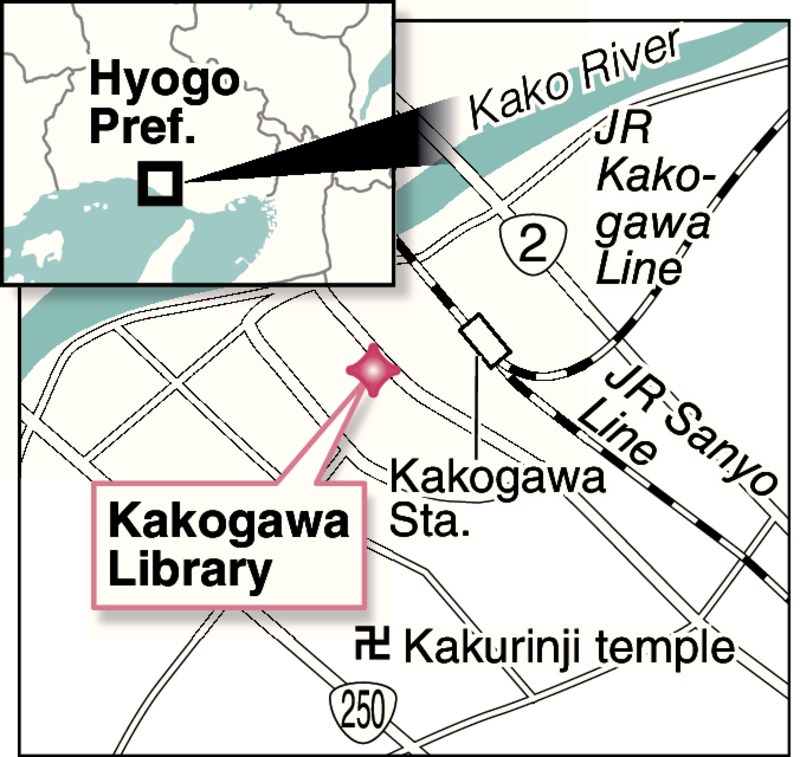
In May 1944, Yukio Mishima received a physical examination for conscription at a public hall in Kakogawa, Hyogo Prefecture. As this year marks the 50th anniversary of his suicide that shocked the nation, this reporter decided to visit the building, which is now used as a municipal library.
Mishima, whose real name was Kimitake Hiraoka, was born in Tokyo in 1925 and entered the Finance Ministry upon graduating from the University of Tokyo, only to quit the job in 1948 to devote himself to writing novels. Known for many masterworks of literature, such as "Shiosai" (The Sound of Waves) and "Kinkakauji" (The Temple of the Golden Pavilion), he broke into the Self-Defense Forces' Ichigaya station in Tokyo and committed ritual suicide there in November 1970.
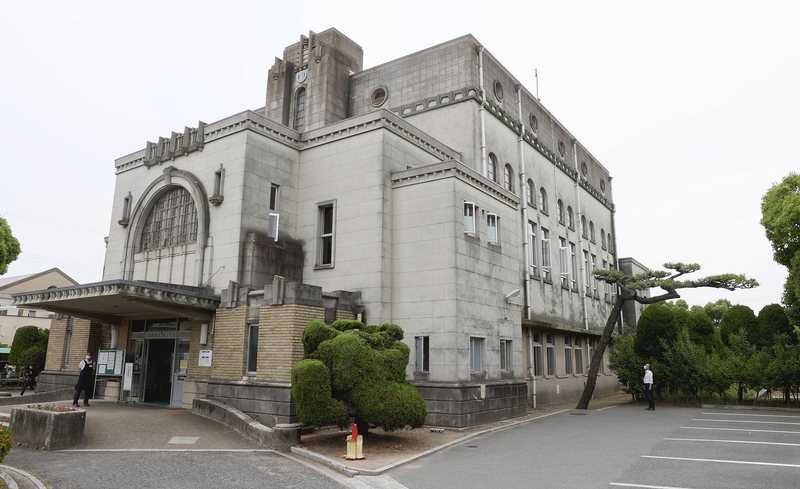
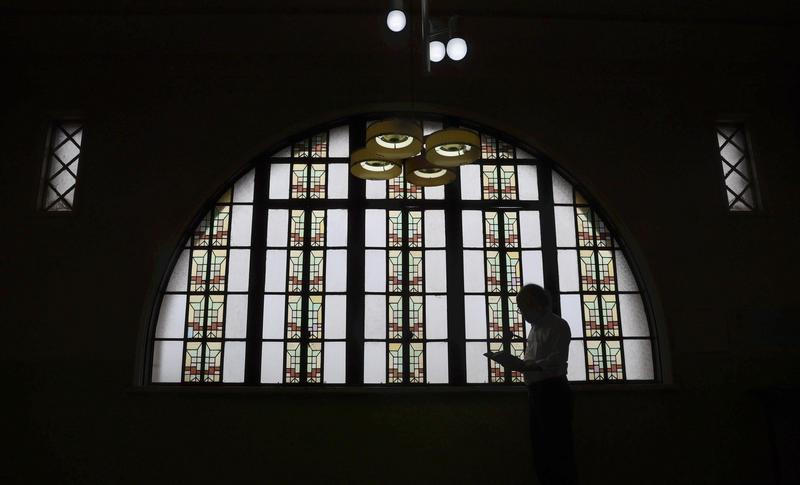
The Kakogawa Library is an elegant, Western-style building that looms beyond a quiet residential area. A large, beautiful stained-glass window on the second floor adorns the front of the building.
A lone pine tree, which is about five meters tall, stands near a parking lot outside the north side of the building.
"Apparently, Mishima was examined for conscription under this pine tree with other young men," said Hiroaki Araki, 59, the director of the library.
Why did Mishima travel to Kakogawa even though he lived in Tokyo at the time? His semiautobiographical novel, "Kamen no Kokuhaku" (Confessions of a Mask), has it as follows:
"At my father's suggestion, I had taken my physical examination, not at Tokyo, but at the headquarters of the regiment located near the place where my family maintained its legal residence, in H Prefecture of the Osaka-Kyoto region. My father's theory was that my physique would attract more attention in a rural area than in the city, where such weakness was no rarity, and that as a result I would probably not be drafted." (from a translation of the novel by Meredith Weatherby)
His legal residence by birth was the village of Shikata, which is now part of Kakogawa. The village was the birthplace of his grandfather, who held a series of prominent positions, such as the head of the government agency administrating Karafuto, or present-day Sakhalin in Russia.
"As a matter of fact, I had provided the examining officials with cause for an outbreak of laughter when I could not lift -- not even as far as my chest -- the bale of rice that the farm boys were easily lifting above their heads 10 times. And still, in the end I had been classified 2."
He received a draft notice at his Tokyo home in February 1945 and traveled to Kakogawa again to enlist. But Mishima, who happened to have a cold, was misdiagnosed as having lung tuberculosis and headed home on the same day.
He later recounted that the unit he was supposed to be assigned to lost many members in countries to the south of Japan, although the truth seems to be that the unit remained in Japan and prepared for homeland defense.
"Confessions of a Mask" does not refer to the public hall or the pine tree, yet there are documents that indicated Mishima was indeed examined at the facility, and novelist Naoki Inose quoted in his book, "Persona Mishima Yukio Den" (Persona: A Biography of Yukio Mishima), words by a man who received the examination with Mishima under the tree. Publication of this book in 1995 apparently prompted Mishima fans to visit the library.
Mishima is believed to have visited Kakogawa only twice in his life: for the examination for conscription and for enlisting. Did he feel ashamed about being labeled as being physically weak? Or did the experience make him ponder life more in depth? The whole series of events regarding his failed conscription may be remotely linked to his suicide.
"Surely, it became one of the reasons he developed an inferiority complex about his body," said Hideaki Sato, 59, a Kindai University professor who also serves as the director of the Mishima Yukio Library Museum in Yamanashi Prefecture. Mishima had an inclination to adore heroism from childhood and started body-building in his 30s.
"By acquiring a strong body, he might have started feeling the desire to dedicate himself to a 'grand cause,'" Sato said.
The 85-year-old library building is getting old, and the Kakogawa municipal government is considering moving its library function elsewhere. They will likely discuss whether the building, as well as the pine tree, should be preserved.
"In the old days, concerts and Takarazuka Revue performances took place in this building," Araki said. "It was the No. 1 cultural hub of the Higashi-Harima district [in southern Hyogo Prefecture], but it was also a place where conscription exams were held during the war. This building and the pine tree witnessed the horror of war, which drastically changes everything."
On the day I visited the library, children were playing on swings in an adjacent park, kicking their legs toward the sky. The early summer sunshine was bright in my eyes.
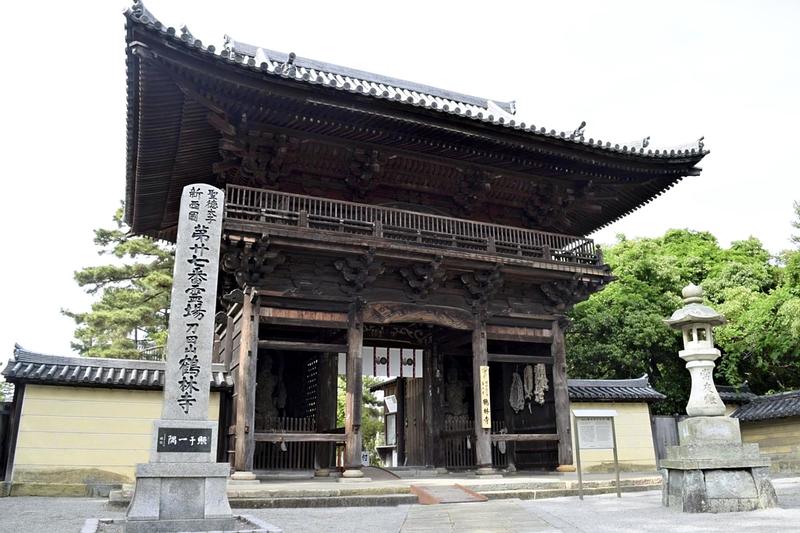
When you want to extend your trip, the Kakurinji temple is recommendable.
Legend has it the temple in Kakogawa was founded by Prince Shotoku in the sixth century. It was initially called Shitennoji Shoryoin and subsequently renamed Kakurinji in 1112. It is also dubbed the Horyuji temple of Harima, the old name for what is now part of Hyogo Prefecture.The Horyuji temple in Nara Prefecture is also believed to have been built by the prince.
There are two national treasures in the temple: the main pavilion built during the Muromachi period (1336-1573) and the Taishido pavilion built in the Heian period (794-late 12th century). The temple also houses 18 important cultural assets, such as a statue of Prince Shotoku from the Kamakura period (late 12th century-1333) and a statue of the Kannon goddess made of copper from the Asuka period (592-710). Visitors can view some of the properties at the treasure house in the temple precinct.
Read more from The Japan News at https://japannews.yomiuri.co.jp/