HYDERABAD: For 13-year-old Sirisha (name changed on request), chancing upon an unattended whisky bottle at home during the second wave turned out to be a huge temptation to try her hands on the liquor.
The chance discovery soon turned into an obsession and she had even stolen money and bribed her maid to get her some liquor over the last four months. She is now under therapy after her parents caught her stealing money from home.
Meanwhile, parents of a 17-year-old adolescent student were alarmed by repeated incidents of anger outbursts, irritability, sleep disturbances and reduced motivation and rushed him to a psychiatrist. The teen disclosed the impact of the pandemic on his life, how he had reduced concentration and other mental health issues and was now a regular consumer of cannabis, usually sourcing it from pan shops.
“On history and interview, he spoke about how the pandemic has restricted him from going for his basketball coaching and swimming and how he is not able to meet his friends like before. He even spoke about loneliness which attracted him towards regular use of cannabis. In the last 6 months, 20 to 30% of adolescents in my practice have been diagnosed with an underlying depressive disorder and substance abuse,” said Dr Virinchi Sharma, consultant psychiatrist and director of Manasa Hospital, adding that kids have admitted to getting access to cannabis for as little as Rs 50 to Rs 70.
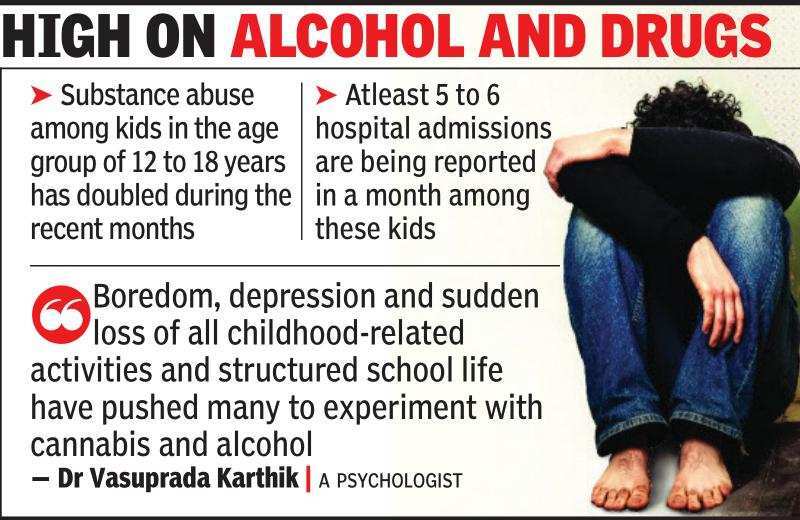
Like these two adolescents, many more younger citizens have borne the brunt of the pandemic-induced restrictions in life and have turned to experimenting and substance abuse. Substance abuse among the kids in the age group of 12 to 18 years has, meanwhile, doubled during the recent months, say experts and atleast 5 to 6 hospital admissions are being reported in a month among these kids.
“Boredom, depression and sudden loss of all childhood-related activities and structured school life have pushed many to experiment with cannabis and alcohol. Substance abuse is being seen in children who are able to go out or have access to something, like alcohol availability in the house. Also, the fact that a lot of information gets exchanged among peers could work as a tempting factor. There is huge increase in substance abuse and it is being seen across social strata,” said Dr Vasuprada Karthik, a psychologist who works with government agencies like Bharosa and SheTeams.