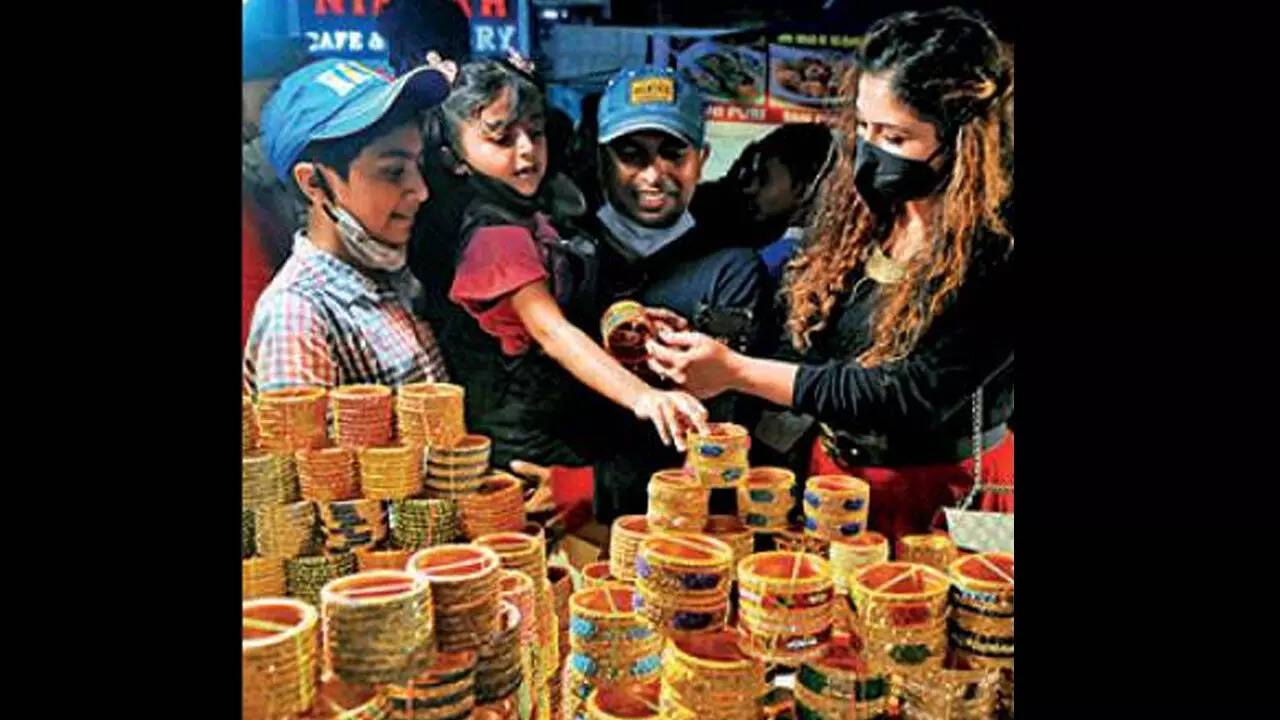
HYDERABAD: The historic Charminar saw a revival of its ‘public square’ image after a near 340-year-hiatus with Sunday’s ‘Ek Shaam Charminar ke Naam’ drawing scores to experience an evening of cultural and variety entertainment. Between 1591 and 1687 CE, Qutub Shahi rulers would hold all major public events — including festivals and celebrations — near Charminar with hundreds of people participating in them.
Festivals like Holi, Diwali and Eid were celebrated on a grand scale at the public square. The rulers too would participate in the celebrations. The chrysanthemum orchards and the fountain (Gulzar Houz) with the four kamans, decorated with festoons, further added to the festivities, as per archival documents.
Apart than festivals, the monument was also a centre for ‘melas’ (fairs) and nobility in all their royal regalia with elephants, camels and horses would wait near the public square waiting for their turn to meet the Qutub Shahi kings.
Qutub Shahi royal palaces extended from near Charminar to the present-day high court abutting Musi. A daily langar would also be hosted, with the royal palace feeding hundreds — mostly wayfarers and foreign traders.
The very purpose of building Charminar was to serve as a mega public place for the common man. There were also Turkish baths and people were given free towels. The Charminar served as Maidan-e-Naqsh-e-Jahan (world public square), replicating the one at Isfahan in Iran.
The nobility themselves participated in public programmes there. The glories of the past are now seeing a revival as a result of the government’s efforts. Historic records also reveal that many royal announcements were made at the Charminar and that the streets during the Qutub Shahi period were decorated on major occasions.
Professor Abdul Majeed Siddiqui in his ‘History of Golconda’ mentions that Qutub Shahs wanted to create a collective life in their subjects so they could promote social activities, develop their mental and moral faculties and thereby spread their culture across the country.
“The common people held their revelries both at Golcunda and Hyderabad (Charminar). Almost all the ceremonial functions, Hindu or Muslim, were accompanied with music and dance,” says Professor Majeed.