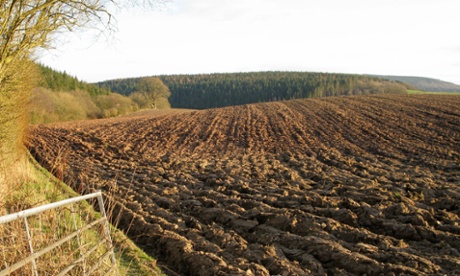
On either side of the track, ploughed fields wait for the harrow, giving the land a corduroy texture accentuated by late sunlight. Each foot-deep furrow is walled with gleaming slabs of clay – too late now for frosts to break down. I walked into the forest beyond.
Dawn, dusk, solitude (or at least companionable silence) are the prerequisites for nature-watching. The liminal times between light and dark are when the natural world is most alive. Yet by the still woodland pool small birds were notably silent. I caught a glimpse of barred white among sunlit cinnamon of larches on the hanger beyond, focused my glass and a pale, barred presence leapt into view. A goshawk in adult plumage, massive in its hunched stillness, silencing the world with threat.
From the earthworks atop the hill, I scanned round before turning back into green and thickening light. The air was filled with thin wheezing of goldcrests. Suddenly their call-sequences simplified and sharpened. Plaintive melodies of willow-tits modulated into hoarse alarm calls. By a stack of felled logs at the first forestry bend, the nematode form of a stoat, its tail-tip a thrashing epicentre of darkness, described flick-flacks, intent on luring down its prey. Crossbills clipped away regardless from the tops of spruce.
The performance was more than my terrier could bear. With projectile swiftness she sped after the stoat. It disappeared among the logs. At a stern word she slunk guiltily to heel. Round the next bend two roe deer capered and kicked up their heels, white rumps flashing in the twilight. Klaxon cucketing of a cock pheasant sounded the alarm, the roe dematerialised, the bird crashed through branches – and was suddenly grasped and borne away in steel-strong talons.
Stillness, followed by a piercing cackle – kee-arr, kee-arr. Tutelary spirits! No hanging-to-rot for this pheasant, no imprisonment for this hawk.