NSW Premier Dominic Perrettot's announcement of $3 billion in incentives for green hydrogen producers is a pivotal moment for the Hunter.
The NSW Government clearly considers green hydrogen a key future energy export for NSW, and it is in a hurry to make this a reality.
Orica's announcement last week that it would achieve net-zero emissions by 2050 is just one of many exciting examples of the private sector rising to the challenge.
The NSW strategy could turbocharge a Renewable Energy Industrial Precinct (REIP) in the Hunter as proposed by Beyond Zero Emissions. REIPs are clusters of industry powered by 100 per cent renewable energy with shared infrastructure such as transmission, green hydrogen pipelines and electrolysers.
Our economic analysis shows that the Hunter REIP could attract $28 billion in investment, support 34,000 new ongoing jobs and earn $11 billion in annual revenue by 2032.
A REIP will build on the Hunter's existing mining, energy, and manufacturing expertise, with green steel and aluminium, hydrogen and ammonia experiencing a surge in international demand.
BZE's recent Export Powerhouse report shows that REIPs across Australia could grow a new green export market worth $333 billion a year by 2050 - almost triple the value of our current fossil fuel exports. In comparison, our $128 billion a year fossil fuel industry is looking highly risky in current market trends.
BZE's Export Powerhouse scenario and Transgrid's Clean Energy Superpower scenario calls for a massive renewable energy rollout at a scale that can reduce the need for dispatchable storage. This scale of the superpower renewable build could be used to fasttrack local hydrogen - where green hydrogen can act as a flexible energy sponge, "soaking" up surplus renewable energy for exports and industry, and dispatching it to the grid in times of need.
The NSW Government's announcement backs the Hunter to transition its critical energy trade relationships with Japan and Korea from coal to hydrogen. It has previously allocated funds to establish a hydrogen hub in the Hunter.
Last month the federal government included the Hunter as one of Australia's seven Clean Hydrogen Industrial Hubs.
The Committee for the Hunter is working on a Hunter Hydrogen Roadmap to be launched in November.
A Renewable Energy Industrial Precinct will build on the Hunter's mining, energy, and manufacturing expertise.
The committee says the Hunter is a vehicle for the delivery of commitments by the NSW and federal governments on hydrogen, and any domestic emission reduction targets that will be made at COP26.
NewH2, the Hunter hydrogen knowledge-sharing hub, is coordinating collaboration to create a better outcome for the whole region. In the Upper Hunter the H2N hydrogen network will be the region's first large-scale collaboration to produce green hydrogen at scale for domestic use and export.
Hunter Water will recycle waste water to provide a sustainable source of water for green hydrogen production.
The Hunter even has capacity to manufacture cutting-edge equipment to perform electrolysis to make green hydrogen.
The NSW Hydrogen strategy is part of a series of state and federal government announcements that open the way for a Hunter REIP.
The NSW government is now taking expressions of interest to develop roadmaps for "Clean Manufacturing Precincts" to create net zero industrial clusters in the regions and supporting NSW businesses to decarbonise.
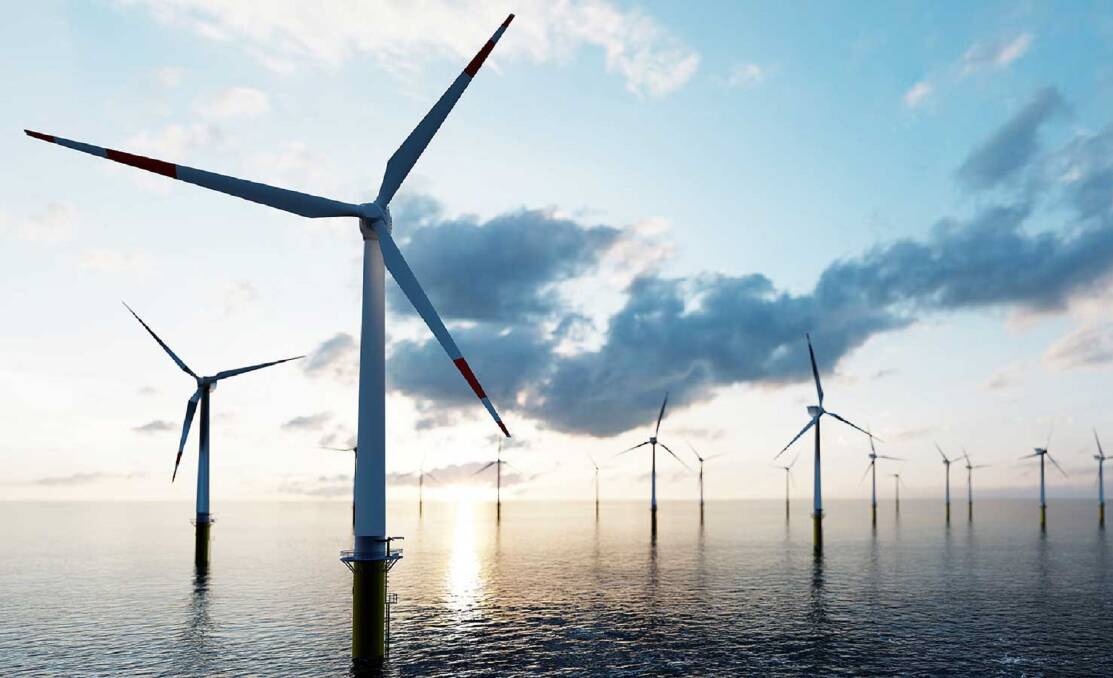
Another game changer for the Hunter is the federal legislation enabling offshore wind projects. The two proposed offshore wind farms are gigawatt scale and could turbocharge the Hunter REIP and green hydrogen production.
Offshore wind energy is important because offshore wind tends to be stronger and more consistent than onshore wind, and can play a "firming" role in supply. These projects are important for major emitters such as Tomago Aluminium and Orica as they move to decarbonise.
The Hunter is also emerging as a hotspot for battery manufacture and electric vehicle innovation. Ampcontrol, BME and 3ME Technology are creating and building the next generation of mining and defence EVs.
The Hunter has so many pieces already in place to become Australia's most significant export powerhouse. The missing piece of the puzzle is the right policy settings to establish a Hunter Renewable Energy Industrial Precinct and bipartisan support the investment community needs to back the Hunter.