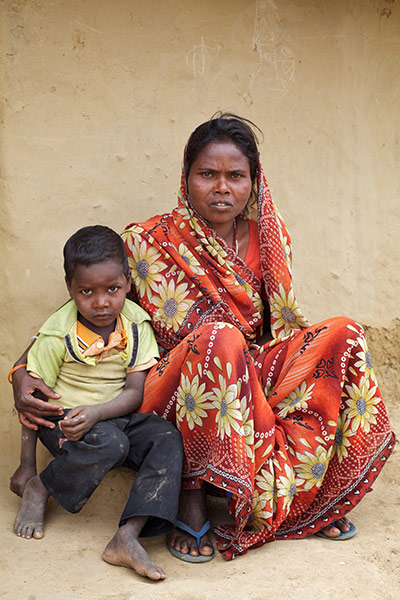
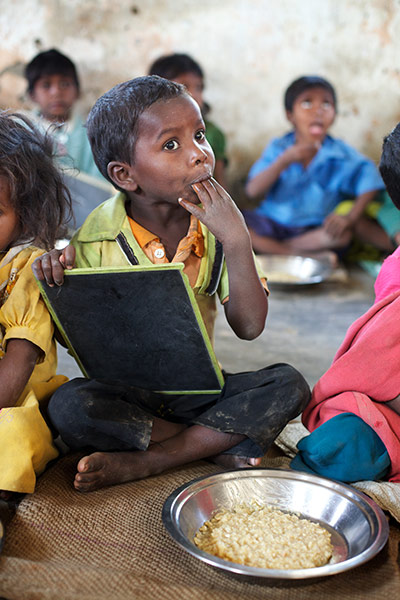
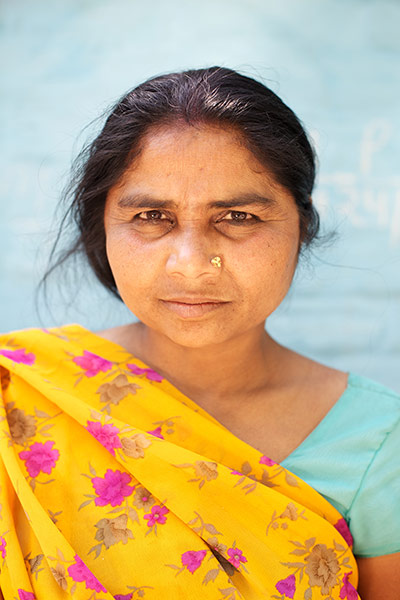
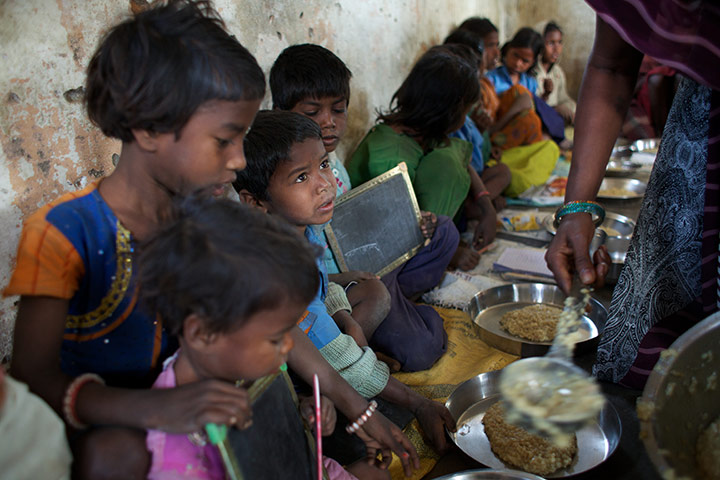
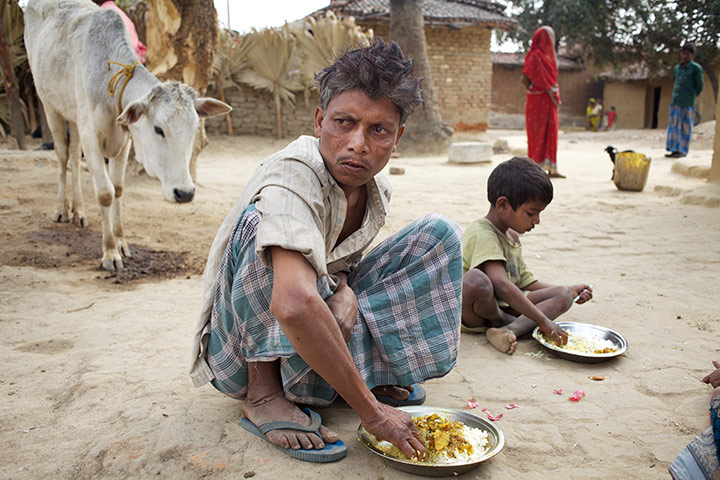
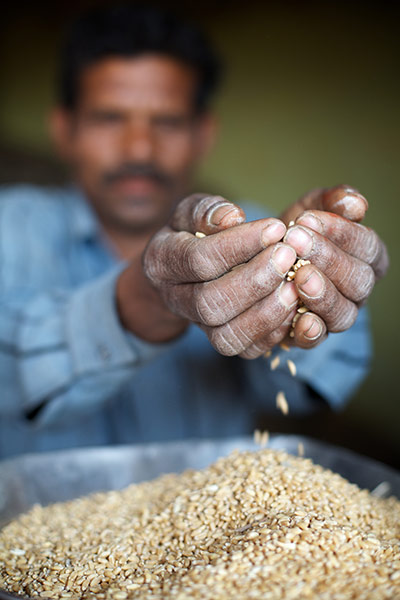
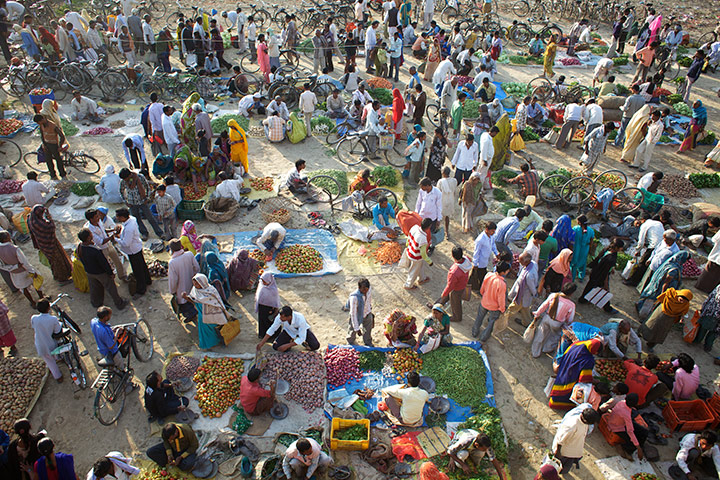
Kari Devi was widowed in April 2010 when her husband, Congress Manjhil, died of hunger and illness. She lives with her four children, Sunil, Sanoj, Babita and Pramod (with whom she is seen here outside her home in Manan Bigha). They live in just one room, sharing a common courtyard with three other families who occupy the house Photograph: Tom Pietrasik/OxfamPramod receives his midday meals at the village's Anganwadi, a local centre for the care of mothers and children. He and his family receive free rice or wheat under a government scheme, the public distribution system, which caters for the country's poorest peoplePhotograph: Tom Pietrasik/OxfamTanuja Dhanuk is a domestic worker and mother of four from Lucknow. She earns about 600 rupees (approximately $3) a month for cleaning houses, and worries about how to make ends meet. The food rations received by the family are not enough for the whole monthPhotograph: Tom Pietrasik/Oxfam
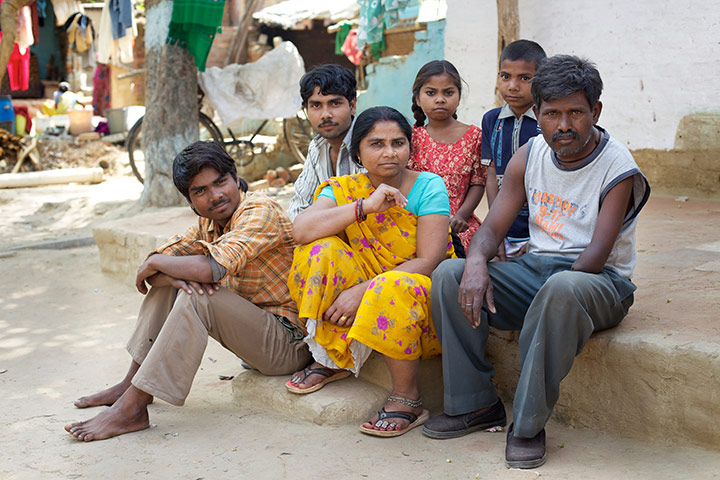
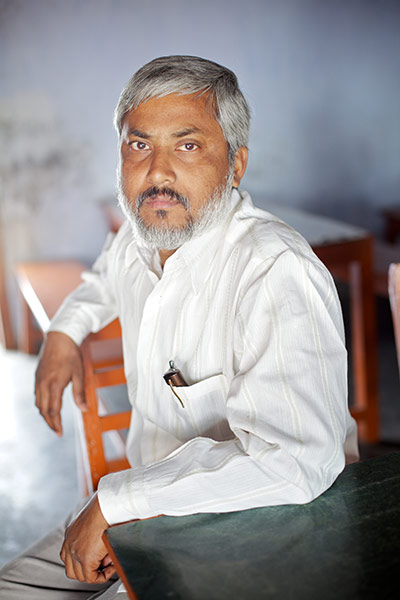
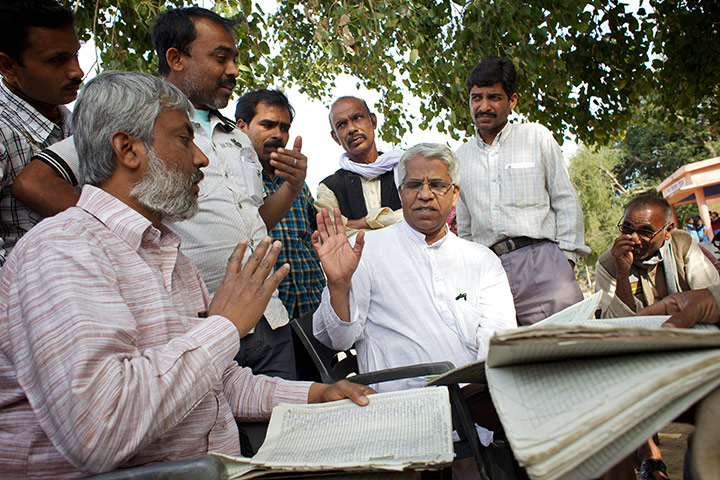
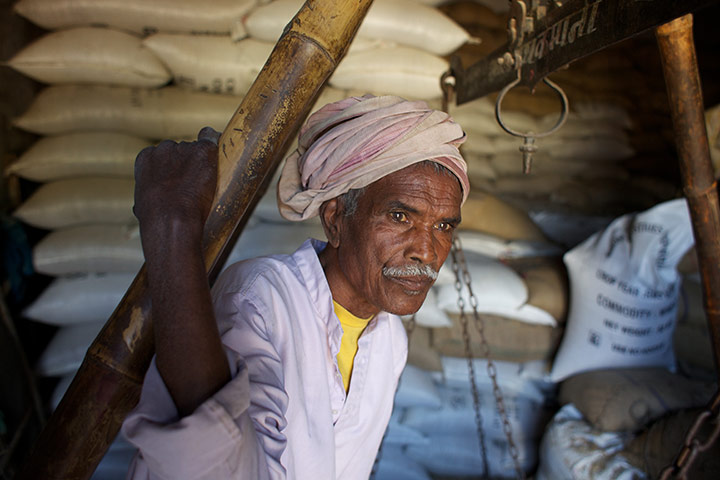
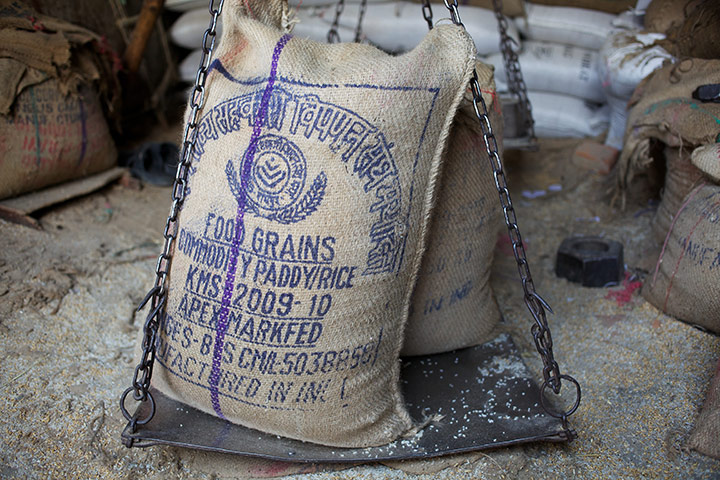
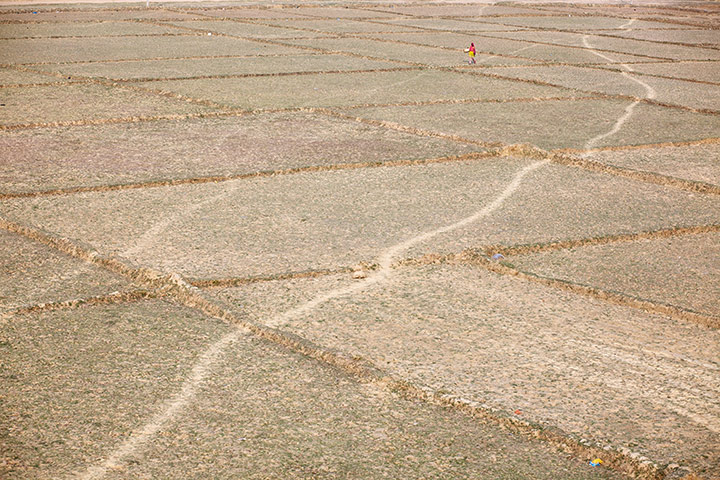
Dhanuk's family are Mahadalits - members of India's lowest and most marginalised social caste. She says she sometimes has to ask her employers for the leftovers from their meals – a source of deep embarrassment to herPhotograph: Tom Pietrasik/OxfamRupesh (who wishes only to use one name) is head of the Koshish Trust and state adviser to the commissioner of the supreme court. He monitors the food-related security schemes and is trying to improve the implementation of state-run programmes. In his push for change, Rupesh has been working with Oxfam in 18 villages in Bihar state. Rupesh argues that the only way to properly administer schemes such as school meals is to make them universal so that all classes, and not just the poor, have a personal interest in themPhotograph: Tom Pietrasik/OxfamRupesh and his colleague Father Jose Kariakatt (centre), from the People's Union for Civil Liberties, check administration records for the midday meals programme at the Madhya Vidyalaya school in Tetua village. Unannounced visits such as this, although rare, are an important way of holding local administrations to account and ensuring schemes are run properly. During this visit, Rupesh found that meals at the school had been suspended five days earlier because the Bihar state government had failed to deliver supplies to the school. Rupesh also discovered that cooking utensils had been stolen from a store cupboardPhotograph: Tom Pietrasik/OxfamInside the warehouse at the state food corporation distribution point in Atri village Photograph: Tom Pietrasik/OxfamDuring a recent unannounced visit by Rupesh to the Atri Block State Food Corporation Godown (a depot), two cases of malpractice were uncovered. First, the one quintal of grain a month that, as part of the Antyodaya scheme providing staple food for the poorest of the poor should be distributed to the public distribution system retailers in the area, had not been delivered for 11 of the previous 12 months. Second, the retailers had paid for their grain delivery for November and December 2010, despite not having received itPhotograph: Tom Pietrasik/OxfamChildren receive their midday meals in Manan Bigha village Anganwadi (childcare centre). The centre has been running for three months thanks to the intervention of the Nyadal, a local village court and justice systemPhotograph: Tom Pietrasik/OxfamEating breakfast in Manan Bigha village. Though there are schemes in place to support vulnerable families, it is an ongoing struggle for residents to claim benefits, including rations, that are by rights theirs. Oxfam partners have helped to promote awareness of social security schemes among residents in Manan Bigha village, and provided them with assistance to set up systems where they can get their views and complaints heard. The Nyadal can refer serious problems or issues to the higher courts. The Nyadal also monitors the government public distribution system and the childcare centre midday meals scheme. The Manan Bigha village vigilance committee reports to the Nyadal, and a complaint box allows residents to post concerns to the NyadalPhotograph: Tom Pietrasik/OxfamWeighing rice at the Gor Khamhi centre for the public distribution system. While the scheme forms an important safety net, it doesn't properly satisfy the calorific needs of vulnerable people. According to Dr Jogesh Jain, of local people's health support group Jan Swasthya Sahyog, 46% of children are still going to sleep hungry every night in rural ChhattisgarhPhotograph: Tom Pietrasik/OxfamA twice-weekly vegetable market in the town of Baragaon. The price of staple foods such as rice and vegetables has risen throughout India in recent monthsPhotograph: Tom Pietrasik/OxfamA woman walks through an arid and unproductive landscape close to the city of Gaya. Much of the land in this area is not properly irrigated and deforestation in the neighbouring state of Jharkhand has exacerbated the effect of poor rains in 2009 and 2010 that have left local rivers without water since the monsoon season of 2008. Such arid landscapes cannot support agriculture, reducing food production and increasing the likelihood of hunger in the areaPhotograph: Tom Pietrasik/Oxfam
Sign up to read this article
Read news from 100’s of titles, curated specifically for you.