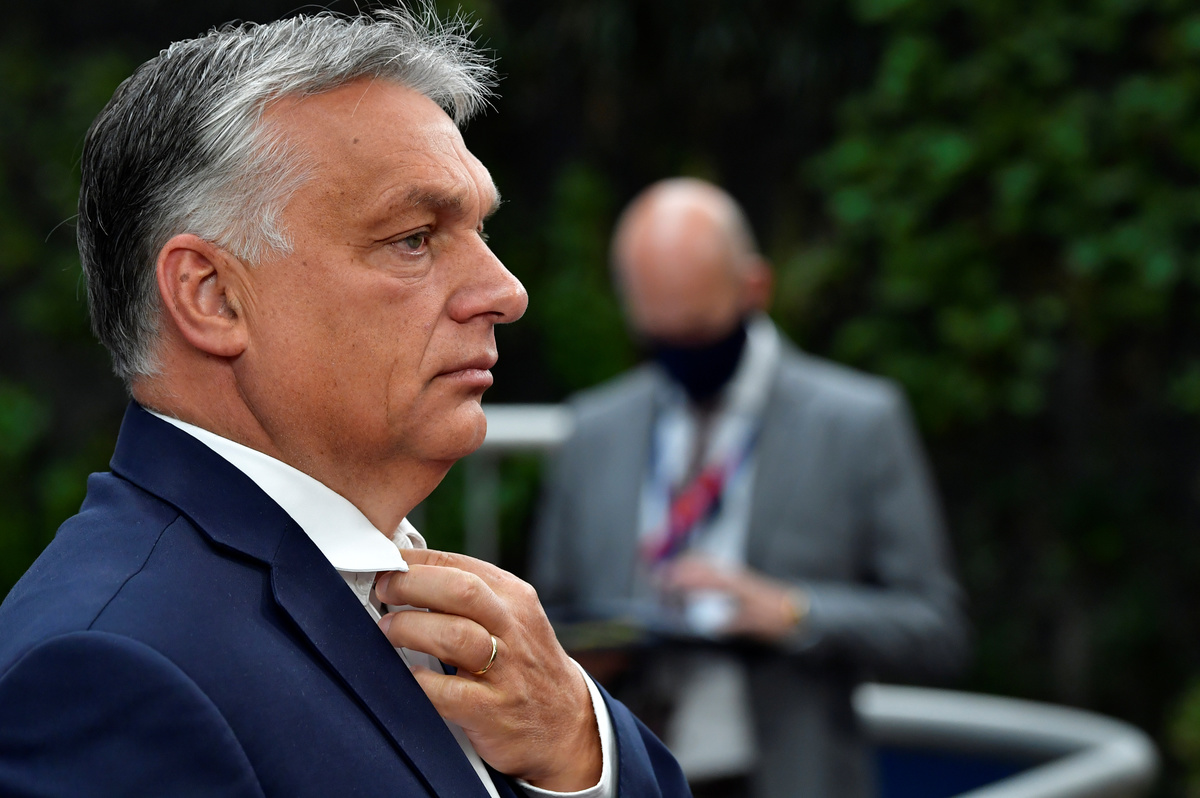
Hungary will not impose blanket school closures to curb the spread of the coronavirus but will aim to protect the most vulnerable elderly as the goal is to keep the economy going, Prime Minister Viktor Orban said on Friday.
Orban told state radio that a mandatory wearing of masks on public transport must be enforced and if necessary mask-wearing would be more widely imposed later. But he said the second wave of the pandemic required a different strategy than the first, which dealt a blow to the economy in March and April.
"The goal now is not for everyone to stay at home, and for the country to come to a standstill. The goal is to protect the ability of the country to keep operating," Orban said.
"We cannot afford the virus crippling the country again."
Orban also said the Visegrad states of the European Union - Hungary, Slovakia, the Czech Republic and Poland - would coordinate their measures to fight the pandemic. Premiers of the four states will meet in Poland later in the day.
Hungary has closed its borders to foreigners since Sept. 1 to curb a rise in coronavirus cases. Subsequently, Hungary decided to exempt tourists visiting from Visegrad states, provided they test negative for COVID-19 before arriving, prompting a rebuke from the European Commission.
"In the all-European crisis, we can create a Central European island, where, by applying special rules, the possibility of movement...remains," Orban said on Friday.
He also said the government would impose a mandatory price fixed by the authorities on COVID tests.
Hungary registered 476 new COVID-19 infections on Thursday, bringing the total number of cases to 10,191.
Gross domestic product data have shown a year-on-year contraction of 8.2%-13.6% in countries across central Europe. Hungary was the worst hit, with its second quarter GDP falling 13.6%.
(Reporting by Krisztina Than; Editing by Jacqueline Wong and Alex Richardson)
.jpg?w=600)