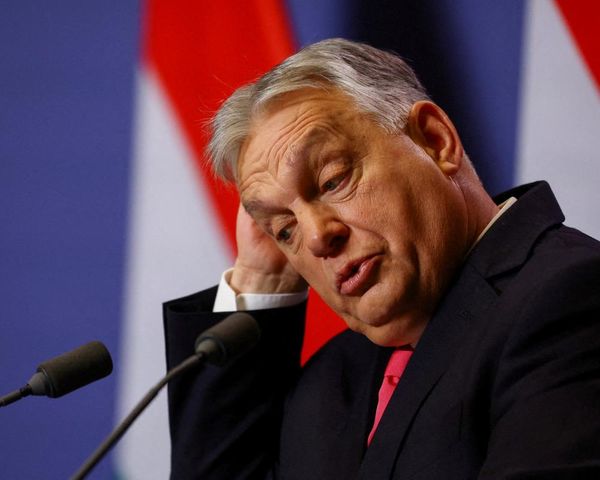

Hungary's Prime Minister Viktor Orban faced fresh criticism on Monday after two of his opposition lawmakers were forcibly ejected from the public broadcaster's offices. They had been attempting to read out a petition against the government and what they call its 'slave' labour law.
Two Hungarian opposition MPs broadcast footage of themselves being thrown out of the MTVA offices in Budapest on Sunday morning, after they asked for access to studios to read out a petition against the government and what they call its “slave” labour law.
MTVA security guards forcibly ejected independent MPs Akos Hadhazy and Bernadett Szel, sparking much criticism online.
Watch!#Hungary #Suppression Opposition MP Akos Hadhazy tried to access restricted news room area, which he had legal right to do so, to read a 5 point petition of the protesters; was denied access and got dragged away by armed security guards.📽️: pic.twitter.com/mMzWFIm0e5
via (@via67293137) 17 December 2018
Visibly shocked by their treatment, the two MPs immediately filed a complaint with police stationed in front of the building.
They said that as MPs they had a right to be on the premises of a public establishment and to airtime on the public broadcaster.
#Breaking"They are beating opposition MPs", says Bernadett Szél who was forced to leave MTV HQ in a violent way. Ákos Hadházy was also kicked out of the building.Happening in 2018. In the EU. #Budapest #Hungary
Balazs Csekö (@balazscseko) 17 December 2018
This followed a major demonstration on Sunday, when protesters threw smoke grenades at police who responded with tear gas in Budapest on Sunday as thousands of people rallied against a new “slave law” passed by the government of conservative Prime Minister Viktor Orban.
More than 15,000 people, according to local press reports, joined the demonstration the first rally since Orban returned to power in 2010 to bring together all opposition parties, from greens to the far right, under the same banner.
The protest was called by unions and opposition parties outraged at reforms that hike the annual overtime hours that employers can demand from 250 to 400 hours and allows payment to be delayed by up to three years.
The government says the changes are needed by employers short of manpower and will benefit those wanting to work extra hours.
(RFI with AFP)