.jpg?width=1200&auto=webp&trim=0%2C0%2C0%2C0)
A controversial Bible-infused curriculum, authorised for Texas public schools in 2024 despite significant pushback, is now set for extensive corrections after hundreds of errors were identified by teachers and education officials. The material had already been introduced into classrooms.
Known as the "Bluebonnet" textbook, the curriculum forms part of broader Republican-led initiatives across the US to integrate more religious instruction into classrooms. While optional for schools, its adoption comes with additional funding.
The curriculum was initially approved amidst concerns from religious scholars that its lessons disproportionately favoured Christianity over other faith traditions, and from advocacy groups who argued it inappropriately prioritised preaching over teaching.
The State Board of Education recently voted 8-6 to approve the necessary changes, which encompass rectifying factual inaccuracies, correcting punctuation, and replacing images due to licensing or copyright issues. The high volume of errors immediately sparked debate among board members.
Democrat Tiffany Clark voiced her dismay, stating: "My concern is that we have failed students this school year who have been utilising this product."
Republican board chair Aaron Kinsey questioned whether correcting "trivial" issues like copyright could truly mean students would fail state tests. Ms Clark retorted that even a simple typo, particularly in maths equations, could have significant consequences.
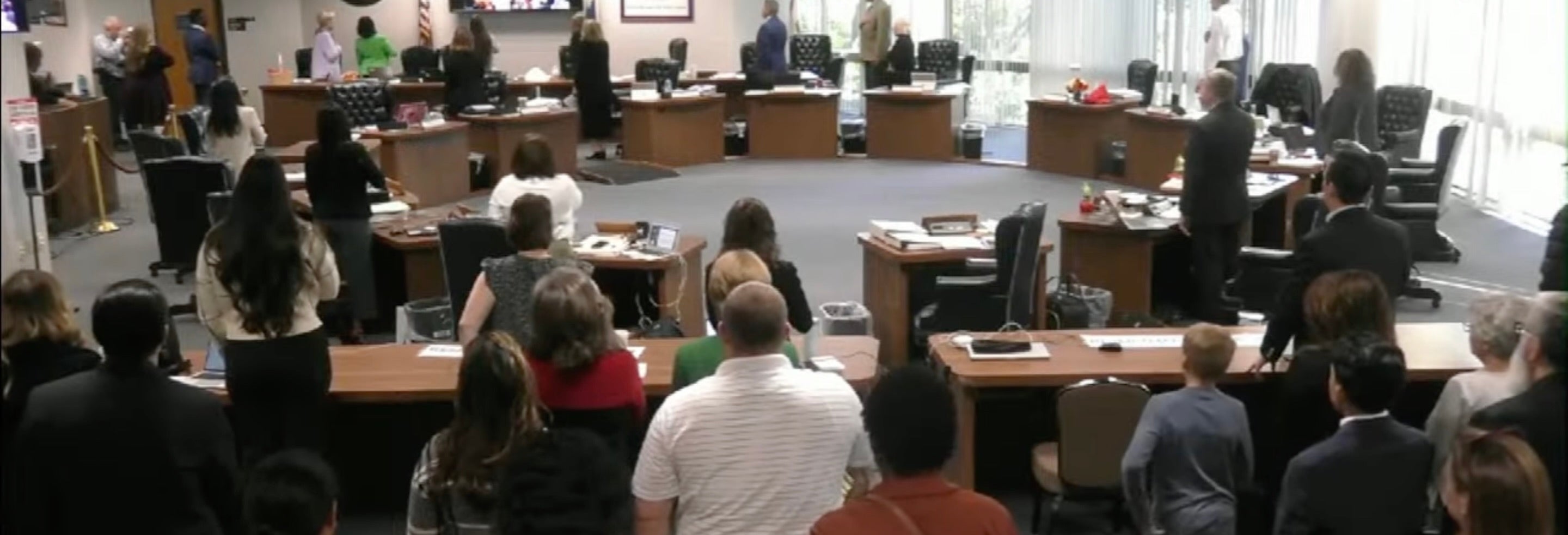
"If we have been teaching incorrectly this is going to have an impact," she warned. Fellow Republican board member Pam Little added: "I understand that some of these errors are minimal, some of them are for clarity and some of them are for accuracy. But still, an error is an error."
Colin Dempsey, an official from the Texas Education Agency (TEA) involved in the instructional material review, acknowledged the "high number of updates" required but maintained that factual errors were "minimal", though he did not provide a specific figure.
Board members suggested over 4,000 corrections were needed, yet Jake Kobersky, a TEA spokesperson, informed The Associated Press that approximately 1,900 changes were made, a figure that includes duplicate corrections across various documents.
Mr Kobersky asserted that most changes were "proactive in response to teacher feedback or grammatical fixes, not a result of factual errors."
The exact number of districts that adopted the curriculum for the current academic year, its first of availability, remains unclear.
However, by August, over 300 school districts and charter schools – roughly a quarter of Texas’s 1,207 districts – had indicated their intention to use it.
Following Wednesday’s approval, the TEA confirmed online curriculum materials would be updated within 30 days, but offered no timeline or cost estimate for printing and replacing physical learning resources.
Ms Little, despite voting for the changes, expressed concern that the board had "set a precedent for sloppy publishing."
In response, Mr Dempsey stated the agency has increased the number of reviewers from five to eight for future assessments.
"I’m hopeful that will improve our process, where these are caught in the summer and not later on," he concluded.
Anthropic refuses to bend to Pentagon on AI safeguards as dispute nears deadline
US military used laser to take down Border Protection drone, lawmakers say
Georgia's child welfare system remains shaken after projected $85.7 million budget shortfall
Bill Clinton expected to testify Friday about Jeffrey Epstein: Live Updates
Trump presents list of U.S. demands but Iran claims ‘significant progress’ in talks
Growing more complex by the day: How should journalists govern use of AI in their products?