Lab-made genomes are within reach. Are we okay with that?
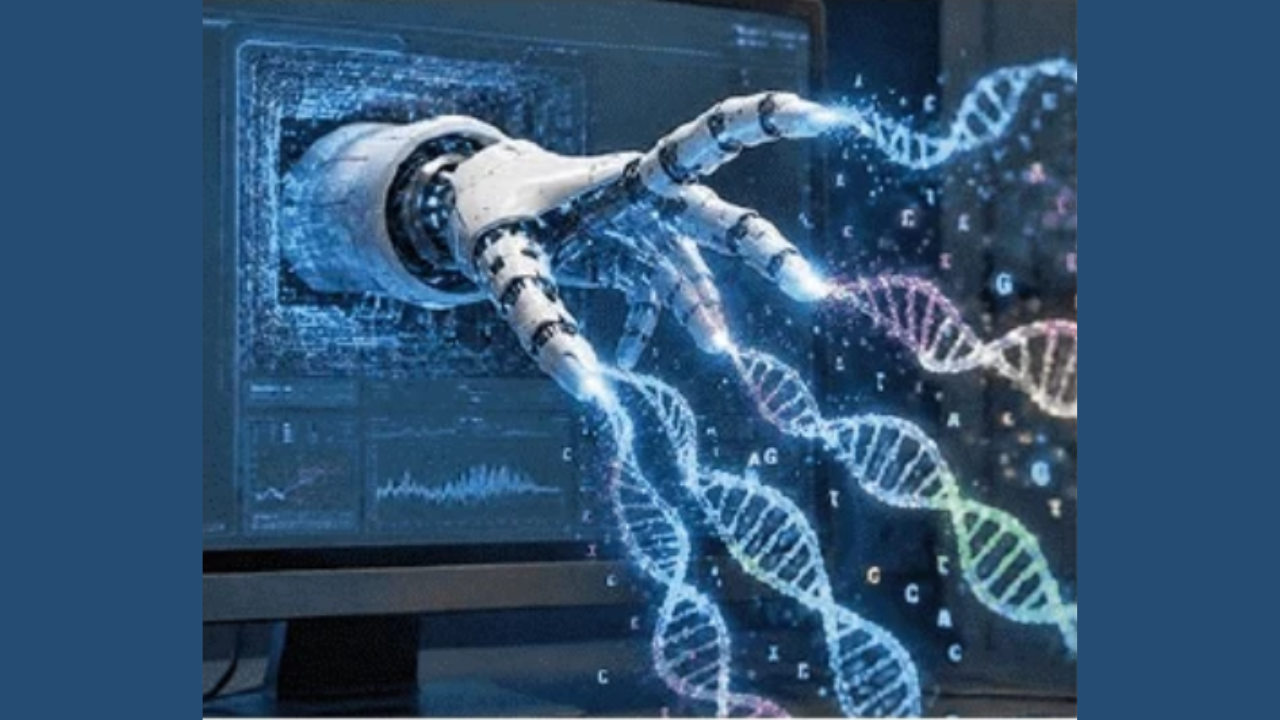
AI. Designing. Genomes. Is here. Artificial Biological Intelligence (ABI). Synthetic biology. Eventually, the inevitability of mass producing living things from computer-generated genomes. Fully synthetic species. Seriously?
Geneticist and author Adrian Woolfson says he wrote On the Future of Species to tell the world about scientific breakthroughs in the sometimes “terrifying”, always “intriguing”, world of scientists & AI tinkering with genomes. Scientists are at a point where a life can be authored. Still at the “scribbling” stage – bacteria, yeast, basics – Woolfson asserts the world must be made aware of what’s happening and collectively decide on the way ahead.
A totally synthetic genome has already been made at Stanford. An artificial living thing co-authored by natural intelligence (conceived and directed by humans) and artificial intelligence (made by computer, designed by AI called Evo). Woolfson says the future is a world where natural species and synthetic species born of ABI will co-exist. Evolution takes millions of years of blind, random, directionless processes, but synthetic genomes can be mass-produced.
Woolfson talks of biology becoming “infra”, the “new steel”. He talks of this infinite space where organisms can be built, like we build infra. Think organisms that can degrade plastics or redesign genomes of crops, store info in DNA, cure illness. ‘Life’ could be industrialised.
The book asks: Should we be doing this? This moment in biology is both “exhilarating but potentially destabilising and full of moral hazards”. There are significant dangers. But there’s no stopping the pursuit. Scientific imagination is what makes us human.

In an interview, Woolfson quoted Har Gobind Khorana, who had authored the first-ever synthesis of a human gene: “In years ahead, genes are going to be synthesised. Next steps would be to learn to insert them and delete them from genetic systems. When in the distant future, all this comes to pass, the temptation to change our biology will be very strong.” The book quotes Peter Medawar, “To deride the hope of progress is the ultimate fatuity, the last word in the poverty of spirit and meanness of mind.”
Woolfson says culture can be our compass – to define ethical and intellectual guardrails for such pursuit. To have firewalls, so natural species and synthetic species cannot intermingle. To define what it is to be human. All diseases will eventually be curable. But, the book asks, if you live till 400, are you “still human?” It’s key to defining what ‘human’ is.
“Is ageing a disease to be cured, or a defining feature of human nature?” Woolfson argues that “without robust political structures that respect and uphold … fundamental human rights, the essence of authentic human nature, as we know it, is at risk of being undermined – perhaps irreversibly.” He is clear, for instance: synthetic human genomes should never form the basis of “parentless reproduction”.
Humanity’s defined by diversity of thought, culture, societal structure. ABI will eventually reveal parts of the human genome that shape individual, social behaviour. Without guardrails, this can even lead to attempts “to eliminate the possibility for dissent and permanently obliterate free will”, which “may one day become a technologically feasible prospect.”
Woolfson sets out the foundational basis where conversations for guardrails can begin. “When the universal generative grammar of biology has been fully comprehended, possibilities for authorship will be limitless.” You need to be informed, he says. Begin with asking: how much say do we even have over directions for such science?