
A study published in the open-access journal PLOS ONE argues that our early ancestors probably created the illusion of moving pictures using figures engraved onto stones and the flickering light of a fire.
The study, by researchers at the Universities of York and Durham, looked at the collection of engraved stones, known as plaquettes, which are now held in the British Museum. They are likely to have been made using stone tools by Magdalenian people, an early hunter-gatherer culture dating from between 23,000 and 14,000 years ago.
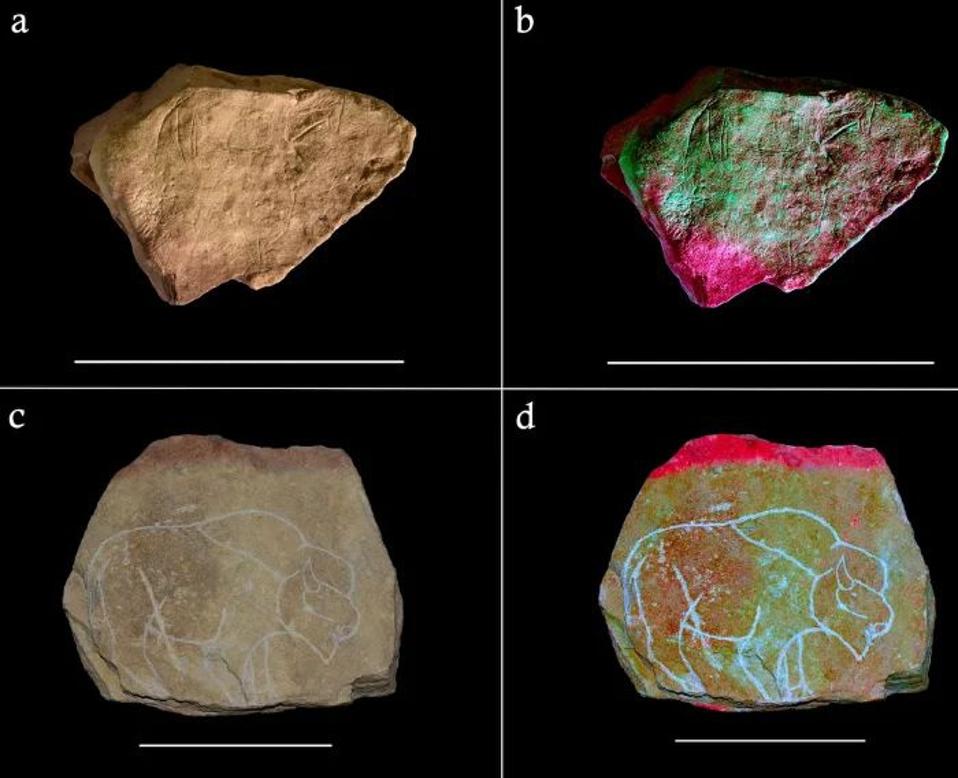
The researchers identified patterns of pink heat damage around the edges of some of the stones, providing evidence that they had been placed in close proximity to a fire.
Following their discovery, the researchers have experimented with replicating the stones themselves and used 3D models and virtual reality software to recreate the plaquettes as prehistoric artists would have seen them: under fireside light conditions and with the fresh white lines engravers would have made as they first cut into the rock thousands of years ago.
Lead author of the study, Dr. Andy Needham from the Department of Archaeology at the University of York and Co-Director of the York Experimental Archaeology Research Center said: "It has previously been assumed that the heat damage visible on some plaquettes was likely to have been caused by accident, but experiments with replica plaquettes showed the damage was more consistent with being purposefully positioned close to a fire.
"In the modern day, we might think of art as being created on a blank canvas in daylight or with a fixed light source; but we now know that people 15,000 years ago were creating art around a fire at night, with flickering shapes and shadows."
Observed under daylight, the carvings seem to show just a series of overlapping figures of - at the time - common animals, like ice-age bison and horses. But under the flickering light of a fire, the carved lines suddenly seem to move.
The Magdalenian era saw a flourishing of early art, from cave art and the decoration of tools and weapons to the engraving of stones and bones.
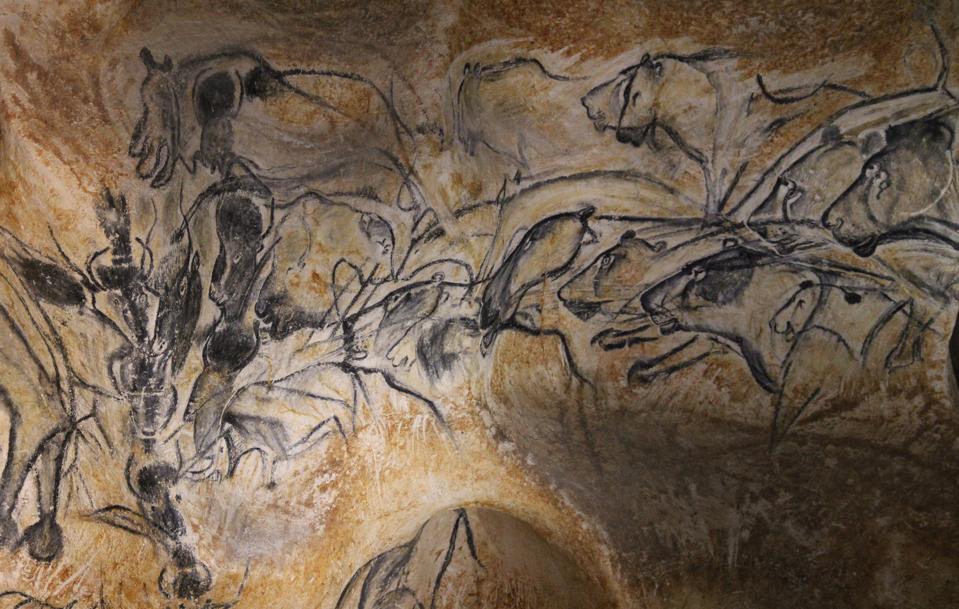
Some of the most impressive cave art shows a confusing array of overlapping figures. One possible interpretation is that the artist just wanted to depict an animal herd or pack. But like in the case of the rock art, maybe the early artist tried to capture the animals' motion, like in a series of still images.
Co-author of the study, PhD student Izzy Wisher from the Department of Archaeology at the University of Durham, said: “At a time when huge amounts of time and effort would have gone into finding food, water and shelter, it’s fascinating to think that people still found the time and capacity to create art. It shows how these activities have formed part of what makes us human for thousands of years and demonstrates the cognitive complexity of prehistoric people.”