
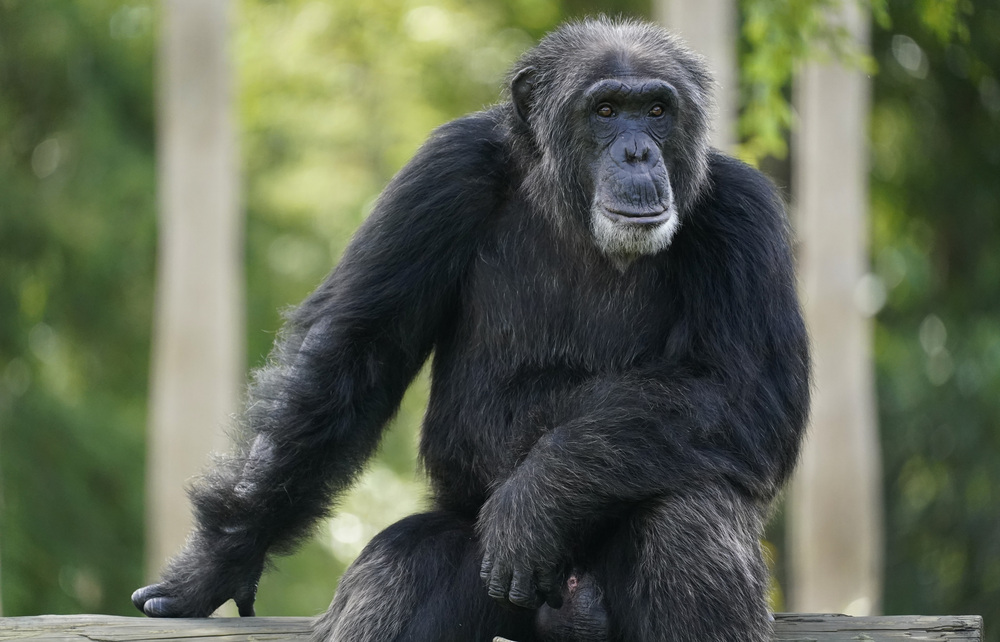
About half of humans can recognize gestures from apes even without context, according to a study published Tuesday.
Researchers at the University in St. Andrews in Scotland showed 5,656 participants videos of chimpanzees and bonobos making 10 of their most frequently used gestures, including raising their arms, which could signal grooming or hunger; shaking an object, which could signal sex; and touching, which could mean "climb on my back" or "give me that food."
About 2,700 people were shown only videos, while the rest were given additional context and information.
On average, 57.3% of people who were given context could correctly identify what the gestures meant, while 52.1% of those who were only shown videos identified the gestures, which was "significantly higher than expected," researchers said.
The only gesture participants largely interpreted incorrectly was the object shake, at a failure rate of over 50%.
"It remains unknown whether the great ape repertoire itself is biologically inherited, or whether apes — now including humans — share an underlying ability to produce and interpret naturally meaningful signals that are mutually understandable because of general intelligence and shared body plans and social goals, or the resemblance of gestures to the actions that they aim to elicit," the study said.