In 2015, the world pledged to "leave no one behind" as part of the 2030 Agenda for Sustainable Development. But millions of people are still being left behind in humanitarian crises.
In one analysis, fewer than half of the people estimated to be in need in 2017 were known to be reached by internationally supported humanitarian assistance.
As a result, there should be better and more equitable funding and action that is proportional to the rising needs -- for the world to address five fatal flaws that allow so many people to fall through the cracks.
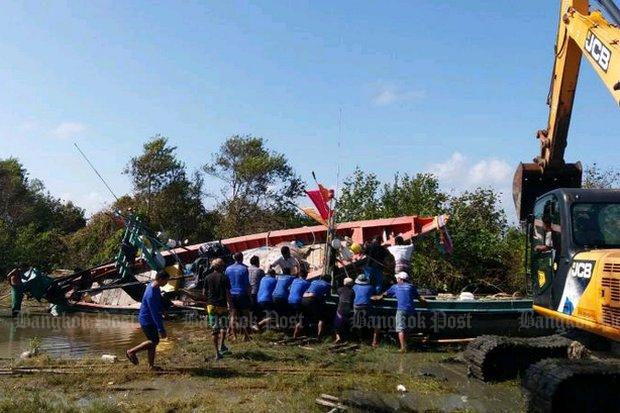
In the aftermath of a major emergency like recent Tropical Storm Pabuk, which affected the southern provinces of Thailand, the Thai Red Cross Society, together with its government counterparts, set about prioritising those most in need, such as the elderly, women and children, and then getting to work providing help. The aim is always that everyone who needs help receives it, and in a timely manner.
But worryingly, many people, and in some cases most people, in many parts of the world are not getting the help they need.
The World Disasters Report, recently published by the International Federation of Red Cross and Red Crescent Societies (IFRC), says that millions of people who need humanitarian assistance are being "left behind" in their moments of greatest need. Some countries face natural hazards but have limited capacity to cope.
How big is the problem? It's not exactly clear. The United Nations estimated that 137 million need humanitarian assistance every year. But UN-led humanitarian operations only targeted 97.9 million people in 2018. Some of those remaining are targeted by national governments, and domestic and civil society organisations. But it is reasonable to say that millions are targeted by no one.
This is only half the story. Even those who are prioritised to receive assistance do not always get the help they need. In several recent major emergencies in places like Afghanistan, Syria, South Sudan and Ukraine, fewer than half of the people estimated to be in need by the UN were actually known to be reached by internationally supported humanitarian assistance.
Why is this the case? Our report lists five factors that explain it.
The first and most obvious explanation is money. The gap between the funds needed by aid groups and the funds made available to them is growing every year. In 2017, only about 60% of the US$23.5 billion appealed for by UN-led humanitarian actors were received. Despite growing evidence of the effect of climate change on the increase severity of disasters, especially in the Asia-Pacific region, we are seeing a sharp drop in funding for humanitarian assistance. But money is only part of the issue. In fact, even if humanitarian budgets were fully funded, millions of people would still be left behind.
The second factor is access. In many situations, humanitarians physically cannot reach everyone in need. This could be for geographical or political reasons, or because of bureaucratic and legal bottlenecks. In Laos, following a dam collapse in July 2018, the devastation caused by the flash flood spread across a vast area of Attapeu Province, damaging roads and infrastructure along its path. This undoubtedly prevented humanitarian assistance from reaching the furthermost villages and rendered flood survivors even more vulnerable.
The third factor relates to information. In many settings, aid groups can't reach people because they don't know they exist. For example, poor or non-existent mapping, particularly in remote areas and fast-growing urban slums, can render entire communities invisible. This was the case for 700,000 people who fled violence in Rakhine State in Myanmar for the relative safety of sprawling un-mapped camps in Bangladesh.
The fourth factor is more about how humanitarian organisations work. Often, aid groups unintentionally exclude groups of people because the assistance we offer can't be accessed by people with different types of disabilities, or by people from marginalised groups.
The final factor outlined in the report relates to people considered outside of the scope of humanitarian work. These are people who are not affected by conflict, disasters or health emergencies, but who nevertheless live in crisis and do not receive help from anyone. This includes people affected by urban violence in their home countries and the many irregular migrants facing death and deprivation on their journeys.
So what is the answer? There is no silver bullet, and the IFRC report includes a number of recommendations ranging from improving how data is collected to encourage governments to prioritise and incentivise support to the people considered to be "hardest to reach".
However, I would like to focus on one recommendation above all: the need to invest more time, more resources and more trust in local humanitarian organisations.
Local humanitarian groups, including National Red Cross and Red Crescent Societies in the Asia Pacific Region, are uniquely placed to overcome the limitations outlined in our report. Their permanent presence means they can respond much more quickly than their international counterparts and need less money to do so.
They are also already present in many areas that international groups find inaccessible. They know who the most vulnerable people are, and how to reach them. They are present before, during and after crises.
However, more success can be achieved and more challenges overcome, if there are synergies between the Red Cross Red Crescent, international organisations, national governments and civil societies.
Asia Pacific is frequently affected by disasters while facing challenges including rapid urbanisation, health risks, rising inequalities, vulnerable migrants, gender discrimination and violence.
The emergency work in the humanitarian crisis needs to link to our joint sustainable development agenda in order to strengthen a resilient and inclusive peace. Together we can make sure that no one is being left behind.
Xavier Castellanos is Asia Pacific Regional Director, International Federation of Red Cross and Red Crescent Societies.