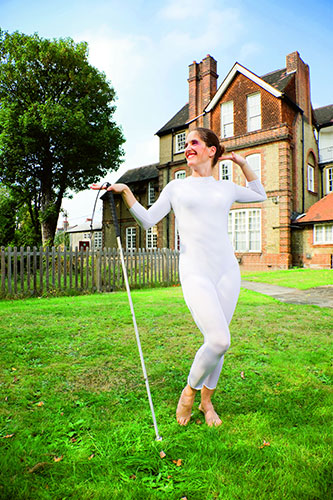
I am a visually impaired member of Cirque Nova – a not-for-profit contemporary circus and street arts organisation. The aim of the group is to promote personal and social development and enhance the lives of disadvantaged and disabled people through the culture and spirit of circus arts. I have performed as an acrobat all over London. Sometimes people don’t think that those without sight are able to do the same things as those with sight. Cirque Nova proves that this is not the case. I chose a white cane as my object as it gives me the freedom to move and a sense of independence. It is an essential part of my everyday life.
Photograph: Nadia Bettega
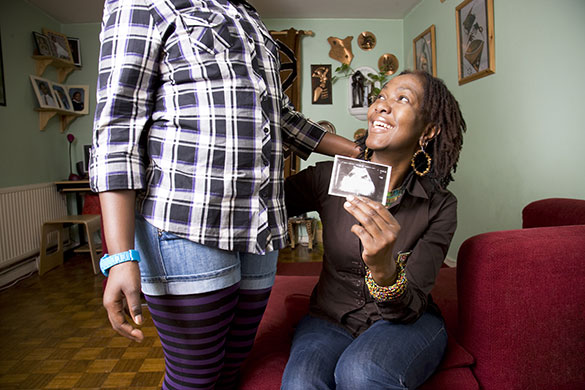
I work for an organisation called Positively Women. The most rewarding thing for me is seeing HIV positive women move from isolation to involvement, enabling them to have a voice, and to influence policies that affect our lives. I speak out about issues affecting these women to challenge the stereotypes that exist about people who are HIV positive. We know our rights, we get the information and we claim our rights. We cannot just sit around and wait for them to be given to us.
The object I chose was my daughter's scan. This reflects my interest in the sexual health and reproductive rights of women living with HIV. I strongly believe that we have a right to choose whether or not to have relationships; whether or not to have children. I hope I inspire other people by being visible.
Photograph: Nadia Bettega
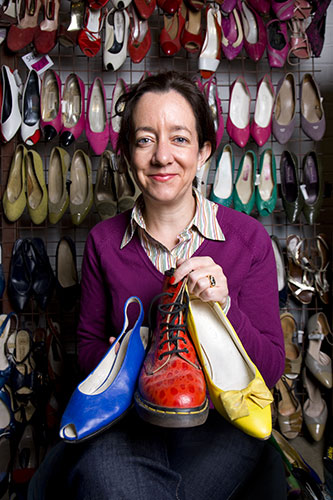
I work with deprived communities in Haringey, north London. HAVCO helps people to help themselves, it aims to empower people to face challenges, and help them to lead fulfilled and happy lives.
I chose a handful of shoes. Something we can all do is to care more. Stepping into someone else's shoes represents caring. It is about making an effort to move out of our own space and into the world. We cannot all be campaigners, or writers, or politicians, or community workers but we can all care, we can all try to understand more. We should challenge ourselves to make the days of others better.
Photograph: Nadia Bettega
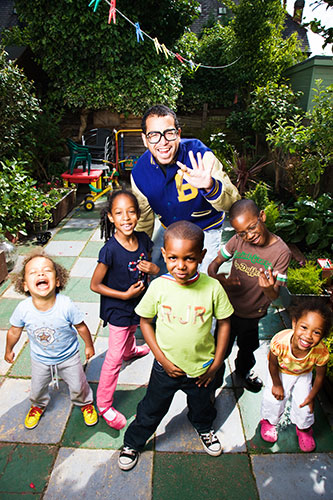
I am an investigator in the Guantanamo team for Reprieve – we represent over 30 prisoners held in Guantanamo.
I am passionate about civil liberties. Everyone should have the right to legal representation. It stems from being inspired by people who give a voice to the voiceless. We are entering a period where certain classes of people or races of people are becoming less important than others. Their liberties and freedoms are seen as less important. That is a dangerous thing.
For me some of the biggest rewards have been really small things. A prisoner who is released who chooses to call me first and say thank you. It’s immeasurable, someone going home, someone going free, someone going to be with his or her family.
I chose a key, because it represents freedom. The key symbolises opening a door, because that is what I am trying to do with my work. I am trying to be that key that opens a door for someone to come out.
Photograph: Nadia Bettega
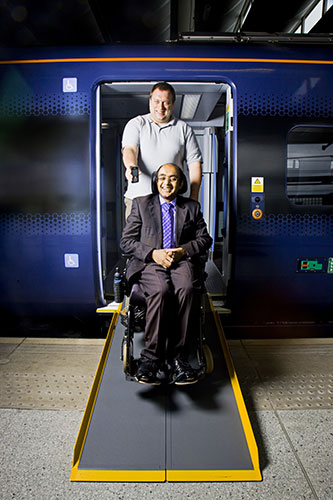
As a disabled person, I face barriers every day. I could get on easily with my life until after university. Going into the big wide world of having to source a job, moving out of my family home, and developing my own future I started experiencing difficulties that prevented me from doing things.
I would say the most important human right is that of equality.
I chose two objects. The main object was a person, my personal assistant Simon who gets rid of the barriers for me and helps me to get on with my life. The second object was my Blackberry, which represents the need for me to communicate effectively.
Photograph: Nadia Bettega
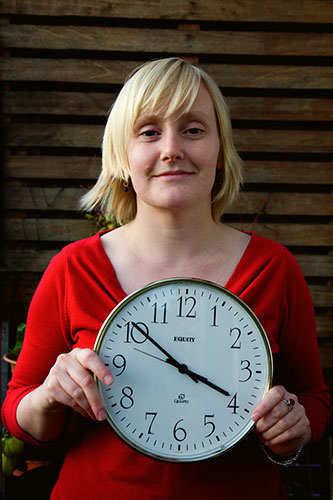
I work with an organisation called Bishop Creighton House.
We work with isolated older people and often come across examples of poor care delivered to older people in hospital, primary care and residential settings. I am frustrated by lack of action when this poor care is highlighted, and I'm really interested in developing a rights based approach to our work with older people – creating more awareness amongst the public of this, and empowering those older people themselves to demand better care, with the support of the community.
The national government and local authorities don't put aside enough money for good quality home care for older people who need personal or domestic care. I feel strongly that care work is missing kindness and time for people. We all have the right to be treated with kindness and given time by others. My object is a clock to represent having time for others.
Photograph: Nadia Bettega
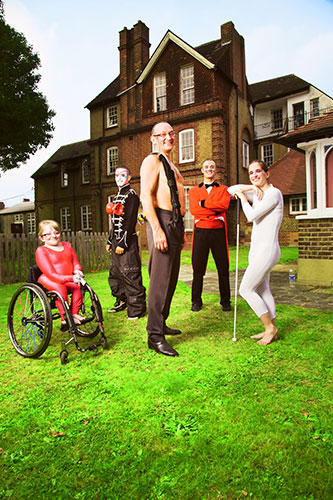
I was infected with HIV aged 22. Once this became public knowledge, it stopped me from getting employment so I decided to create my own job. Cirque Nova is a contemporary circus that trains people with disabilities and homeless youths in circus skills to then try and get them into employment.
The most important human right is the right to express yourself without fear of retribution. I express myself is through performing arts.
The item I chose is a work tool, the neck strap I hang on the trapeze from.
The biggest reward for me is having a disabled person say they hate performing, and then after their first show ask to be allowed to do it again. And I get great pleasure when one of my pupils surpasses a fear through our training.
Photograph: Nadia Bettega
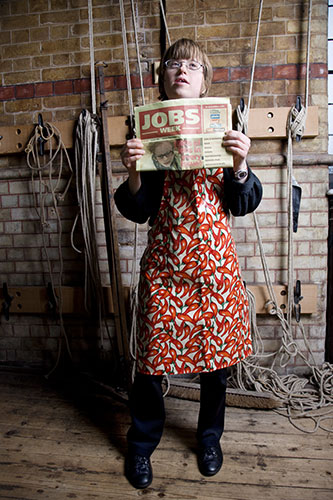
At the moment I am doing work experience at a local café. I chose an apron as my object together with the jobs section of a newspaper. I chose this because I would like the opportunity to work, to earn my own living, to support myself. It represents the right to employment. In the past, employment opportunities for people with learning disabilities have been limited. There have been misunderstandings about the abilities and skills of people with learning disabilities, and lack of support for the learning disabled in setting out and following an employment route.
At the moment, less than 10% of people with learning disabilities are in paid employment.
There have been efforts to promote employment opportunities and increase support for people with learning disabilities who are seeking employment. I hope this will mean that I too can have a job in the future.
Photograph: Nadia Bettega
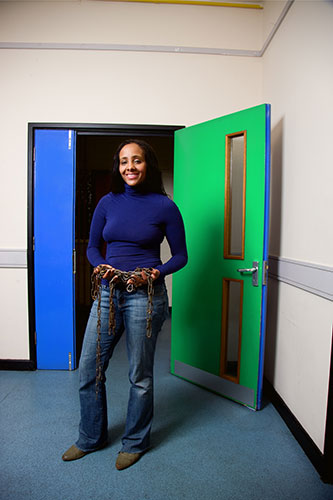
My name is Mhret. My sister and I left Eritrea aged 11 and 13 because of the bombing. My parents could not come with us. In the beginning was terrible. I was put in a detention centre that was like being in a prison and it was very difficult not having my family around me. The UK has one of the worst records in Europe for detaining children. The effect that this has on people is very bad, psychologically and emotionally.
Now I go classes to the Baytree Centre in Brixton every week and have made lots friends there from all over the world. It feels good to go there and I feel free.
I chose to hold a handful of chains to represent the right to freedom and as a symbol of support for those who are still inside.
Photograph: Nadia Bettega
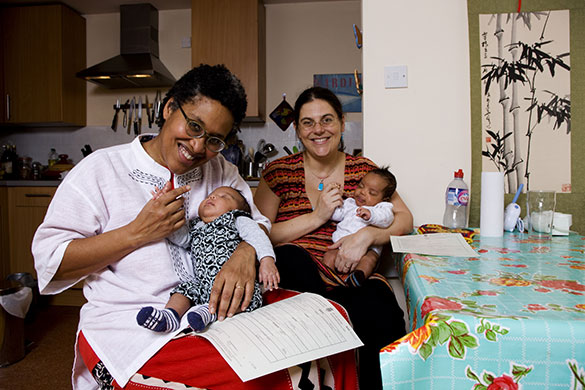
My name is Margarita, I am from Puerto Rico. I am a minister of religion and human rights activist. My name is Frida Kruijt, I was born in the Netherlands and work for Amnesty International. We chose our children’s birth certificates to represent the right to establish a family. Oshadi and Siboney are two of the first children in the UK to be issued birth certificates which fully recognise both their female parents. A simple and common thing for a parent like registering your child’s birth, is a right that we as women in a same sex relationship only gained in 2009. We are very aware that our rights are fragile and need constant advocacy. Human rights in general are not set in stone, they are hard to be gained and easily lost. Gay rights are usually last to be gained and first to be lost. Affirming what we are, a family, may be a private matter but especially in our case it is a way to raise awareness about our rights.
Photograph: Nadia Bettega
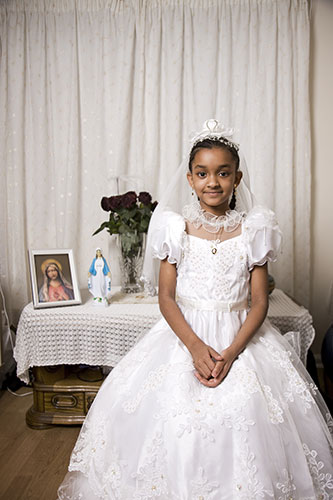
My name is Refkha. I am 9 and I chose to be photographed in my communion dress. I chose this to represent the right to religious freedom. I think that people of all religions and traditions should be able to practice them, even though their beliefs and practices may seem strange to others. In Sudan, where my parents are from, many people who came from Christian and traditional homes were made into slaves and tortured due to their religious beliefs and practices.
I think people should respect the rights of persons of all faiths to coexist in peace together without oppression or discrimination. People should have the right to follow God in the way that they want to.
Photograph: Nadia Bettega
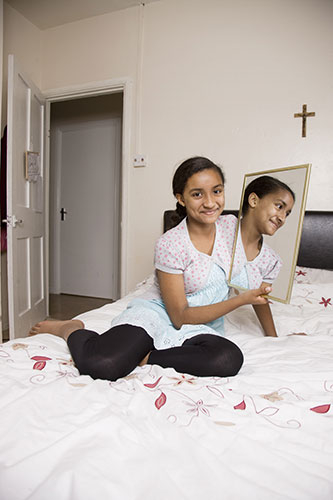
I am 11. I live at home with my mum and dad, and we are eight children.
I have a British passport. I was born in England but my mum and dad came here many years ago from Sudan. They had to leave their country. Their family and friends came here as refugees because at the time there was a lot of fighting between groups of people – they treated them differently depending on what religion they had and there were also some government problems. I have never been to Sudan. Maybe one day I can go there if things get better.
My object is a mirror and I chose that because I believe that everyone should have the right to be themselves. I’m not sure what I want to do with my life but I think something creative, something to do with arts. Maybe a writer, or an architect.
Photograph: Nadia Bettega
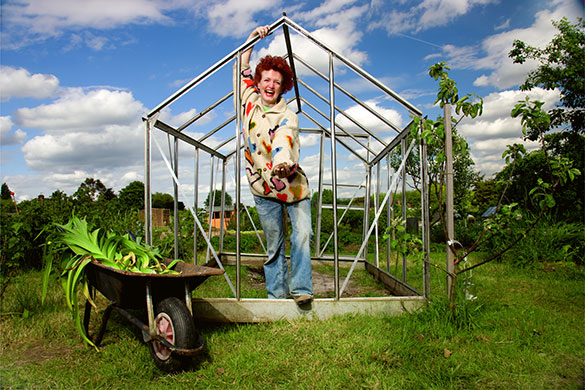
I work for an organisation called Housing Justice, we represent homeless people and those with inadequate housing. My mum told me that I should never make anybody else’s mistakes for them, that I should go and make my own. I have always thought that it is important to stand up for what you believe in and do something about it, whatever the cost. I want better for my country. I love England and I don’t like the journey that it’s making at the moment. We have lost touch with the most vulnerable people, and they often have the answers to our community. I chose my allotment and a handful of earth to represent human rights. We were all made of soil and we will all return to dust and I think it matters what happens between those two ends of time. When the time comes and you return to dust, did you really try and change things for people? Or did you just let things pass you by? When I become dust I would like it to have left the world a better place.
Photograph: Nadia Bettega
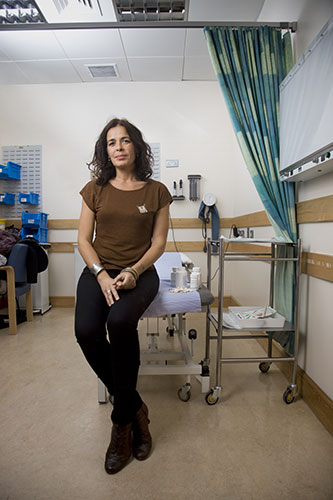
I was first diagnosed with HIV in 1997 in Rome. I was shocked by the result.
I wanted to do something meaningful with my life. I came into contact with Positively Women who offered me psychological and social support and many of the services I had not been offered at the time of my test. I now work for the organisation as a community development manager. Women are often still not taken seriously and there is not enough support out there. Stigma, discrimination and gender roles make women more vulnerable. I chose to be photographed with my medication because I believe everyone has the right to health and a sense of well-being. Not everyone who is HIV positive has access to ARV treatment. We are all human and it is important that we know our rights, demand them, and be a collective voice and feel connected to a community.
Photograph: Nadia Bettaga
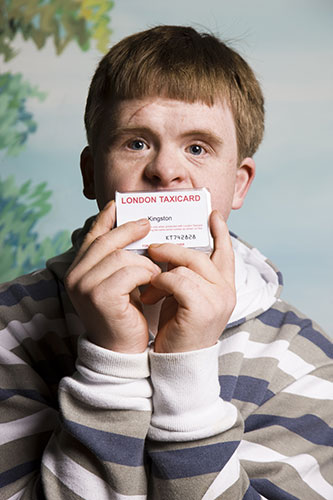
I live in Tolworth. Once a month I go to the Down 2 Earth club in Teddington. I love going there because I have a lot of friends in the group. I think it is an important human right to be able to travel around independently. I have a Freedom Pass, so that I can travel on buses and trains. I also have a taxi card which allows me to travel in taxis on my own. I am holding my taxi card in my photo because it is very important for me. It allows me to travel on my own and to be more independent.
Being able to communicate is important for me. I think we should all be aware that there are great differences between people, but we should try to treat everybody equally.
Photograph: Nadia Bettega
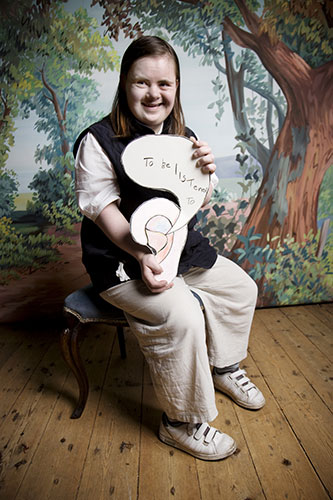
My name is Teresa but my family and friends call me Tessy. I am 28 and live at home with my auntie. We go to the DSA meetings together and then stay at my home afterwards and have tea and play games.
I love arts, crafts and music. I love poetry and train at Poetry in Wood near Whitechapel, and I go to a drama class near home as well. Last year we did a production of Romeo and Juliet. I do flower arrangement at Southgate college. I don't read or write very much, but my aunt reads with me every evening. I love books about birds and animals, how to grow plants, and stories about other people.
I chose a big ear as my symbol because I and other people with disabilities have the right to be listened to when they make decisions concerning their lives and the way they want to live.
Photograph: Nadia Bettega