LOS ANGELES _ Complacency, bureaucracy and an inadequate safety culture led to the failure last year of the Oroville Dam spillway, according to an independent investigation report released Friday.
The findings point to human error by a number of organizations, but say that the dam's owner, the California Department of Water Resources, was "somewhat overconfident and complacent regarding the integrity of its civil infrastructure."
It describes the department as an "insular organization which inhibited accessing industry knowledge and developing needed technical expertise."
Cost pressures on the department led to "strained internal relationships" that resulted in less priority on safety than was required, it said.
The report found that periodic inspections of the dam were insufficient to identify the original design flaws and the subsequent deterioration of the spillway's integrity.
The independent forensic team, organized by the Association of State Dam Safety Officials and led by dam safety expert John France, found that no single person or organization was fully at fault for the failure. It put some of the responsibility on the Federal Energy Regulatory Commission, which oversees the dam's operation.
Not long after the spillway was completed in the 1960s, cracks began developing that indicated problems, but the Department of Water Resources soon considered those to be normal.
A preliminary report by the team found the technical factors that caused the damage involved water that penetrated through cracks and joints that lifted entire sections of the spillway and eroded the underlying soft rock. Thin concrete, weak anchors into the underlying unstable rock and corroded steel re-enforcement played a role, as well.
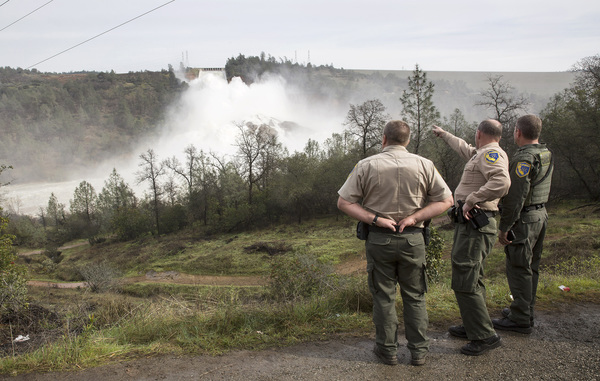
The spillway began disintegrating on Feb. 7, when a deluge in the Feather River watershed filled the dam and forced operators to open the spillway gates.
When 55,000 cubic feet of water per second went crashing down the ramp, the concrete structure began to fall apart and allowed water to scour massive craters in the underlying soft rock.
The flow was a small fraction of the 300,000 cubic feet per second that the spillway was designed to handle.
Once damage to the spillway began, dam operators closed the gates and allowed the reservoir to rise up to a concrete lip, known as a weir, on an emergency spillway. It was the first time in the dam's history that the emergency spillway was used and it quickly eroded the bare hillside under the weir.
It led to an evacuation order for 100,000 residents of Oroville and other nearby communities out of concern that the weir could fail and send a 30-foot wall of water down the Feather River.
"The decisions were made with the best of intentions, but against the advice of civil engineering and geological personnel, who by then had recognized the poor bedrock conditions and the potential for unsatisfactory performance of the previously untested emergency spillway," the 584-page report found.
The operators later reopened the main spillway, causing more extensive damage.
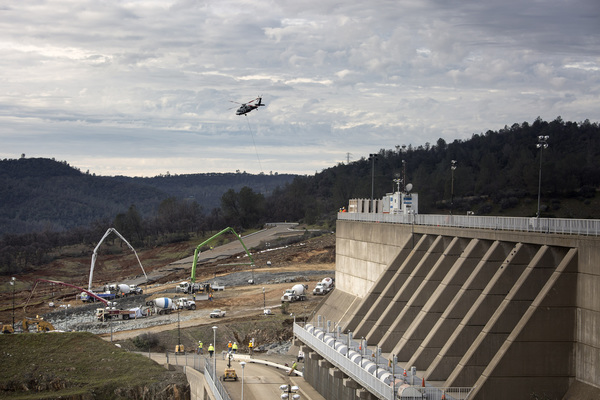
The Department of Water Resources is rebuilding the spillway at a cost of $500 million. Major parts of the repair were completed by Nov. 1 and additional sections of the spillway are to be rebuilt this summer.