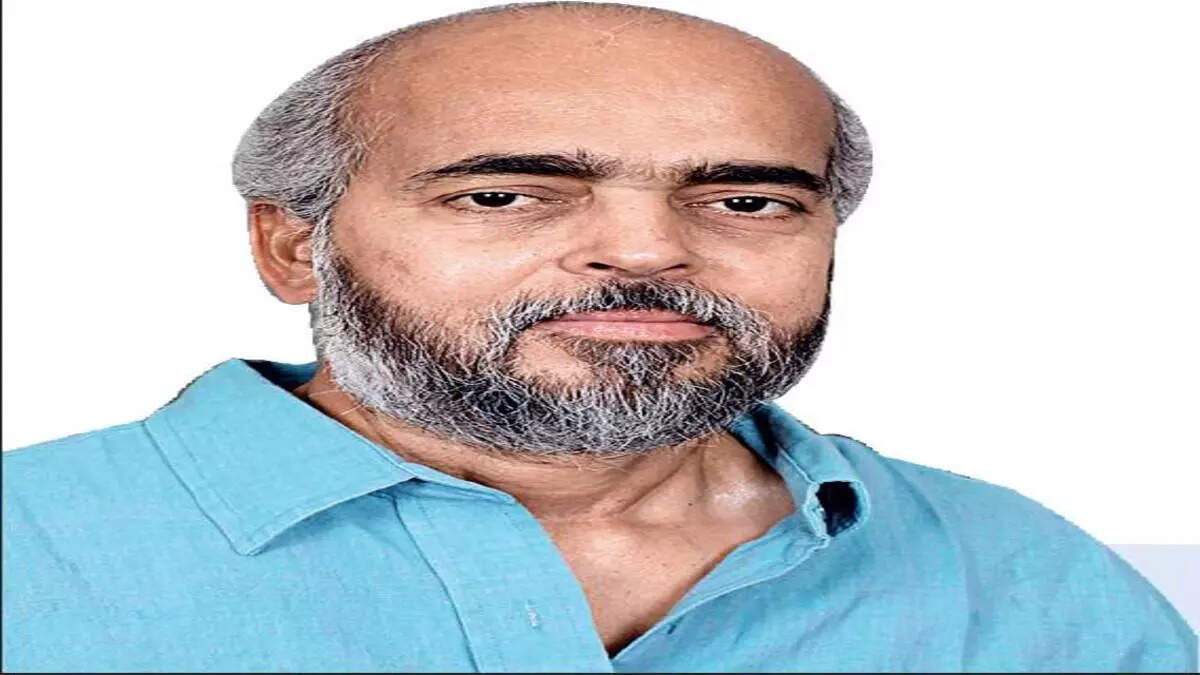
Dr Krishna AchutaRao, one of the lead authors of the recently-released Intergovernmental Panel on Climate Change (IPCC) Report 2021 and head of the Centre for Atmospheric Sciences at IIT-Delhi speaks to U Sudhakar Reddy on the impact of climate change on India, how the country’s agriculture sector was at risk if future projections of monsoon materialise and the danger of urban flooding looming over many cities. Excerpts:
Q: Would you please explain climate change projections and impact on India and South India?
Rao: The projections reported in this report cover the South Asian region as a whole and generally point to more temperature and rainfall extremes occurring already, and more will occur in future as the globe warms.
Q: What is your contribution to the IPCC report?
Rao: I was a lead author on Chapter 3, which deals with quantifying the human contribution to climate change. I was also a contributing author on the Summary for Policymakers.
Q: What are the projected carbon emissions for India and the biggest contributors here?
Rao: The projected carbon emissions are calculated as “scenarios”. Emissions depend on various socio-economic and technological factors as well as policy interventions. So what will happen in the future is not possible to predict, but possible pathways are used to look at future climate change. Some of the details of future projections are not done at country level — so India’s contribution in the future is entirely dependent on what we do in the future. Whether we continue to use coal and other fossil fuels (for energy, transport) will decide our future emissions. In addition to these, we have sizeable emissions from agriculture which also need to be addressed.
Q: What should be done at the national and state levels to mitigate climate change impact?
Rao: We clearly have to focus on reducing emissions by reducing use of fossil fuels. With the recent increases in renewable energy production, we have a great opportunity to scale up our low or zero carbon energy to meet more of our needs. We also have to replace high emission parts of industrial processes with lower emission ones. In addition to reducing emissions, we also need to plan on how to adapt to the changes that are already occurring and will continue to happen. These will be important in order to reduce the worst effects of climate change on our communities.
Q: Your earlier research papers from IIT Delhi have projected several impacts and dangers to Earth due to increase in temperature.
Rao: Much of my work has focused on how climate changes due to natural and human factors. The future is certainly going to be impacted more and more by human factors.
Q: How would you see India’s agriculture sector being impacted? Will urban flooding increase?
Rao: India’s agriculture is certainly at risk if future projections of monsoon are to materialise. If monsoon rainfall goes up and at the same time becomes more erratic (more excess and deficit seasons), farmers’ dependence on it is bound to become problematic. The added issue is that as the climate warms, more water evaporates from land and from plants’ transpiration, requiring more irrigation to compensate for water lost from the soil. This will put additional pressure on groundwater systems. Urban and other flooding will certainly become more probable as rainfall amounts increase and the chances of heavy rainfall events are projected to increase with additional warming.