Get all your news in one place.
100’s of premium titles.
One app.
Start reading
Reuters
Reuters
Business

Huge statue of Marx, a gift from China, erected at his German birthplace

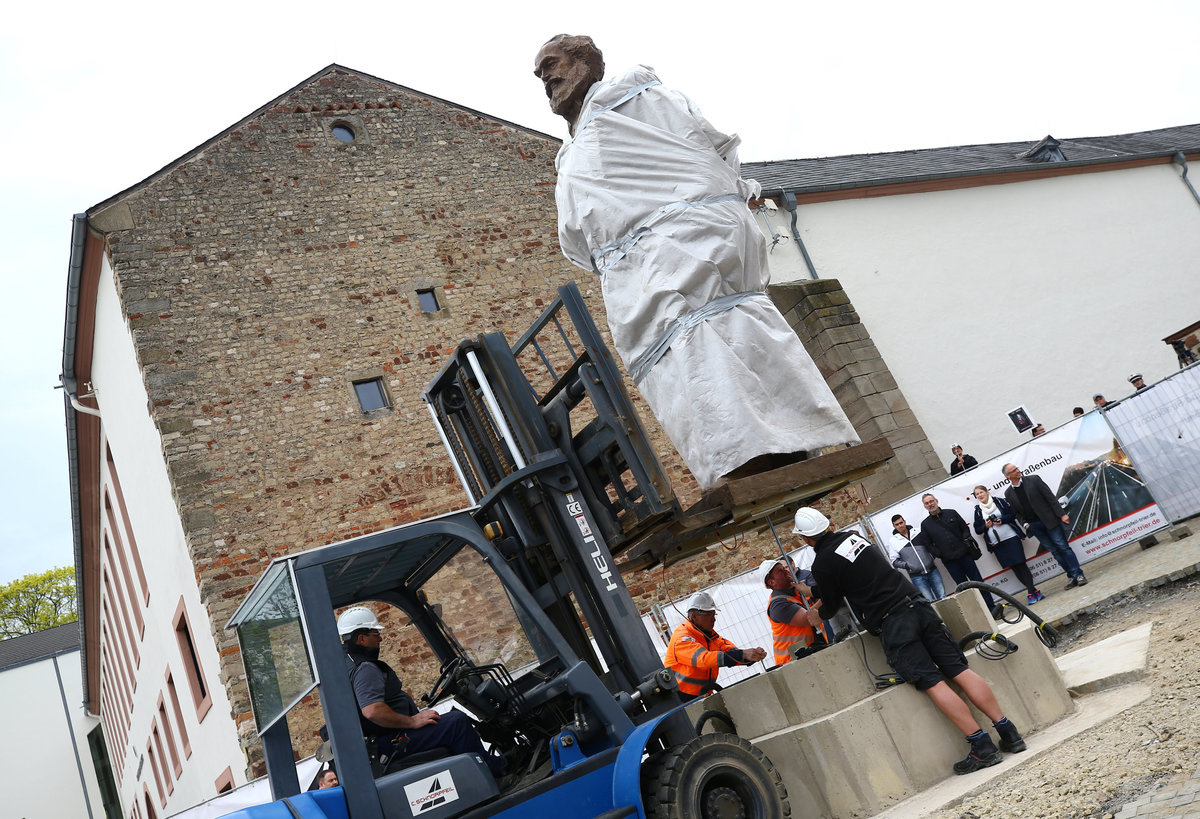
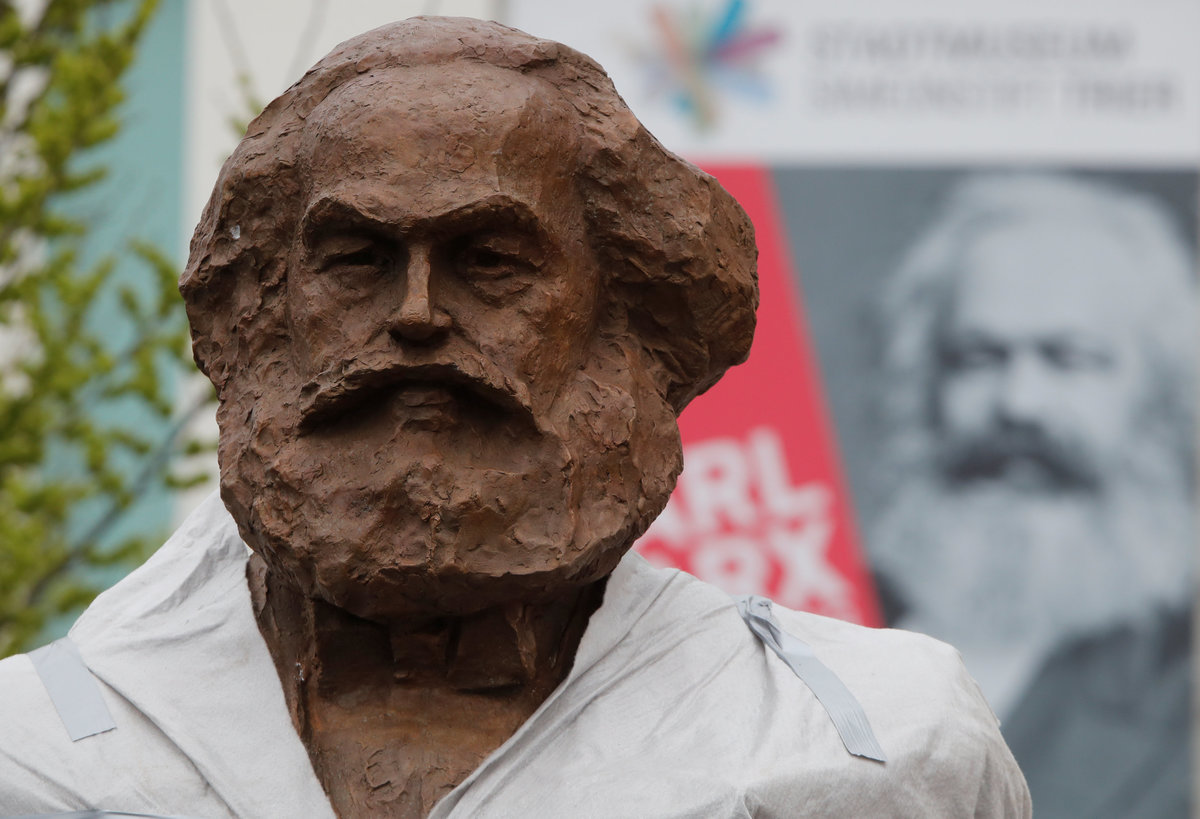
Workers set up a bronze sculpture of Karl Marx in his hometown Trier, Germany, April 13, 2018. REUTERS/Wolfgang Rattay

TRIER, Germany (Reuters) - A massive statue of the founding father of communism was erected in his birthplace on Friday, after the southern German city of Trier decided to accept the bronze sculpture from China despite concerns over the country's human rights record.

    The three-tonne Karl Marx statue was erected ahead of the 200th birthday of the influential thinker and philosopher on May 5, when it will be unveiled.

    "Karl Marx is Trier's most famous son," city official Andreas Ludwig told Reuters on Friday.
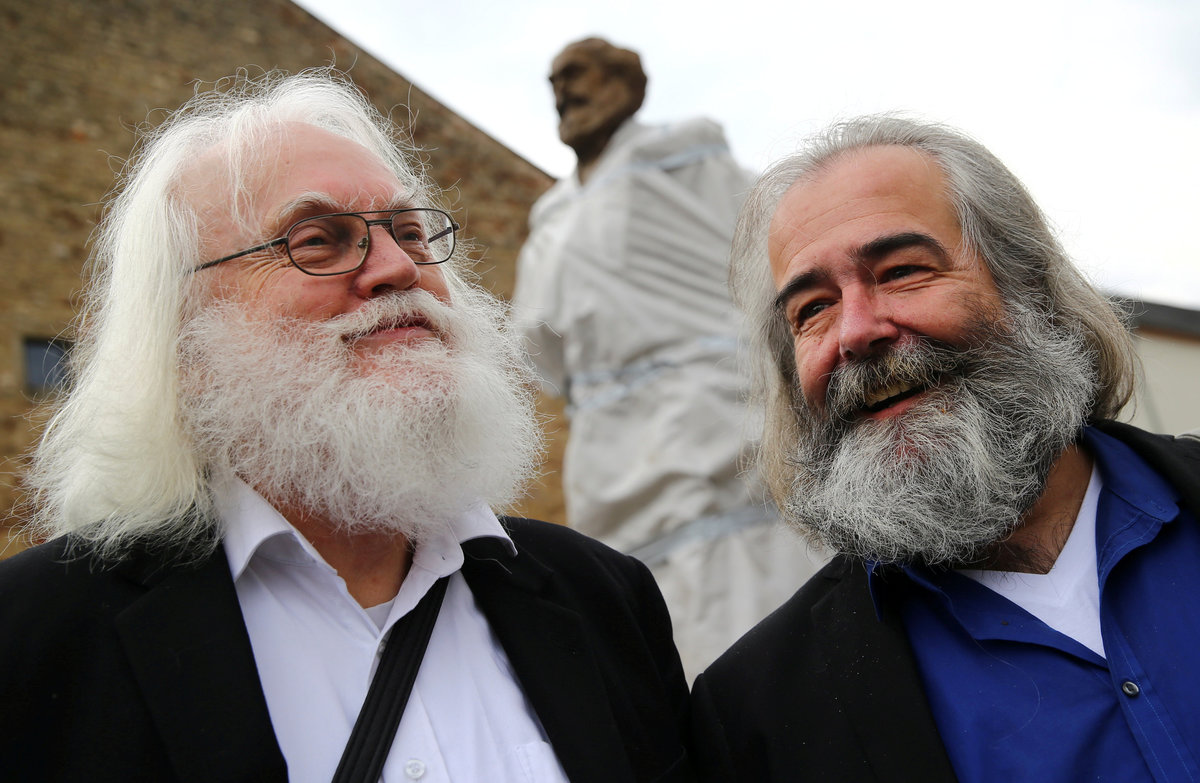
Michael Thielen and Henning Laufer, two Karl Marx look-alike men, pose in front of a 4.4 metres (14 feet) high bronze statue of Marx, created by Chinese artist Wu Weishan and donated by China to the hometown of the German philosopher in Trier, Germany April 13, 2018. REUTERS/Wolfgang Rattay

    It depicts a thoughtful but towering Marx, who stands tall at over 5 m (16.4 ft) including the sculpture's base, holding a book in one hand. The 19th century thinker spent the first 17 years of his life in Trier near the Luxembourg border.

    The city council voted in favour of accepting the gift from the Chinese government by 42 members to seven in March 2017, but the statue has divided opinion.

     Some see it as final recognition of Trier's most famous resident.
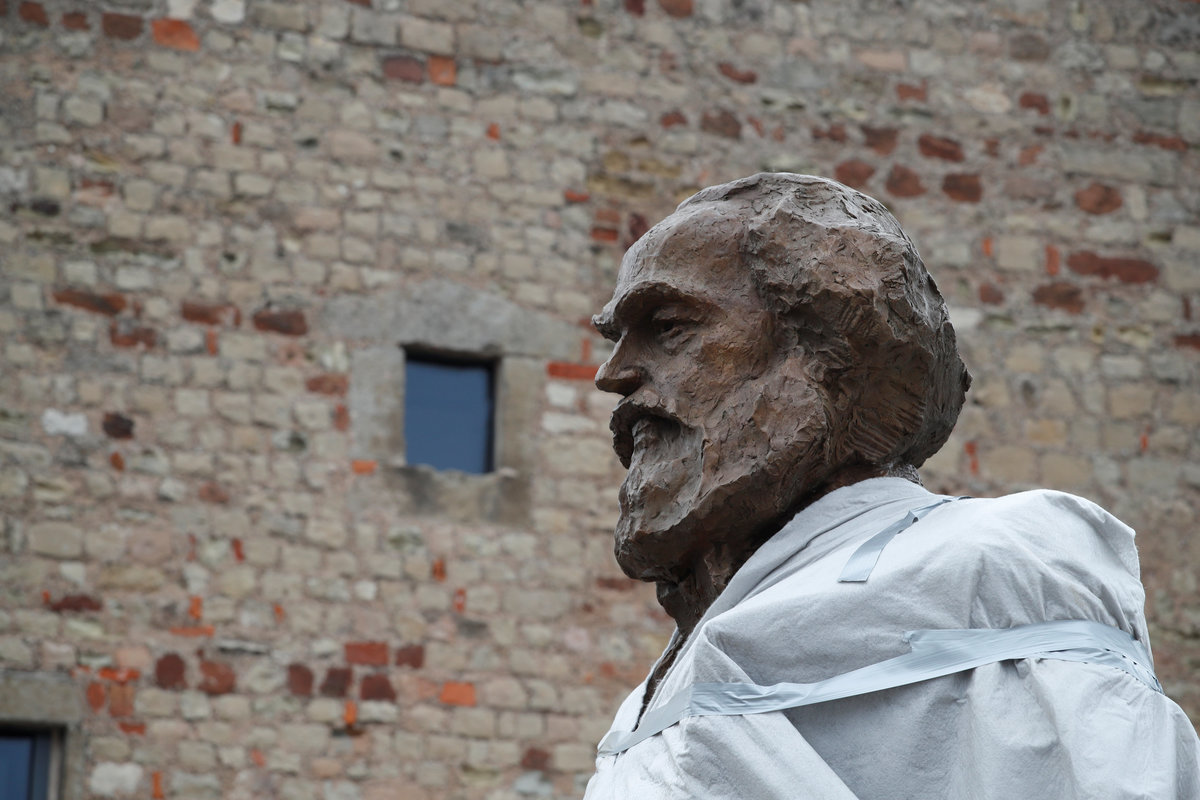
The 4.4 metres (14 feet) high bronze statue of Karl Marx, created by Chinese artist Wu Weishan and donated by China to the hometown of the German philosopher, is seen after it was erected in Trier, Germany April 13, 2018. REUTERS/Wolfgang Rattay

    "People have predominantly welcomed the gift," said Michael Thielen, who is one of two Karl Marx impersonators at the opening.

    Others worry that accepting the gift from China is not compatible with criticising the country's human rights abuses.

    As recently as March, China has come under criticism from U.N. rights experts for the detention of human rights lawyer Jiang Tianyong, who disappeared in November 2016 and is believed to be being held in secret detention.
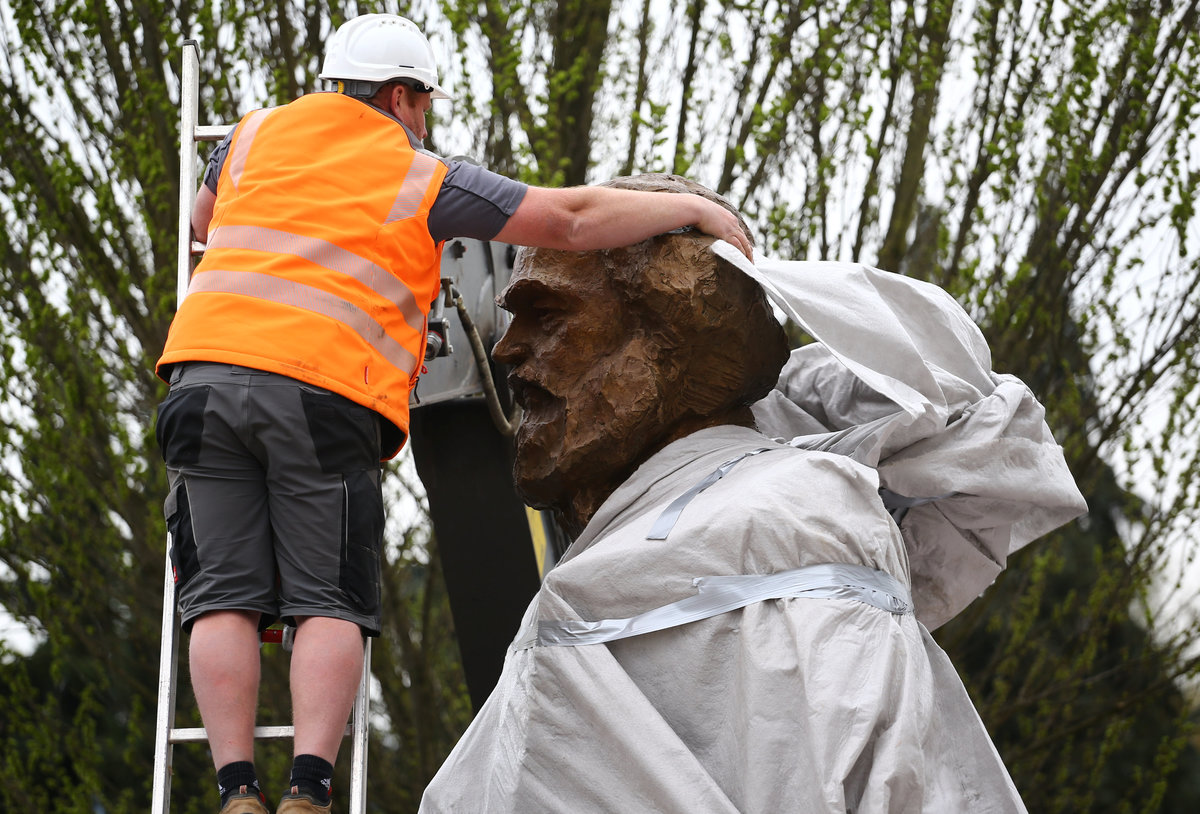
Workers set up a bronze sculpture of Karl Marx in his hometown Trier, Germany, April 13, 2018. REUTERS/Wolfgang Rattay

    Since 2015 China's President Xi Jinping has presided over a widespread crackdown on human rights activists, which has seen numerous lawyers like Jiang arrested and given long prison sentences.

    The Chinese artist behind the bronze statue, Wu Weishan, had previously suggested that it should be placed at the Porta Nigra, an iconic Trier landmark and one of the largest Roman gates north of the Alps. The statue was erected in the end by Simeonstiftsplatz, in the heart of the southern German city.

    Marx's status in Germany is controversial, with some in the country blaming the philosopher's ideas for the rise of Communist dictators, the Berlin Wall and subsequent Cold War division.
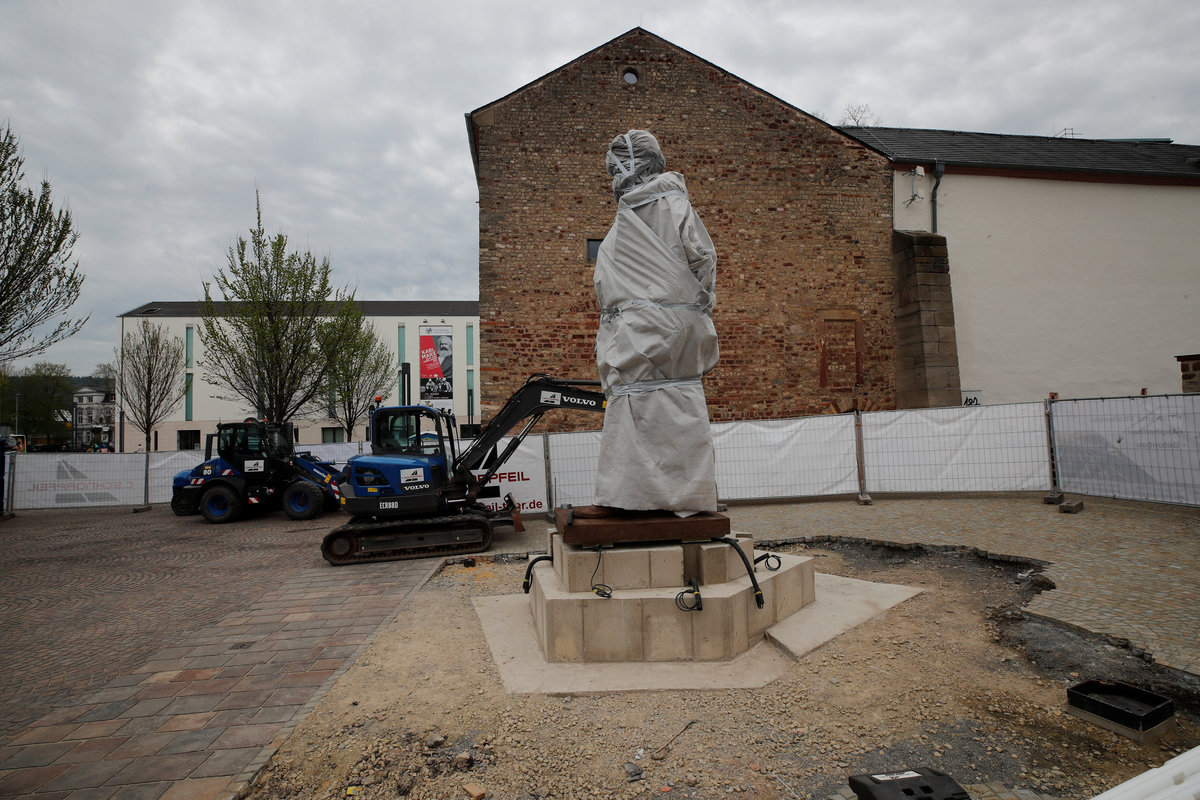
The 4.4 metres (14 feet) high bronze statue of Karl Marx, created by Chinese artist Wu Weishan and donated by China to the hometown of the German philosopher, is seen after it was erected in Trier, Germany April 13, 2018. REUTERS/Wolfgang Rattay

    Dieter Dombrowski, Federal Chairman for the Union of Victims of Communist Tyranny (UOKG), said in a statement: "For the victims of crimes that can be traced back to Karl Marx's ideas this event is disrespectful and inhumane."

(Reporting by Reuters TV; Writing by Charley-Kai John)
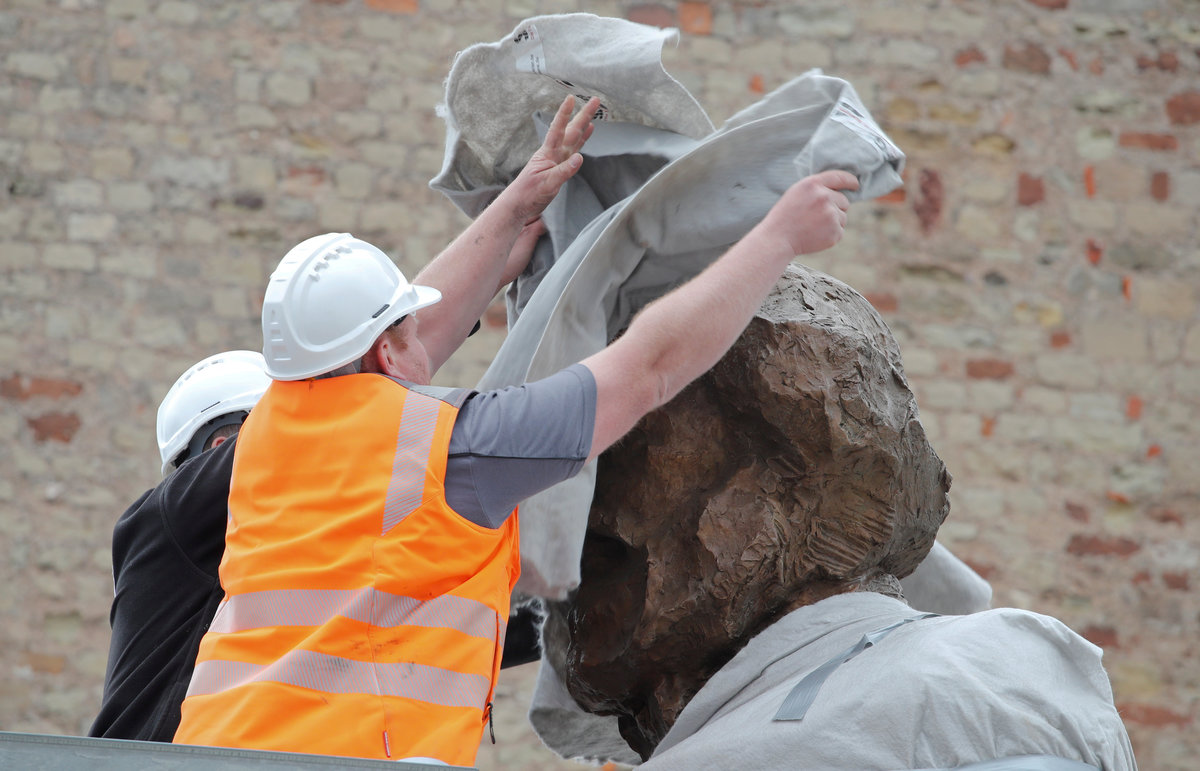
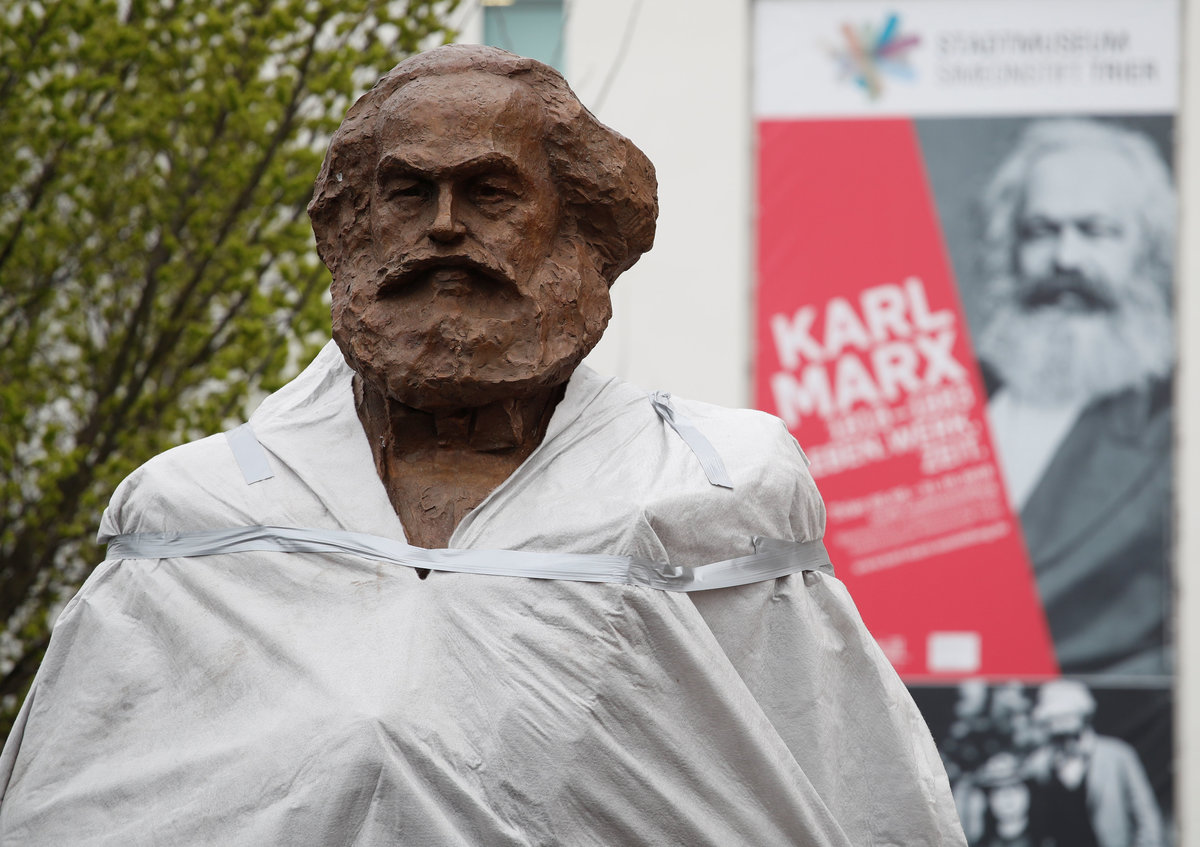
Workers re-cover the head of a 4.4 metres (14 feet) high bronze statue of Karl Marx, created by Chinese artist Wu Weishan and donated by China to the hometown of the German philosopher in Trier, Germany April 13, 2018. REUTERS/Wolfgang Rattay
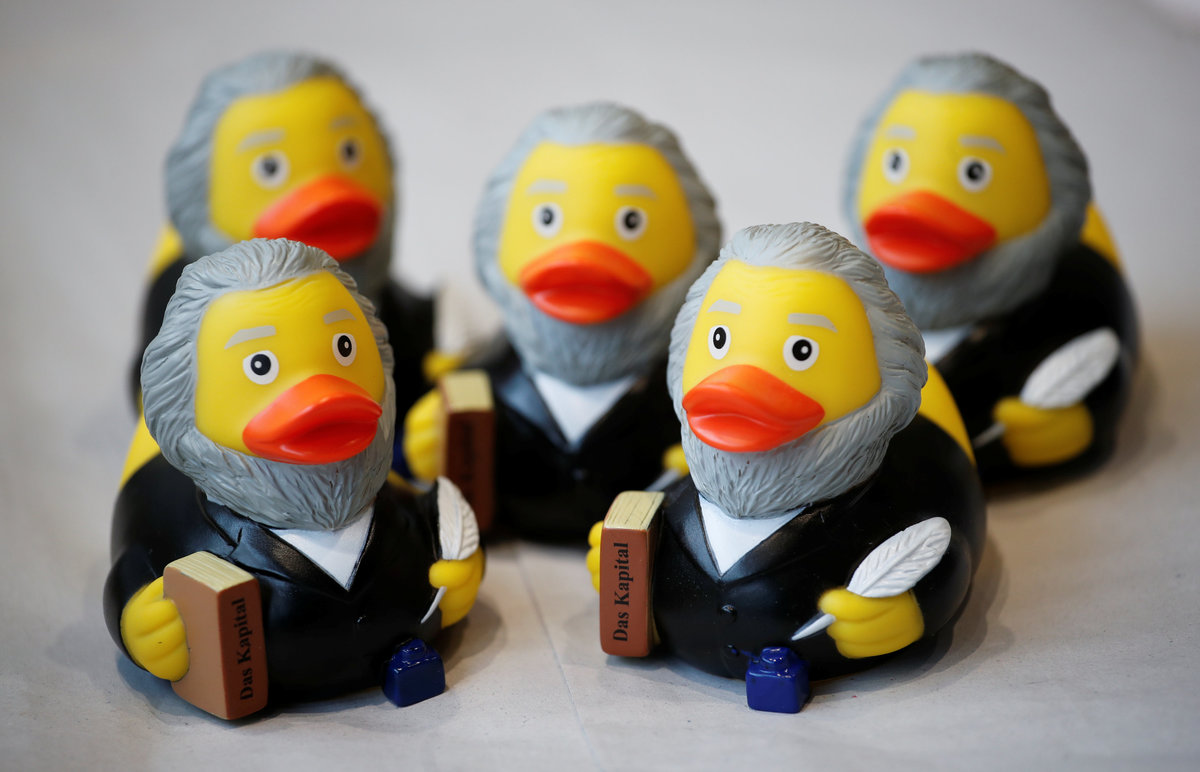
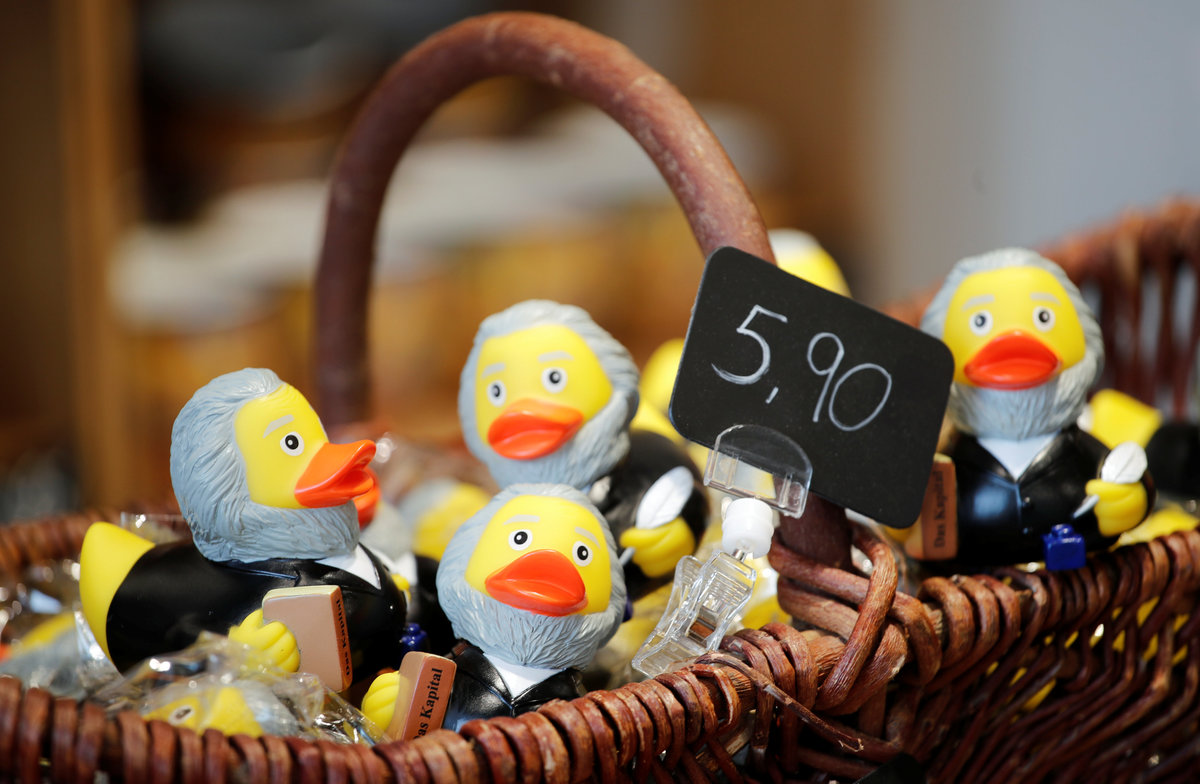
Rubber ducks depicting German philosopher Karl Marx are for sale at the price of 5.90 euro (about 7.30 U.S. dollars) at a souvenir shop in his hometown in Trier, Germany, April 13, 2018. REUTERS/Wolfgang Rattay
Workers set up a bronze sculpture of Karl Marx in his hometown Trier, Germany, April 13, 2018. REUTERS/Wolfgang Rattay
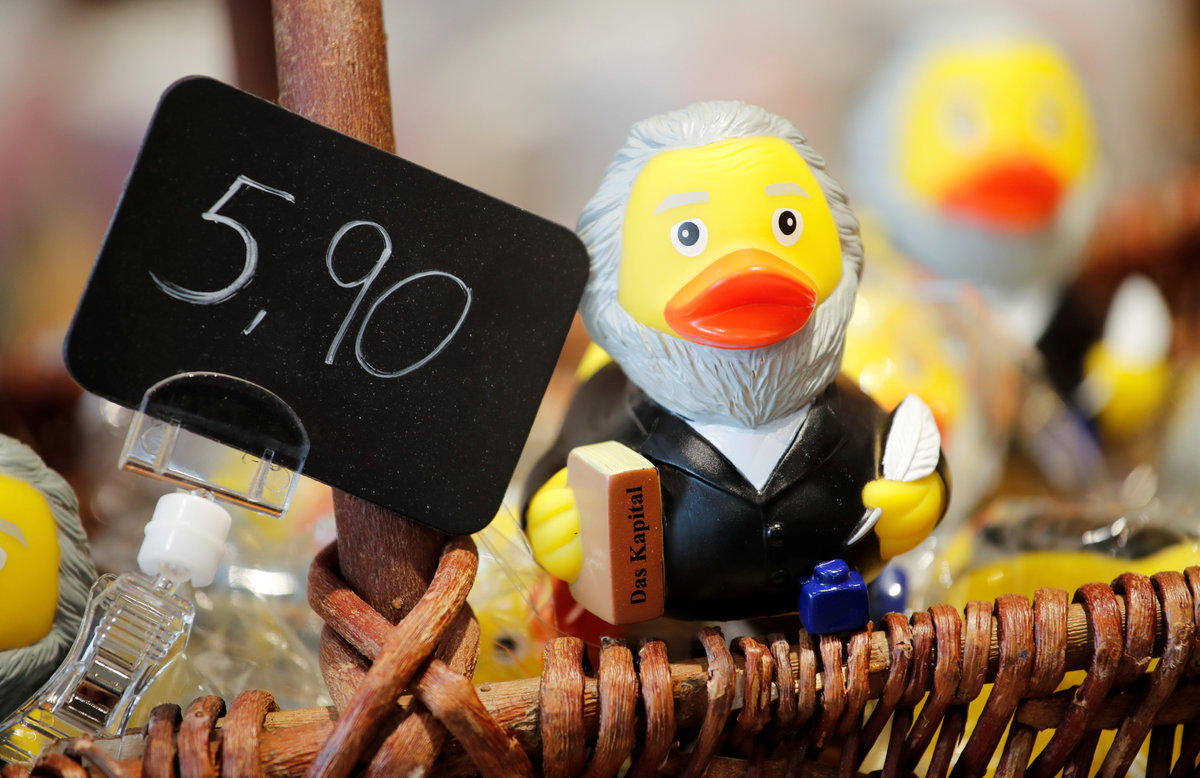
A rubber duck depicting German philosopher Karl Marx is for sale at the price of 5.90 euro (about 7.30 U.S. dollars) at a souvenir shop in his hometown in Trier, Germany, April 13, 2018. REUTERS/Wolfgang Rattay
Workers set up a bronze sculpture of Karl Marx in his hometown Trier, Germany, April 13, 2018. REUTERS/Wolfgang Rattay
Rubber ducks depicting German philosopher Karl Marx are for sale at the price of 5.90 euro (about 7.30 U.S. dollars) at a souvenir shop in his hometown in Trier, Germany, April 13, 2018. REUTERS/Wolfgang Rattay
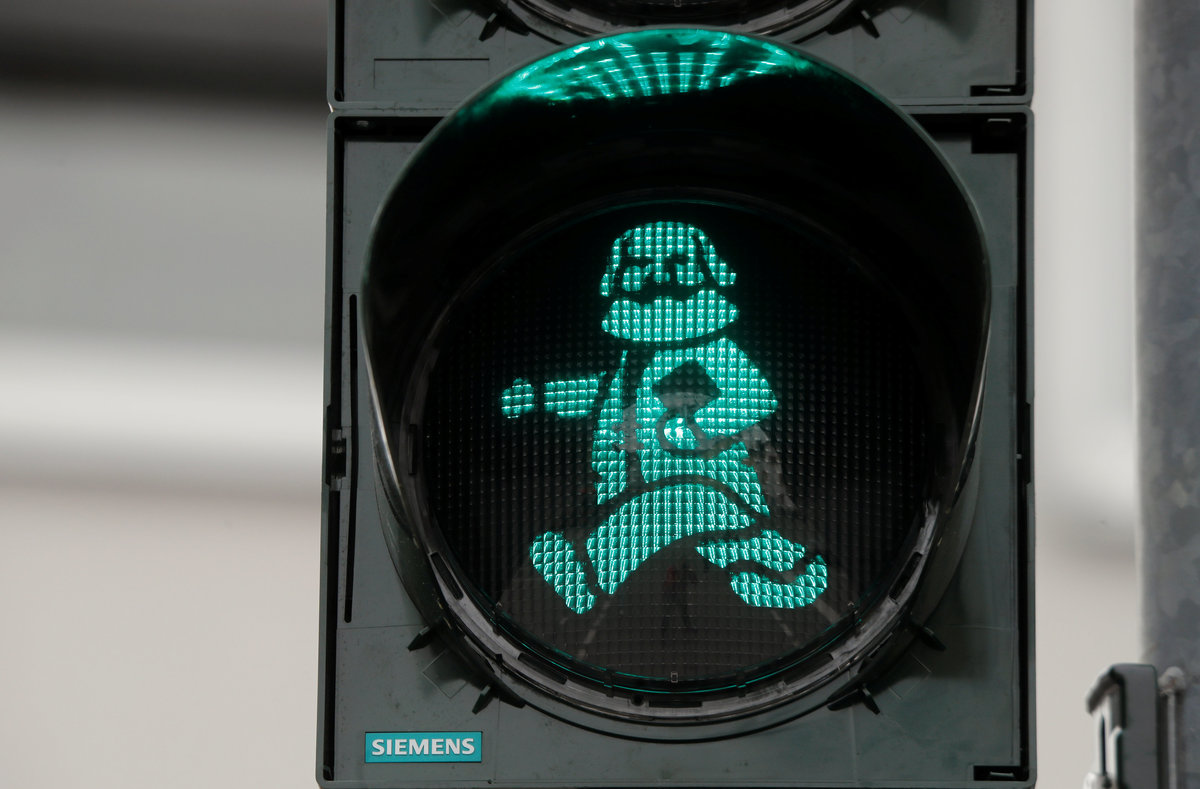
An image of German philosopher Karl Marx is seen in a traffic light for passengers in his hometown in Trier, Germany, April 13, 2018. REUTERS/Wolfgang Rattay
Sign up to read this article
Read news from 100’s of titles, curated specifically for you.
Already a member? Sign in here
Related Stories
Top stories on inkl right now
One subscription that gives you access to news from hundreds of sites
Already a member? Sign in here
Our Picks
Fourteen days free
Download the app
One app. One membership.
100+ trusted global sources.