WASHINGTON — Final passage of a sweeping budget reconciliation package to enact President Joe Biden’s fiscal policy agenda on infrastructure, child care, education and more likely won’t occur until sometime this fall, according to the House Democrats’ point man on budget issues.
House Budget Chairman John Yarmuth told reporters after the Democratic Caucus met with top White House officials on Tuesday that his plan was to mark up a fiscal 2022 budget resolution — a prerequisite for any filibuster-proof reconciliation bill — in mid-July. Democrats will then try to adopt the budget with reconciliation instructions on the floor before the August recess, he said.
The White House, meanwhile, is giving negotiators another week to 10 days to reach agreement on a bipartisan infrastructure package before fully moving to the reconciliation process, according to Yarmuth.
The Kentucky Democrat said his committee is preparing to write reconciliation instructions for about $4 trillion in spending but could remove any bipartisan agreement from those instructions.
“We’re assuming right now that everything will be done by reconciliation,” he said, including Biden’s infrastructure, child care and other proposals and perhaps some additions backed by congressional Democrats. “That doesn’t preclude a bipartisan agreement. If one happens, we just take that part out of the instructions. But right now, we’re assuming everything will be in.”
House Democratic Caucus Chairman Hakeem Jeffries separately told reporters after the meeting that his party plans to “lean in” to the bipartisan discussions and try to find common ground.
“But if the obstructionists prevail, the self-described ‘Grim Reaper’ prevails, then we are going to have to proceed to get it done through the vehicle that is available to us through reconciliation, but that is a conversation for another day,” the New York Democrat said, referring to Senate Minority Leader Mitch McConnell, R-Ky.
Biden sent Congress two separate proposals earlier this year, totaling more than $4 trillion. The first would finance highways, bridges, clean energy subsidies, rural broadband access, home care for the elderly and more. The second would fund initiatives like universal preschool, two years of free community college, assistance with child care expenses and a new paid family and medical leave benefit.
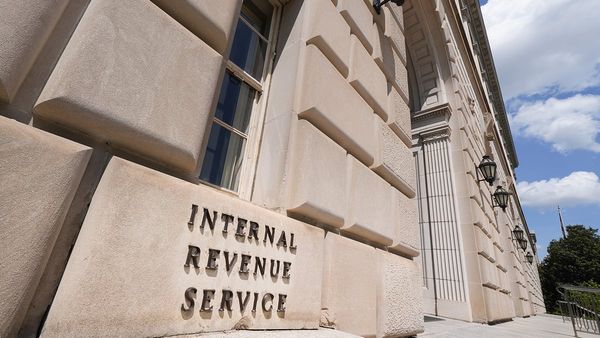
Those items would be financed by an array of tax increases on corporations and wealthy households as well as enhanced IRS tax enforcement initiatives aimed at wealthier households, private firms and cryptocurrency assets.
Biden spent weeks negotiating with a group of Senate Republicans led by West Virginia’s Shelley Moore Capito before calling off those talks amid a stalemate. But the White House has since been working with a group of 10 senators — five from each party — to iron out details of an infrastructure proposal on which they tentatively agreed last week.
That bipartisan group has offered about $579 billion above current spending projections over the next five years on what it considers “hard” infrastructure — roads, bridges, waterways and the like. Speaker Nancy Pelosi, D-Calif., and other top Democrats have said that’s not enough, and it’s unlikely her caucus would support such a plan unless they had assurances more spending was in the offing.
Senate Majority Leader Charles E. Schumer, D-N.Y., has said for weeks that that chamber would pursue infrastructure plans along two paths — one through bipartisan negotiations, and one through the reconciliation process.
Advancing the next reconciliation package could be more challenging than approving the $1.9 trillion COVID-19 relief law enacted in March, given that a handful of Senate Democrats haven’t yet indicated they are willing to go along with the “big, bold” package Schumer plans to put forward.
Yarmuth said he is keeping a close eye on the very narrow margin that Democrats have in both the House and the Senate, saying that remaining united “is the only chance” Democrats have to advance these packages through reconciliation.
“I think our caucus understands that, essentially, we’re all Joe Manchin,” he said, referring to the West Virginia Democratic senator who has become one of the most important swing votes in the chamber. “With the margins we have, everybody has the ability to tank whatever we’re trying to do. Here we’ve got four votes; there they have zero margin. So, essentially, everybody’s in a position to sabotage whatever we’re doing.”
After the meeting with White House officials, Progressive Caucus Chair Pramila Jayapal, D-Wash., was somewhat skeptical of the two-path approach given concerns that moderate Senate Democrats might not support a second package that includes more left-leaning priorities.
“If there was to be, by some miracle, a smaller bipartisan deal, I think it would be very difficult to find the votes for that in the House unless there’s a simultaneous movement and agreement of the full reconciliation package with 50 votes in the Senate,” she said.
She said that progressive support of a bipartisan package would be “predicated on it, first of all, being a bill that we like and secondly on the two moving together.”
Jayapal also said progressives wouldn’t support increases on the gas tax or user fees.
Yarmuth told reporters that in addition to including reconciliation instructions for both of the Biden administration’s plans, “other things” could be included in the final package, but decisions haven’t been made.
Lawmakers may need to include a debt limit increase in the package, for instance. And several Democrats have been pushing for months to include immigration-related proposals in budget reconciliation.
And, among others, Senate Budget Chairman Bernie Sanders, I-Vt., has been advocating for a health care package including extending Medicare access to individuals younger than 65; adding dental, vision and hearing benefits under Medicare; and paying for part of it with legislation to cut federal government outlays for prescription drugs.
Rank-and-file Democrats were clearly getting restless with the pace of talks, however.
“At some point, you got to fish or cut bait,” Michigan Rep. Debbie Dingell said after the Tuesday morning meeting. “So I think these are healthy discussions; I think it’s always good when you can bring people together. At some point, it’s gonna work or not work, and that some point can’t be a year from now.”
———
(Roll Call's Niels Lesniewski contributed to this report.)