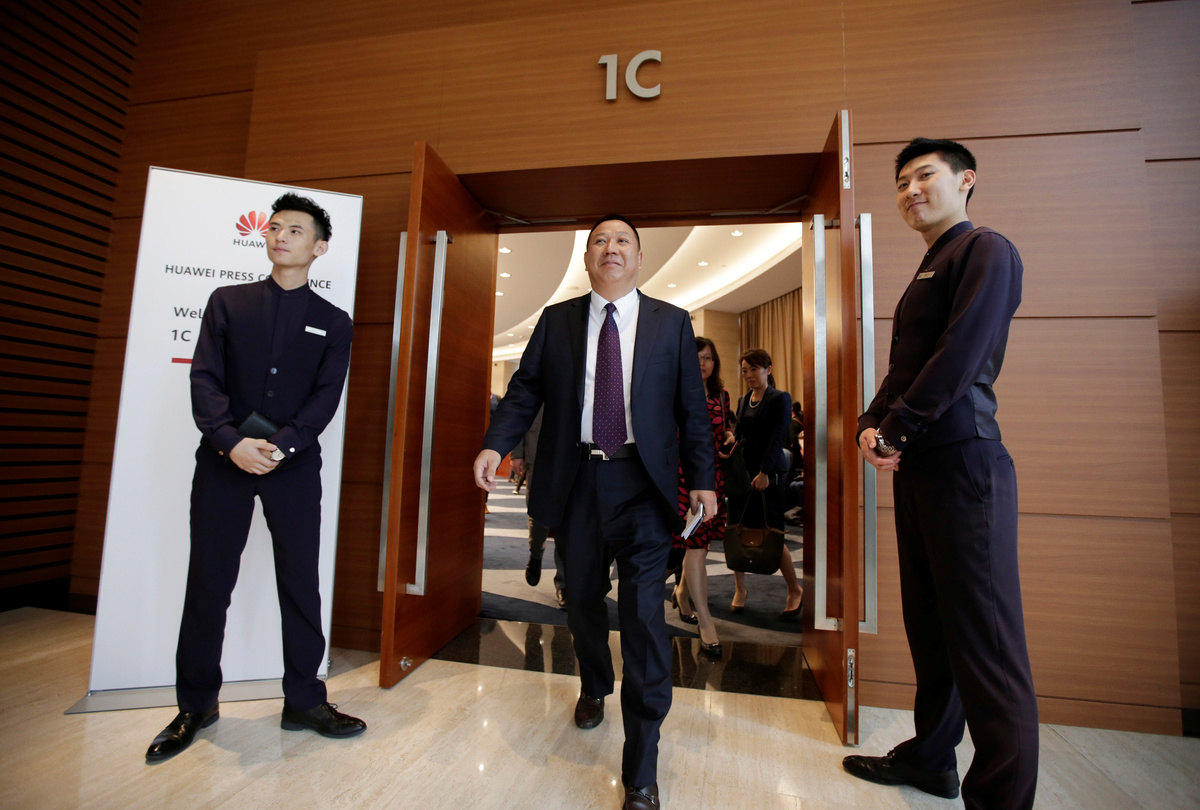
HONG KONG (Reuters) - China's Huawei Technologies Co Ltd has filed a legal motion seeking to declare a U.S. defense law unconstitutional, in the telecom equipment maker's latest bid to fight sanctions from Washington that threaten to push it out of global markets.
The motion for summary judgment in its lawsuit against the U.S. government, filed late on Tuesday in the U.S. District Court for the Eastern District of Texas, asks a judge to declare the 2019 National Defense Authorization Act (NDAA) unconstitutional. Huawei filed its lawsuit in March.
The NDAA bill, passed by the U.S. Congress last summer, places a broad ban on federal agencies and their contractors from using Huawei equipment on national security grounds, citing the company's ties with the Chinese government.
Huawei, the world's largest telecoms network gear maker, has repeatedly denied it is controlled by the Chinese government, military or intelligence services.
U.S. Secretary of State Mike Pompeo kept up the pressure on Huawei on Wednesday.
"Huawei is an instrument of the Chinese government," Pompeo said in an interview with Fox Business Network. "They're deeply connected. It's something that's hard for Americans to understand."
Glen Nager, a partner at law firm Jones Day and lead counsel for Huawei, told Reuters the U.S. court had agreed on a schedule to hold hearings in September on motions by opposing sides.
Some legal experts said Huawei's lawsuit was likely to be dismissed because U.S. courts are reluctant to second-guess national security determinations by other branches of government.
The lawsuit "will be an uphill battle because Congress has broad authority to protect us from perceived national security threats," said Franklin Turner, a government contracts lawyer at McCarter & English.
In November 2018, a federal appeals court rejected a similar lawsuit filed by Russian cybersecurity firm Kaspersky Lab, which was challenging a ban on the use of the company's software in U.S. government networks.
'DANGEROUS PRECEDENT'
Earlier this month, the U.S. Commerce Department put Huawei on a trade blacklist that bans companies from doing business with the Chinese firm, a move which immediately disrupted the global tech sector.
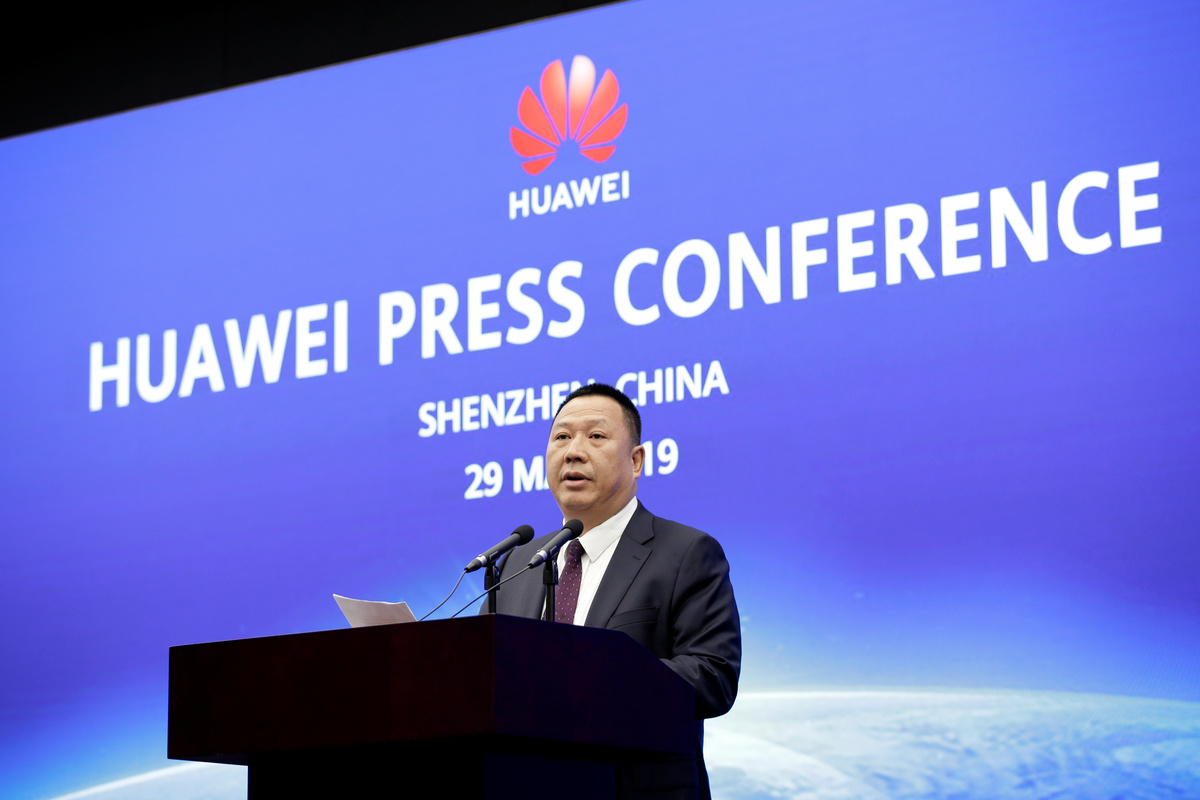
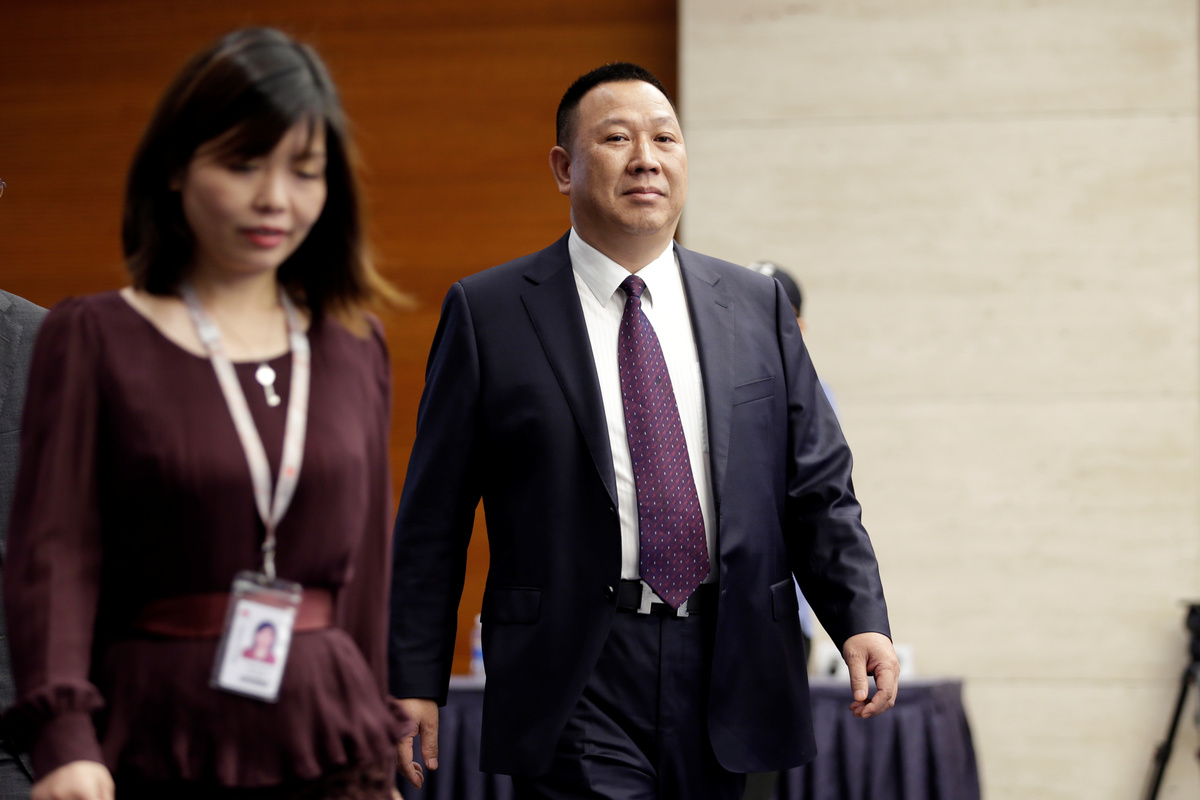
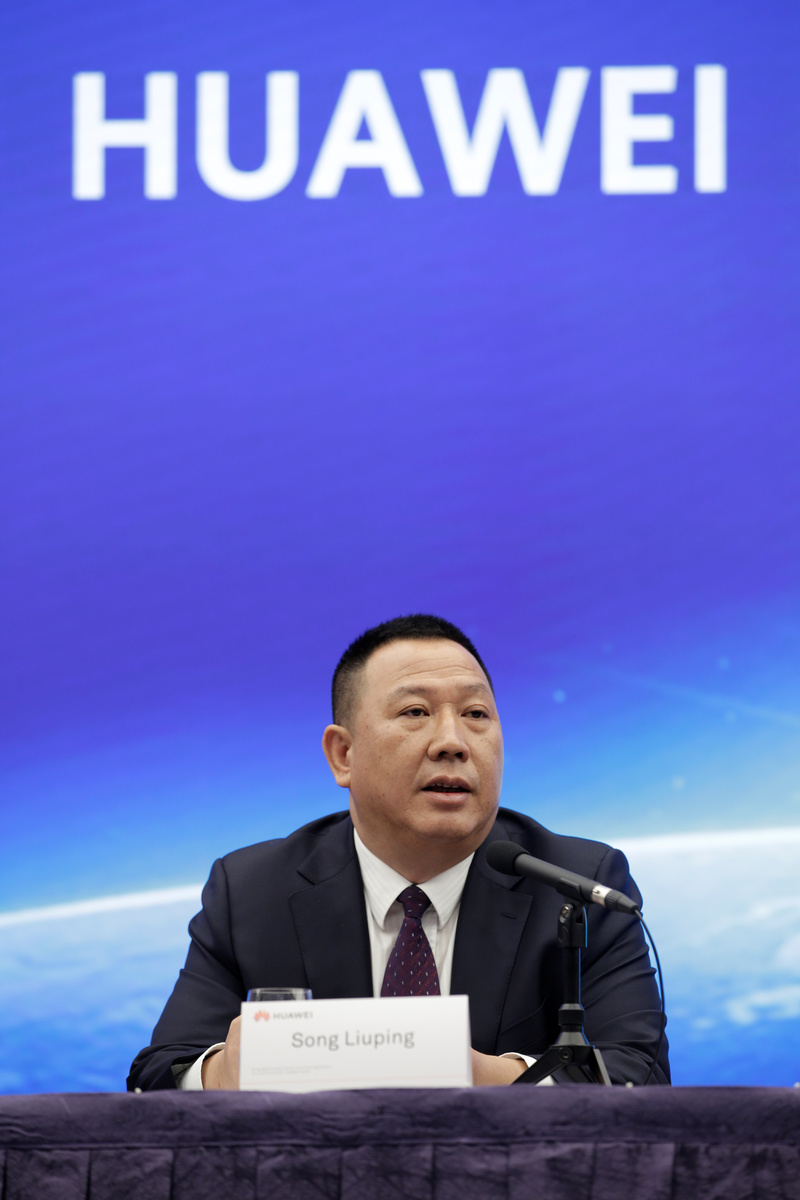
Huawei's chief legal officer, Song Liuping, on Wednesday said the company was reviewing ways to fight the U.S. ban, which he said was affecting its more than 1,200 suppliers and threatened to affect its 3 billion customers in 170 countries.
Song said Washington's use of administrative orders and laws to punish a single company "sets a very dangerous precedent."
"Today it is telecom and Huawei, tomorrow it could be your company, your industry, your customers," he told reporters at Huawei's headquarters in Shenzhen.
The ban, along with separate accusations of bank fraud and corporate theft that the United States has made against Huawei and its chief financial officer, has exacerbated the trade war between Beijing and Washington.
Huawei, which has been given a 90-day reprieve from the ban, has denied its products pose a security threat and protested Washington's attempts to limit its business.
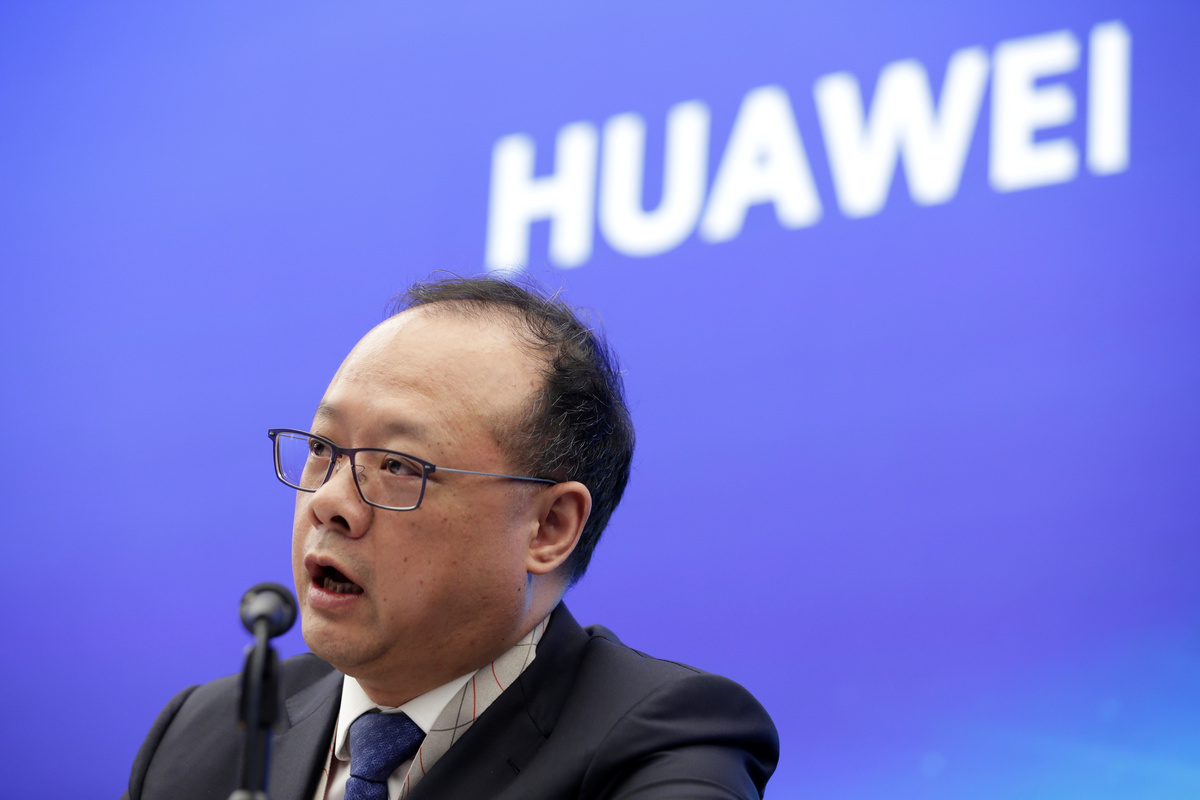
Vincent Pang, Huawei's senior vice president and head of corporate communications, said the executive order and blacklist had transcended the boundaries of normal market competition.
"This could lead to the start of the fragmentation of the global tech ecosystem and standards," Pang said on Wednesday at Huawei's headquarters.
Pang also said he did not expect the "political" situation to delay the introduction in China of fifth-generation (5G) network technology.
(Reporting by Sijia Jiang; Additional reporting by Rishika Chatterjee and Jan Wolfe; Editing by Christopher Cushing, Jeffrey Benkoe and Paul Simao)