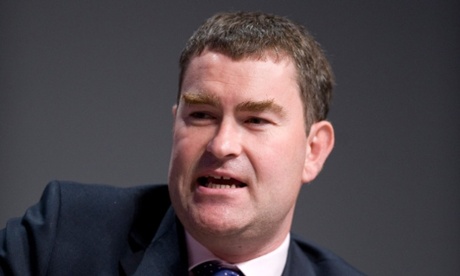
The Treasury minister David Gauke has defended the government’s efforts to clamp down on tax avoidance, insisting that there is no evidence that Stephen Green, the former HSBC chairman then coalition trade minister, knew anything of questionable practices at the bank’s Swiss subsidiaries.
After forcing Gauke to the Commons to answer an urgent question in the wake of the HSBC revelations, Labour demanded to know what due diligence the government undertook to ensure that Lord Green had no involvement or knowledge of the systematic tax evasion.
One Labour source claimed the appointment of Green smacked of “Andy Coulson mark II” – a reference to Cameron’s decision to appoint the former News of the World editor as his press spokesman despite the reports of phone hacking at the News of the World.
Gauke denied HM Revenue and Customs had ignored evidence of wrongdoing, pointing out after a list of UK citizens involved in tax evasion in the HSBC Swiss subsidiary was passed to HMRC, 1,000 people had paid back tax and penalties worth £135m in tax interest and penalties.
Faced by pressure from Labour to explain why the identity of the wrongdoers had been kept secret by the government, Gauke said it was normal HMRC practice – stretching back to beyond 2010 – not to publish the names of individuals found to have been evading tax, but instead to focus on recovering the lost revenue.
The chief secretary to the Treasury, Danny Alexander, seized on the apparent double standards in treatment, saying: “We quite rightly prosecute and often jail people guilty of damaging our society through conventional crime and antisocial behaviour.
“The way we treat systematic tax evasion should be no different. If that means jail for offenders and those that conspire with them, then so be it.”
Gauke conceded that tax evasion is a criminal offence, and in some cases money laundering appeared to be involved, but he claimed he had only been given clearance by the French tax authorities on Monday to pass information to other prosecuting authorities.
He told MPs that HMRC received the HSBC data under very strict conditions which limited the department’s use of it to pursuing offshore tax evasion and prevented HMRC from sharing their data with other law enforcement authorities. Under these restrictions, HMRC had not been able to seek prosecution for other potential offences such as money laundering, he said.
However French authorities confirmed they will provide all assistance to allow HMRC to exploit the data to its fullest.
Gauke said: “In most cases disclosure and civil fines are the most appropriate and effective intervention. That is how the HMRC has approached the receipt data has been from leaks and whistleblowers including the Swiss HSBC data shared with the department in 2010.”
He said HMRC had received data covering 6,300 entities and that boiled down to information on 3,600 individuals and businesseses. He said a total of 1,000 were challenged and settled, while the remainder were compliant.
Margaret Hodge, the chair of the Commons public accounts committee, is due to address the crisis at a meetingon Monday night, saying: “Today’s shocking revelations about HSBC further expose a secretive global industry serving a wealthy elite. If these tax cheats were so-called benefit ‘scroungers’ they would be pursued with the full force of the law.
“Nor should HSBC be allowed to escape responsibility for their role in cheating the British government out of millions of pounds of tax. HMRC may go easy on them, but parliament, on behalf of the public, will not.”
The bulk of the Gauke statement led to a political row between Labour and the Tories, focused on whether the latter had done enough to clamp down on tax evasion while it was in government. Labour retaliated by claiming coalition ministers have colluded with their business backers.
Gauke repeatedly pointed out that Ed Balls, the shadow chancellor, had been City minister when the offences were due to have occurred, but Labour countered that the information in the files was only passed to the UK tax authorities in May 2010. Green was personally appointed trade minister later that year.
Shabana Mahmood, Labour’ spokeswoman on Treasury affairs, asked whether the information sent to HMRC by the French authorities was passed to government ministers, and if not why not. She claimed if there had been failure to question Green prior to his appointment as a minister, this would represent “an inexplicable and inexcusable failure of responsibility”.
She called for a statement fromGreen on his knowledge of the activity at his subsidiary, and the extent to which he shared information within government.