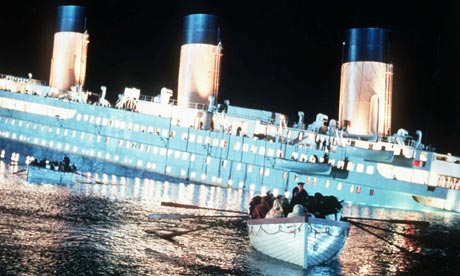
Recently I heard the introduction of housing revenue account self-financing likened to the launch of the Titanic. The absurdity of the notion made me laugh. How could they possibly be the same?
One hundred years on, the tragic story of the Titanic's maiden voyage is well documented. Films and books paint graphic depictions of proud individuals, arrogant organisations, foolish decisions, cowardice, death and almost unbelievable heroism.
Some versions assume more dramatic licence than others, but the facts boil down this: the great ship was built to survive a head-on collision but not the blow that finally struck; radio operators received information about icebergs en route but did not pass them to the bridge, leaving Captain Smith without the facts he needed to navigate a safe course; the Titanic was sailing too quickly to avoid any large obstacle in its path as the onboard early warning system could not search far enough ahead.
In short, the full extent of the risks being taken on that night almost one hundred years ago did not become clear until it was too late to do anything about them.
Steering a course through reform
Housing revenue account (HRA) self-financing is, in some ways, completely different. Self-financing is not about getting from A to B – it's about delivering long term investments and improvements in local housing, using local resources and an affordable level of debt.
But there are risks to be avoided under self-financing, and you only need to scan the horizon for a moment or two to start identifying the tips of some potential difficulties. What will be the impact on the HRA of welfare reform, changes to right-to-buy and pressures to save money on the General Fund? What happens if a council changes its rent policy?
The HRA business plan offers a key to delivering investment while navigating a safe passage between the various visible and part-concealed risks. There are many different types of business plan. Some are produced after a quick look at existing budgets as an exercise that "ticks the box" and are then forgotten for a few years. Some are based largely on what the people producing the plan already know about their housing stock and their intended destination – in much the same way as the captain of the Titanic authorised a course for New York based on what he already knew, and what he judged to be reasonable.
Business plans should be built on hard evidence that is comprehensive and withstands challenge, yet they also need to be flexible.
Business planning
A good business plan brings an understanding of what the council can and cannot deliver over the long term, on the basis of what it knows now. The plan should be based on:
• Sound evidence and projections about the council's stock, its long term investment needs, income generating capacity and the cost pressures that you face – so that the business plan is affordable and delivers what is needed
• An objective, up-to-date understanding of potential future decisions that could threaten delivery of the business plan. This is key information that can affect the quality of the decisions made
• Frequent reviews of progress against the business plan – this provides early warning when some of those potential future events materialise and corrective action is required
The process for preparing and maintaining the business plan is also important. Regular discussion with staff, councillors and tenants helps to raise awareness of the requirements, the changing context and the risks that need to be managed, while also providing for constructive challenge.
Avoiding the icebergs
These discussions help everybody to understand what the evidence is saying. They are also more likely to identify if a key piece of information is weak or missing. A council with governance arrangements that provide for this type of regular meeting and knowledge transfer down the organisation should also be better able to spot early signs of hazards on the radar, and choose the best response in good time.
So, when each of the 170 housing authorities in England launch their self-financing housing revenue account on 1 April will they all be doing so with a clear understanding of all the risks and opportunities? Will they all have arrangements in place to monitor progress and make timely responses to changes in circumstances?
Things would undoubtedly have been different for the Titanic if onboard arrangements had supplied the captain with a timely flow of all the facts he needed to foresee and avoid the fatal collision. That's why every housing authority needs an effective early warning system: a long term HRA business plan that is based on the evidence, updated regularly and embedded in all its decisions. How else will you avoid the icebergs?
Glenn Smith is a consultant with Sector which specialises in housing finance
This content is brought to you by Guardian Professional. Join the housing network for more comment and analysis direct to your inbox