Get all your news in one place.
100's of premium titles.
One app.
Start reading
The Economic Times
The Economic Times
Suchitra Mandal

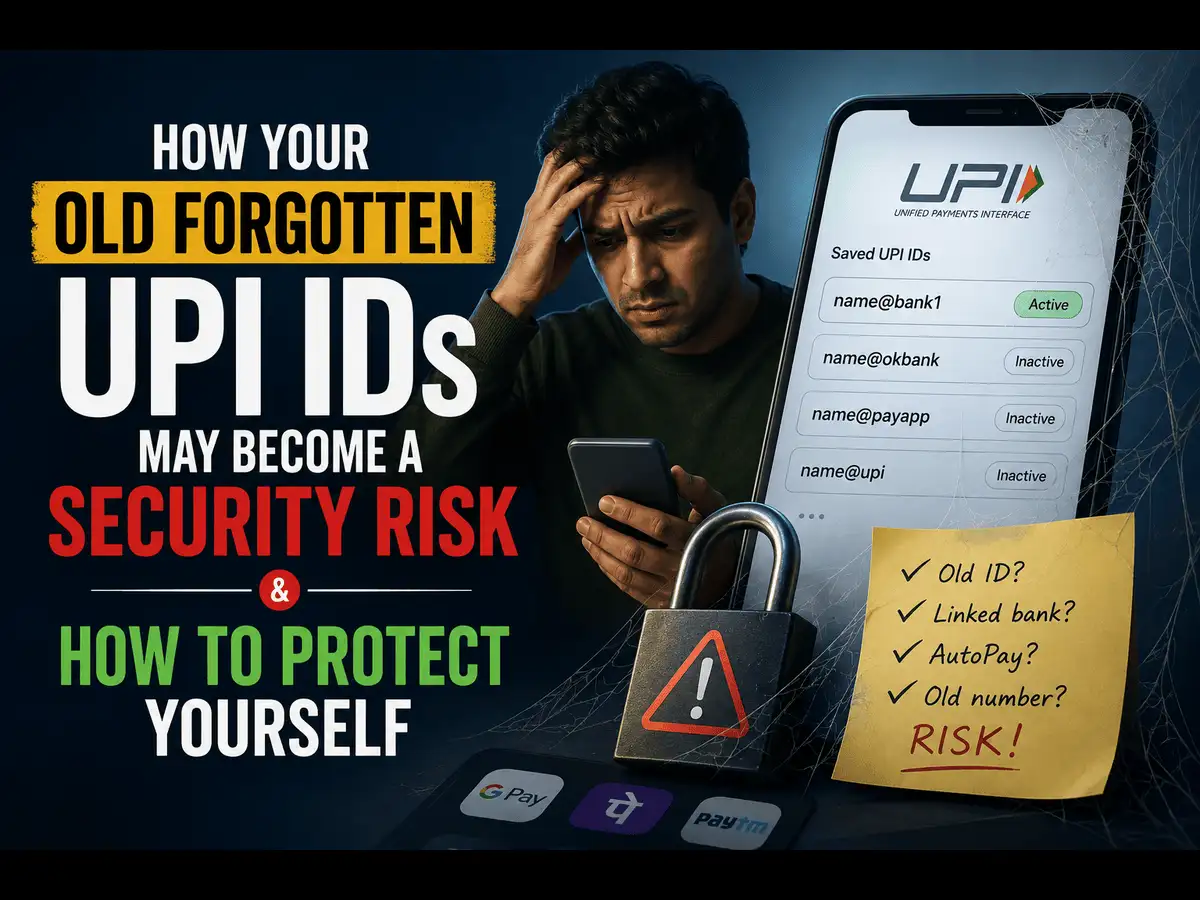
How your old forgotten UPI IDs may become a security risk and how to protect yourself

Setting up a new UPI ID is super easy these days. You just download a payment app, link your bank account, set a PIN, and you’re all set to make payments.

With so many apps out there offering better experiences or deals, people are switching apps faster than ever, which often leads to having multiple UPI IDs across different platforms. Many of these IDs you no longer use, remember, or don’t even realise are still active.

“Every UPI app creates a unique ID the moment a bank account is linked,” says Vasisht Ravichandran, COO, Pop UPI, adding that unlike a credit card, a UPI ID carries no fee, no monthly statement, and no reminder that it exists.

The problem is that these forgotten UPI IDs do not disappear when the app is deleted.

In many cases, they remain active in the background, still linked to bank accounts, mobile numbers, AutoPay mandates, and device permissions. According to cybersecurity experts, that can quietly become a financial and privacy risk.

Why deleting the app does not delete the UPI ID

One of the most important things users fail to grasp is the difference between uninstalling a UPI app and actually deactivating a UPI ID.

Deleting the app from your phone only removes the application interface.

“Internet guidance and banking advisories broadly confirm that uninstalling a UPI app alone does not completely deactivate a user’s UPI presence. In most cases, the UPI ID, linked bank accounts, mandates, AutoPay instructions, and certain device-level registrations can continue to remain active with the bank or Payment Service Provider (PSP) unless they are separately removed or disabled,” says Rohit Mahajan, Founder & CEO, plutos ONE.

131195347

Cybersecurity experts warn that relying only on app deletion can create a false sense of safety.

“AutoPay, UPI Lite, linked bank accounts, collect requests and device-bindings will all remain active within the banking or PSP layer after the application has been uninstalled from the phone; therefore, uninstalling a UPI application can leave users with a false sense of security as far as cyber-risk is concerned,” says Ankit Sharma, Senior Director and Head of Solutions Engineering at Cyble.

In short, the app may disappear from your phone, but the payment identity can continue to remain active.

Why old UPI IDs can become a serious security risk

A major security risk emerges when old mobile numbers are recycled.

Telecom operators routinely reassign inactive mobile numbers to new users after a period of time. If an old UPI ID remains linked to that recycled number, the new owner may start receiving transaction alerts, collect requests, and authentication-related communications connected to the previous user’s financial accounts.

UPI transactions rely heavily on SIM ownership and device binding. If a recycled number remains connected to an old UPI setup, fraudsters may exploit this through SIM-swap attacks, social engineering, or identity theft, according to Sharma.

The risk becomes even more concerning when recurring mandates are involved.

AutoPay instructions for subscriptions or EMIs can continue sitting in the system even when the user has stopped using the app, says Mahajan. If these mandates fail due to account or number-related issues, users may not immediately notice the problem.

Many discover it only after a payment bounces or a service gets disrupted.

How to check all UPI IDs linked to your mobile number

One major challenge for users is that there is currently no single universal dashboard showing every UPI ID created across all apps.

“NPCI's website at npci.org.in is the most comprehensive starting point, showing all UPI IDs linked to a mobile number. Most bank apps also list linked UPI handles under the payments section. Individual UPI apps, however, only show the ID they generated — not IDs created on other platforms. For users without internet access, the *99# USSD service provides basic UPI account information on any mobile network,” says Ravichandran.

131195394

However, experts caution that no single method may show the complete picture, making cross-checking across multiple apps and banks important.

The safest way to delete old or unused UPI IDs

Experts say proper UPI “cleanup” should become a regular part of digital financial hygiene.

The recommended process to fully deactivate a UPI setup includes:

  • Unlink of all bank accounts from UPI apps
  • Delete or deactivate the UPI ID/VPA
  • Cancel AutoPay mandates and recurring payment approvals
  • Disable UPI Lite and transfer remaining balance back to the bank account
  • Update or remove old mobile numbers linked to banking records
  • Contact the bank directly if the app does not provide full deactivation options

Mahajan says users should not leave inactive UPI IDs linked to old SIM cards for long periods

Similarly, Sharma recommends proactively auditing all UPI accounts and permissions rather than waiting for suspicious activity to emerge.

The challenge is that these risks often remain invisible until something goes wrong.

That is precisely why experts say users should periodically review all active UPI IDs, linked bank accounts, and mandates even if everything appears normal.

Sign up to read this article
Read news from 100's of titles, curated specifically for you.
Already a member? Sign in here
Related Stories
Top stories on inkl right now
One subscription that gives you access to news from hundreds of sites
Already a member? Sign in here
Our Picks
Fourteen days free
Download the app
One app. One membership.
100+ trusted global sources.