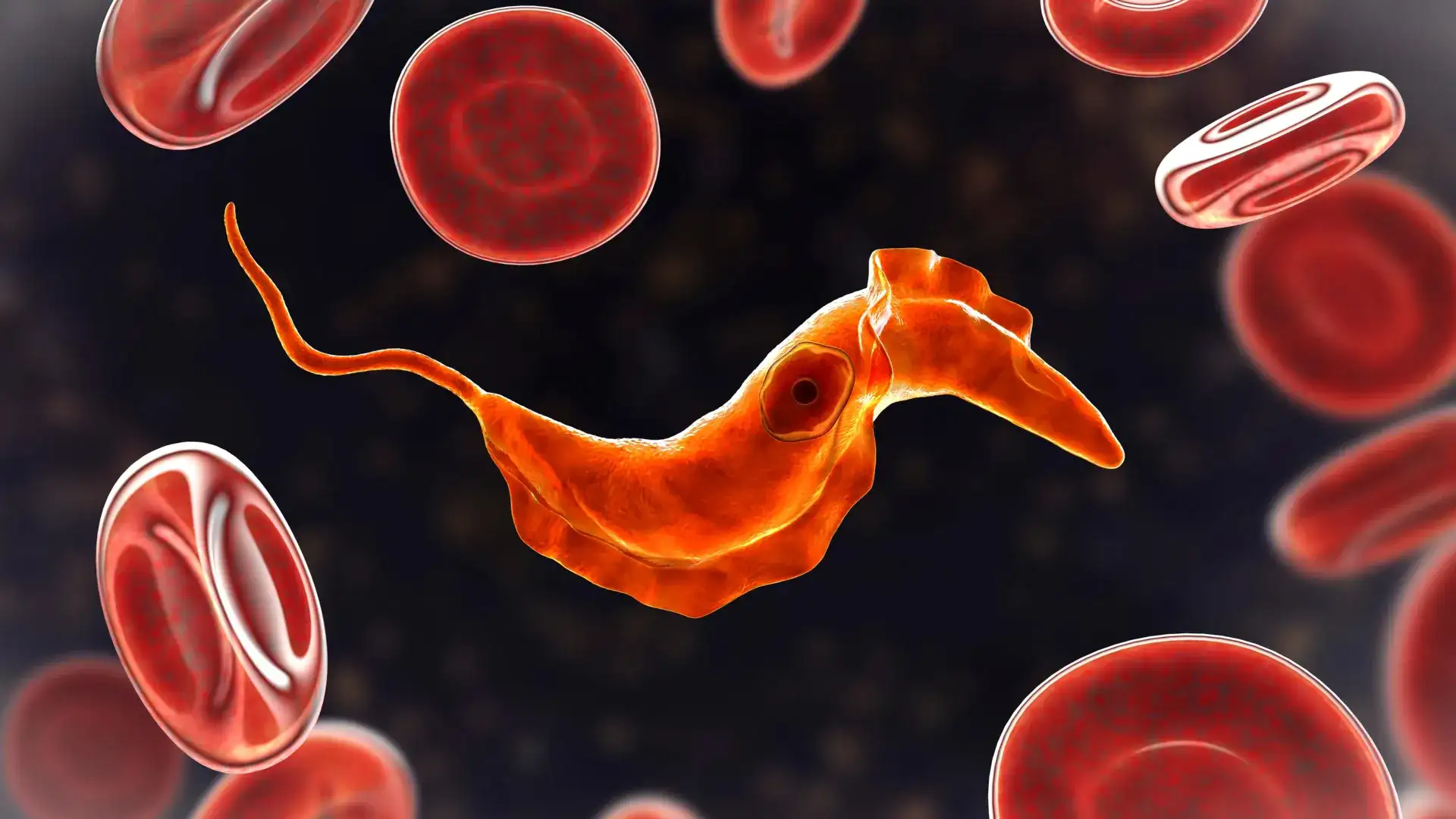
Scientists discover ancient single-celled ancestors still live on in your blood, according to groundbreaking new research tracing the evolutionary history of human immune cells back nearly 700 million years. The discovery suggests modern human blood cells may still carry biological features inherited from Earth’s earliest single-celled organisms. Researchers say the findings could transform how scientists understand immunity, evolution, and even diseases like cancer.
The study, led by researchers at Kyoto University, focused on the origins of blood cells across the animal kingdom. Scientists compared gene activity patterns in blood and immune cells from multiple species to reconstruct an evolutionary family tree stretching back hundreds of millions of years. Their analysis revealed that some of today’s most important immune cells likely evolved from ancient unicellular organisms that existed before complex animals appeared on Earth.
Scientists discover ancient single-celled ancestors still live on in your blood through immune cell evolution
Blood cells exist in nearly every known animal species. However, blood and immune systems evolved differently across organisms as species adapted to infections, environmental threats, and disease over millions of years. Scientists already understand human blood biology in detail, but the deeper evolutionary origin of blood cells remained unclear until now.
The research team developed a new analytical method capable of comparing gene expression patterns across different animals and cell types. This allowed scientists to identify relationships between modern blood cells and ancient life forms. By rebuilding this evolutionary map, researchers traced the development of immune systems from primitive organisms to modern vertebrates, including humans.
Scientists also identified the ancient roots of a key gene called FOS, which remains active in blood cells across many species today. The study traced this gene back to unicellular ancestors living around 700 million years ago. Researchers believe this timing closely matches the emergence of the earliest multicellular animals on Earth.
The discovery suggests early animals may have reused genetic material from single-celled organisms to create the first immune and blood systems. Instead of inventing entirely new biological pathways, evolution likely modified ancient cellular programs that already existed in primitive organisms.
Researchers say this explains why many immune responses in humans still resemble ancient survival mechanisms used by single-celled life forms. The study shows that parts of the modern immune system may represent direct evolutionary continuations from Earth’s earliest organisms.
Human blood cells may still preserve a 700-million-year evolutionary legacy
The evolutionary reconstruction also revealed how different blood cell types likely emerged over time. According to the study, mast cells may have evolved directly from macrophages during early animal evolution. Later, primitive versions of T cells and red blood cells likely developed from mast cell lineages.
Scientists further discovered that early B-cell ancestors appeared to branch directly from macrophages after mast cells had already separated evolutionarily. This complex branching pattern helped researchers build a detailed evolutionary family tree of blood cells spanning hundreds of millions of years.
The findings suggest the differentiation pathways controlling modern blood cells still reflect this ancient evolutionary structure. In other words, the biological processes shaping immune cells today may still follow developmental patterns established hundreds of millions of years ago.
Kyoto University researchers say blood cells connect humans to Earth’s earliest life forms
Study leader Hiroshi Kawamoto said the findings represent the culmination of years of work investigating blood cell evolution. He explained that the developmental pathways of vertebrate blood cells appear to preserve a 700-million-year evolutionary history within the human body itself.
First author Yosuke Nagahata said the study changed how he thinks about the human body and evolutionary history. He noted that realizing ancient biological systems still circulate inside human blood creates a powerful connection between modern humans and distant ancestral organisms.
The research highlights how evolution continuously reuses successful biological systems instead of replacing them completely. Scientists say modern immune systems are not entirely new creations but refined versions of ancient cellular defense mechanisms that once helped primitive organisms survive Earth’s earliest environments.
Researchers say the new analytical method developed during the study may have major medical applications beyond evolutionary biology. By understanding how blood cells evolved and diversified, scientists may uncover new insights into diseases linked to abnormal cell development, including leukemia and cancer.
The team believes tracing the ancient origins of cellular behavior could help explain why certain diseases emerge and how immune systems respond to them. This knowledge may eventually contribute to the development of future treatments targeting cellular pathways shared across evolutionary history.