Earlier this month, Ofsted announced a purge of inspectors, with 1,200 of them not being reappointed. The aim is to make inspections consistent, it says.
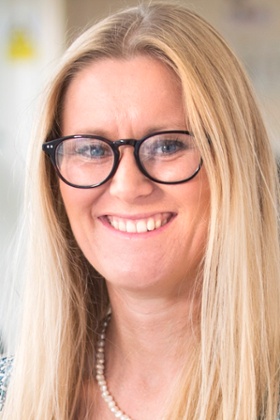
Lindsay Skinner, deputy headteacher, Bridgwater College academy, Somerset
Ofsted professes to be something that improves education – even its tagline says “raising standards, improving lives” – but that’s utter nonsense, it’s not what they do. They inspect schools – that in itself doesn’t raise standards. When you have an Ofsted inspection, they diagnose what needs to improve, but they do nothing to drive that through. If it is going to be just a regulatory body then it should admit that this is what it is. If it wants to actually help improve schools, it needs to provide proper support. And if it doesn’t intend to do that, my question would be: is it worth the money?
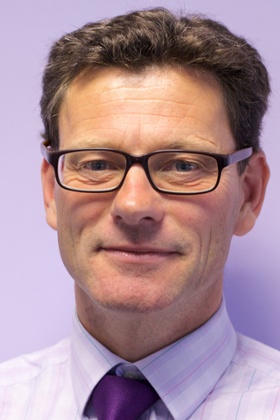
Michael Freeston, director of quality improvement, Pre‑school Learning Alliance
There are benefits to having a common framework, but there are also questions about how applicable this is to early years. There’s a paragraph that says children and learners are able to calculate risk effectively, for example, risk associated with child abuse, sex exploitation, domestic violence, female genital mutilation, forced marriage and so on. If you start using the language of schools in early years, do you then start to shape early years to look like schools? Another issue is that inspectors aren’t being brought back in-house for early years. If there were concerns to make Ofsted take inspections of school in-house, weren’t they equally concerned about consistency of early years?
David Cooper, principal, Wilberforce sixth-form college, Hull
There isn’t just a problem with consistency between inspectors, but also between sectors. We’re a sixth‑form college, and there are schools rated outstanding, where if we had those pass rates, our institution would be inadequate. We’re inspected against a sixth-form colleges benchmark for a lot of our provision – but there’s only 92 of them. Parents around here don’t want to know how we perform compared with a college in Surrey or Cornwall, they want to compare us with local schools and other institutions.
Brenda Neburagho, deputy headteacher, St Matthew academy, London
Ofsted needs to be really clear and transparent about what it’s looking for – there are tweaks to the framework quite often, so inspectors and school leaders need to be regularly trained and on the same page. Ofsted needs to have a much stronger relationship with schools – it shouldn’t just work with schools when it comes to inspection. I also think it’s important inspectors take into account the impact of middle leaders. These are the people embedding policies and ensuring there is consistency on a day‑to-day basis.
Trevor Burton, headteacher, Millthorpe school, York
I would challenge Ofsted to say it does any quality control, beyond that of the grammar, spelling and content of the report. There are 1,200 inspectors that haven’t been reappointed – but a lot of us are worried they haven’t got rid of the right people.
In response to research I did – which showed that judgment outcomes were quite strongly correlated with pupils’ prior attainment, something over which a school has no control – the head of the data unit at Ofsted admitted it is actually more difficult for schools with lower prior attainment intakes to get higher grades. That’s an admission of something that shouldn’t be true.
Sean Harford, national director for schools, Ofsted
I believe the consistency and reliability are there. If a school knows the data outcomes of a school down the road and they think, “their data outcome is only as good as ours, and yet they got ‘good’ and we’re ‘requires improvement’,” people often class that as inconsistency. The reality is that it’s not just about data. Schools are unique places.
We’ve had a rigorous quality assurance process – we’ve looked at planning material of inspectors, the on-site evidence; we look at the evidence after the inspection, and at the report and we’ve given feedback to inspectors.”
There are a number of areas we can improve. For example the complaints process: the chief inspector has just announced that we’ll have complaints scrutiny committees in each region with independent people on those. We’ve moved from 2,800 to 1,400 inspectors, because we needed fewer.We’ve got the best, the pick of the crop.