Few industries have managed to avoid the disruptive effect of recent advances in communications technology, and the charities sector is no exception. Mobile devices have changed the way in which information about various causes are disseminated, but more importantly how that information is leveraged to raise public awareness and effect change. Jonathan Simmons is executive director of Zone – a digital agency that specialises in the charity and non-profit sector. He thinks the biggest impact of technology in general has been the way in which it has changed expectations.
“Technology has had a big impact on charities in two ways. One is around things like transparency and geographical boundaries. Traditionally a lot of charities would say things like ‘give us your clothes, we’ll stick them on a boat and transfer them to somewhere they’re needed’. That seems quite anarchic when you have online tools like CAF Donate available to you.
“The other great impact of technology is the practical access it has given, in an area like diabetes for example. The charity sector here has tended to do one of three things – contribute to research, contribute to support services or campaign to government so that diabetics are better treated. In a world where I can wear a device where I can measure everything around the disease – what is the role of a diabetes charity? So we live in a world of greatly changed expectations.”
Simmons thinks that, as with other industries, changed expectations have disoriented many charities, and some see the rapid pace of technology as a threat rather than an opportunity.
“It does undoubtedly challenge charities’ whole raison d’etre,” he says.
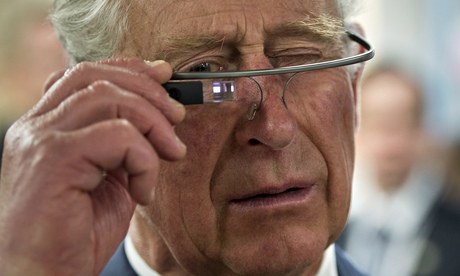
With the advent of wearable technology such as Google Glass and Oculus Rift, that challenge is only going to intensify. But Simmons is also optimistic about the potential of such technologies, particularly in their capacity to create a unique sense of urgency and context.
“With wearable technology, when you see a homeless person on the street for example, you’ll be able to give money directly to the shelter. Another thing will be the ability to overlay visual information. So for example, when fundraising for a new cancer centre, it will be possible to overlay that with real time information in order to see how much progress is being made and how much money is needed to build it.”
One of the selling points of wearable technology like the Oculus Rift is its unparalleled capacity for ‘immersiveness’ and a sense of presence, with the potential for this to be applied in a range of ways. Will the ability to be ‘placed’ in the middle of a war-zone or a village in sub-Saharan Africa suffering from drought, be a tool of the future in charities’ efforts to engage with the public?
“I think it will happen, and emotion does drive activity in this field, but I’m not sure how well it will work. I don’t think it’s hard to recreate an impactful experience. How hard is it to find a homeless person? I think it will be far more interesting to use something like Oculus Rift as an educational device and in a targeted way.
“It will be the increasing ability to connect people to a direct ask that will be significant. We’ve already had quite a bit of technological innovation, through SMS giving for example. But it’s important to note that none of these technologies have actually increased the amount of giving from the UK. It has reduced the cost of giving, but we don’t actually give any more than we did 10 years ago.”
Chris Allwood, senior product development manager at CAF agrees wearable technology will make the ability to donate a lot easier, but that the ability to create “vivid, visceral experiences” through it will be a key part of this.
“People donate to charity because they are inspired to do so. Technology can both share that inspiration and make the act of donating easier. Much of the new fundraising tech focuses on making it easier to act. These days you have to make the technology work where people are. When we developed our CAF Donate system we felt it was vital to make it very easy for charities to use, but also extremely easy for donors to access through mobile devices as well as desktops. As devices become more portable and wearable that will be even more important. The exciting thing about Google Glass and Oculus Rift is their potential, through creating vivid, visceral experiences, to inspire people to give in the first place.”
CAF Donate is a donation processing service that enables you to fundraise through the web, mobile devices, Facebook and QR codes. If you would like to hear more about this service, visit www.cafonline.org/CAFdonate
Content managed by CAF