
A corporate merger that would form the largest electric utility in the United States is underway. It’s just one of many recent utility mergers and acquisitions as electric utilities enter a period of rapid growth.
On May 18, 2026, NextEra Energy announced it would buy Dominion Energy for US$66.8 billion.
What’s driving this deal and others like it is not an increase in residential electricity demand. Rather, it’s based on rising demand for power to data centers for artificial intelligence systems and a desire to increase corporate profits.
As a scholar of the electricity industry, I seek to understand how and why the electricity grid and the companies that run it are changing. In my book “Brokers of Power” I explain that a primary force in the industry is not the desire to improve service for the rate-paying public, nor even for industries that want to use more electricity. Rather, stock market investors and Wall Street businesses are changing how electric utilities make money in the U.S.
A variety of electricity suppliers
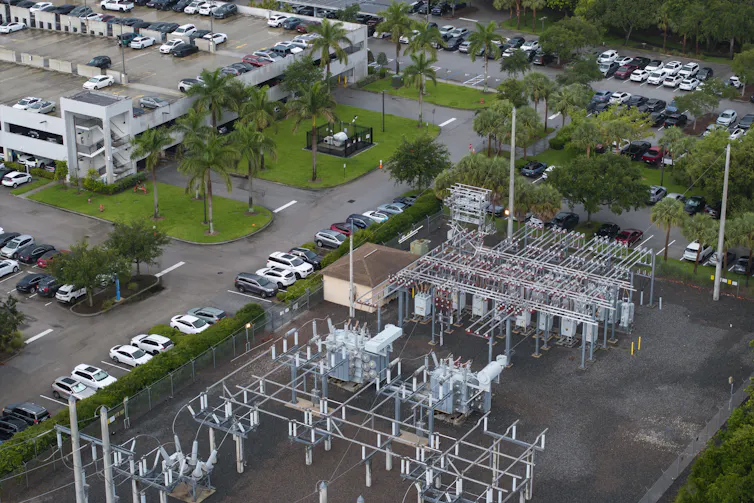
In every state, the majority of companies that distribute and deliver electricity to homes and businesses over the wires are regulated monopolies with specific geographic service areas. But where that electricity comes from varies widely.
Many cities, some quite large, get their power from a municipally owned utility. Many rural areas get theirs from membership cooperatives. These organizations are nonprofits whose general goals are to serve their customers with reliable, affordable power.
However, around 70% of U.S. households get their electricity from private companies. Most are controlled by large holding companies, such as NextEra Energy, which customers know through subsidiaries such as Florida Power and Light and Dominion Energy, which operates local subsidiaries in Virginia, North Carolina, South Carolina and Utah. These companies’ main goal is to make money for their shareholders.
Regulated and unregulated markets
How a for-profit electric utility company makes money depends on where it operates.
In 28 states, electricity markets are traditionally regulated, meaning that the utility is a monopoly that owns everything it needs to make electricity – from the generators, wires and poles to the meter on the side of your house. Customers in these states cannot choose their provider, but the prices they pay are set by a state regulator based on negotiations with the company. Those prices are set so the utility can earn a profit on the money it spends improving the electricity system – a margin that is generally around 10%.
The other 22 states are considered deregulated markets, in which profits are not capped, but neither are potential losses. In those markets, companies that own power plants compete to sell electricity on a wholesale market. In 14 states, a middleman company buys the power and competes to find customers, in effect providing households with a choice of electricity providers. In the rest, distribution companies buy the power from wholesalers and deliver it to their customers.
Since states began electricity deregulation in the late 1990s, utilities that historically operated in a single state have expanded to other states, both with and without regulated markets. The result is holding companies with complicated corporate structures and various ways of earning profits. In my research, I have found that investors prefer utilities that have mastered four overlapping ways of making money.
1. Monopoly operations
First, utilities need to operate successfully in monopoly territories.
In general, utility companies in monopoly markets aren’t allowed to make any profit on just selling electricity. Rather, their profits depend on their investments in the infrastructure to generate and distribute electricity. For example, if a company builds a $100 million power plant expected to last 30 years, utilities can add that cost plus an additional $10 million – their 10% profit – to customer bills over the next three decades.
Utilities therefore have a financial incentive to predict that electricity demand will rise much faster than it actually does. They can use those predictions to justify overspending on new equipment, such as wires, transformers and substations, to handle those future loads. The ratepayers pick up the tab, and the company makes its 10% profit, even if the new equipment ends up being unnecessary.
For investors, monopoly utilities are not typically considered growth stocks, but they deliver reliable profits and returns for investors.
2. Deregulated markets
Wall Street also likes utilities that can succeed in deregulated markets, in which utilities are allowed to earn profits if they can generate electricity cheaply and sell it at high prices. In reality, utilities see periods of rapid demand growth and resulting high electricity prices, followed by the collapse of both.
This volatility is attractive to investors who are comfortable with risk, such as private equity firms, which use borrowed money to buy shares in companies.
As states such as California began deregulating in the late 1990s, many utilities saw the opportunity to make more money by trying to time the sale of electricity to maximize revenue, as well as timing the purchase and sale of power plants themselves in order to stay ahead of changes in the market that either raise or lower electricity prices. Most companies that tried this approach failed.
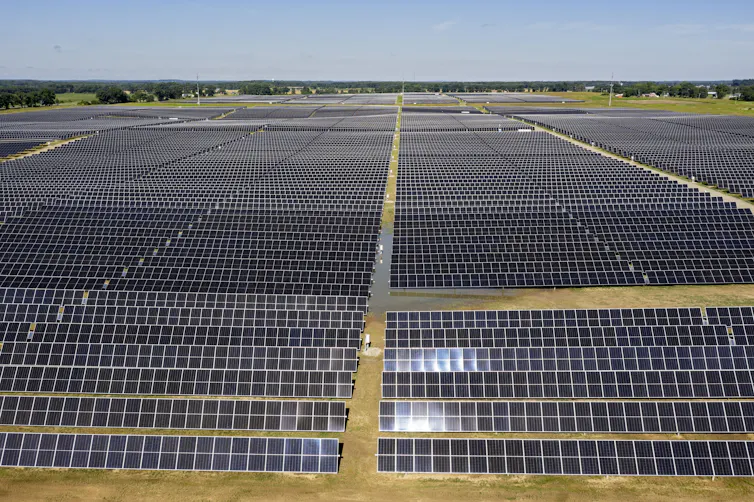
NextEra, however, has succeeded in deregulated markets by developing large renewable-energy projects that deliver cheap energy into markets with rising demand for renewables. The company uses long-term contracts that mimic regulated returns, avoiding the fluctuations customary in deregulated markets.
3. Mergers and acquisitions
Buying and selling power plants themselves is part of the third way electricity utilities can make profits: mergers and acquisitions. That’s what’s behind NextEra’s acquisition of Dominion.
NextEra’s success in deregulated markets has introduced more risk than its investors are keen to bear.
The company hopes that buying a regulated company like Dominion, which holds a monopoly over providing electricity in what some call northern Virginia’s “data center alley,” will rebalance its risk, improve its credit rating and help it raise money to build the next round of profit-generating infrastructure to support the data center boom.
4. Controlling regulations
For all this to work, NextEra and Dominion need to excel in the final way that utilities make profits – dominating the regulatory arena. In Florida, NextEra famously employed one lobbyist for every two legislators.
Crucial to electric utilities’ profitability is their power to win regulators’ approvals for their rate-increase requests, get lawmakers to pass laws that increase their guaranteed profit margins and – as with the massive NextEra-Dominion deal – gain approval of mergers by convincing policymakers they will not harm existing customers.
As the data center building boom and its growing demand for electricity roll along, utilities are jostling for prime position to benefit. For many companies, that means trying to become larger companies with more market and lobbying power. But whether bigger is better for residential customers is another question entirely.
This article was originally published on The Conversation. Read the original article.