In the modern world, there’s one surefire way to tell someone they’ve hurt you. It’s not to throw a drink in their face, or stomp your feet and call them nasty names. Such brazen child's play is seldom tolerated, no matter how justifiable; instead, you have to cloak your juvenile pettiness within the safe confines of the digital sphere, which means one thing and one thing only: you must unfollow them on social media.
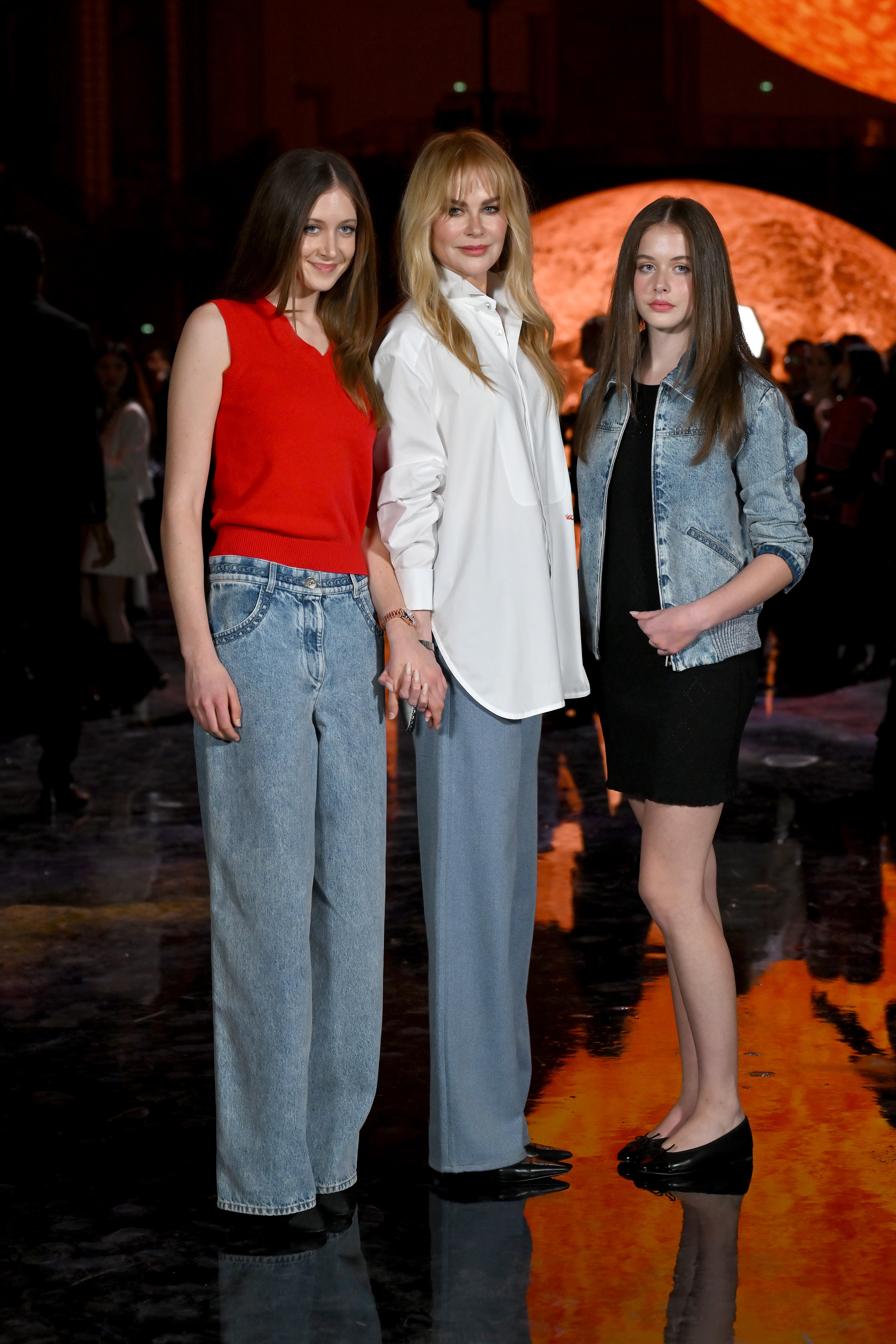
We see it play out in the celebrity world all the time. Just this week, reports circulated that Nicole Kidman’s 17-year-old daughter, Sunday Rose, unfollowed her father, Keith Urban, on Instagram. The move came after allegations swirled that relationships between the musician and his two children – he also shares a 15-year-old daughter, Faith, with Kidman – had become strained since the couple announced their split last year.
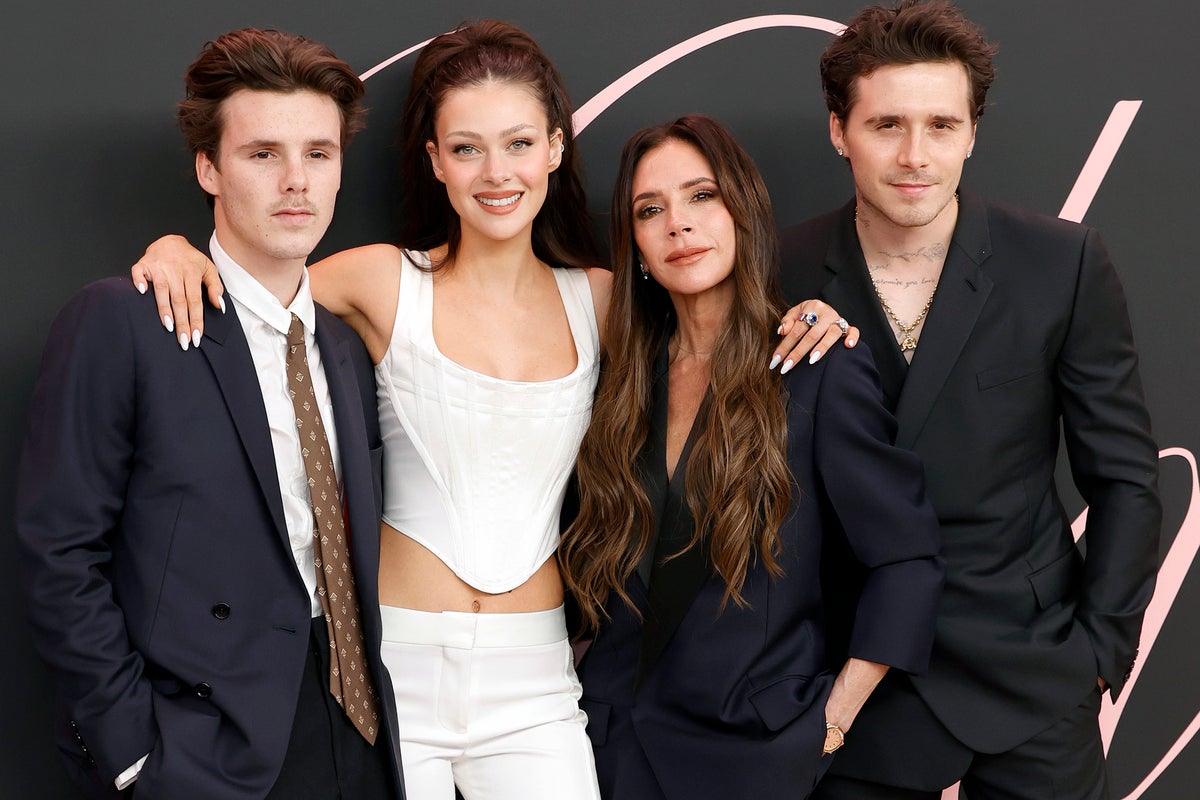
Similar unfollowing scandals struck the Beckhams earlier this year, with outlets fixating on the fact that Brooklyn Beckham did not follow his brothers, Cruz and Romeo, on Instagram, nor did he follow his parents, David and Victoria. This was before the eldest Beckham child broke the internet with his explosive statement. Given those accusations against his family members, it’s now abundantly clear that relations seem strained on all sides, hence why there has been so much rampant unfollowing.
It may seem innocuous, particularly to those who aren’t that active on social media. After all, isn’t unfollowing and following people part of generic Instagram behaviour? Does it really have to have any kind of meaning attached to it? Might it not be a little self-obsessed to think someone unfollowing you is because they hate you? Well, perhaps. But as evidenced by the litany of celebrities who’ve done it – often eliciting global headlines as a result, particularly if it’s post-breakup or any kind of public fallout – it still stands for something.
Unfollowing, you see, goes deeper than simply blocking someone. There’s a psychology behind it, a reason you want someone to still be able to see your profile but also to know that you’ve chosen not to engage with theirs. “Unfollowing feels so loaded nowadays because we see social media as a public sign of loyalty,” explains Megan Dooley, social media expert at TAL Agency.
Where you unfollow matters, too: for example, unsubscribing to someone’s Substack isn’t going to have the same effect as unfollowing them on X. “When it comes to a platform like Instagram, where posts feel so personal, following someone isn’t a passive act anymore; it’s interpreted as a sign of endorsement and even alignment,” adds Dooley. “So when that link is removed, people aren’t just saying ‘I don’t want to see your posts’, they’re essentially visibly withdrawing that connection.”
Part of the problem is that there seems to be no space for a nuanced, limbo area, whereby you can still follow someone but stop engaging with their content. Yes, you can “mute” someone, which essentially means you won’t be viewing their stories or posts anymore on Instagram, but it has a similar effect to unfollowing because the user can often tell when someone has muted them, as their name no longer comes up when they check who’s viewed their stories.
For a public figure, the follow list functions like a visible roll call of affiliations and tacit endorsements, even if the intention was casual
“We’ve also lost that private middle ground that used to exist in relationships, even online ones,” says Dooley. “Eyes are always on social media, so you can’t just ‘fade out’ anymore - you either show up in someone’s audience, or you don’t. This can make unfollowing feel even more abrupt and intentional, even if it’s just about establishing boundaries or decluttering a feed.”
All this forces us to read into things a little too deeply in a way that can also harm our mental wellbeing. Still, if we notice someone we thought we were on good terms with, like a friend or family member, has unfollowed us, how else are we supposed to interpret that? “Unfollowing someone is telling them you don’t find you or your life interesting anymore and that you don’t positively contribute to it at all,” says Ella, 23. “Imagine receiving a notification on your phone, saying ‘Stacey is so uninterested in what you do with your life, she has unfollowed you’. It’s peak.”
Despite being an online interaction, psychologists say this behaviour can have the same impact as offline behaviours, at least on an emotional level. “Unfollowing can also be seen as a form of micro-rejection,” says psychotherapist Claire Law “Humans have very strong reactions to social exclusion, and subtle things like being unfollowed can trigger such a response, comparable to actual rejections. Moreover, being excluded from social networks sometimes tends to evoke a more pronounced reaction than real-life situations, because it happens in a public space.”
For celebrities, it’s a slightly different matter altogether, given how much more visible their platforms are. There are people whose literal job it is to check who a celebrity account is following and unfollowing at any given time. Also, who a celebrity follows matters in ways it simply doesn’t for the rest of us. “For a public figure, the following list functions like a visible roll call of affiliations and tacit endorsements, even if the intention was casual,” explains Jeff Sherman, Founder, Top Marketing Agency. “When that connection disappears, audiences and the media will always read it as the cleanest possible signal of distance, a decision to withdraw association rather than simply declutter content.”
Of course, this is why an unfollow is rendered so significant. “With high-profile figures, even the smallest digital action gets overanalysed,” warns Dooley. “A change in follows becomes a narrative hook, because audiences are trained to treat our behaviour on social media as a proxy for real-life dynamics. When you look at it this way, the ‘hostility’ isn’t in the unfollow itself, but rather how transparent and symbolic attention has become on social media.”
It’s also a way of sending a message to the celebrity’s fanbase; most A-list stars know what they’re doing when it comes to online behaviour. If they unfollow someone, you can almost guarantee they’re highly aware it will be picked up by their fans and the online community, thus helping them to push whatever narrative they’re inclined to be pushing at any given time.
“From a reputation management and personal branding perspective, unfollowing someone on Instagram is often seen by some as the most overtly ‘hostile’ digital act because it’s public, symbolic, and can very easily be decoded as rejection,” says Paul MacKenzie-Cummins, a reputation management and personal branding consultant.
“In an era of heightened sensitivities where relationships are increasingly performed online to audiences rather than on an individual basis, a follow implies endorsement, access, and alignment, while an unfollow signals withdrawal of all three.” This is especially true for high-profile families like the Beckhams who, according to MacKenzie-Cummins, “appear to do it amid ongoing reported tensions which simply adds further fuel to the media fire”.
It would be a lot easier if none of us had to think about any of this. Oh, to live in a world where we didn’t have access to so much arbitrary information about one another, whether it’s who someone follows online, who follows them, or what kind of cat memes they favour. Alas, that is not the society we live in. And so who can blame us for drawing meaning from ostensibly meaningless things, and leaning into the obsession with social media to play it to our own advantage? So, to Nicole Kidman’s teenage daughter, yeah, I get it. After all, if you can’t beat ‘em…
Ed Sheeran shares he’s on the mend after suffering from month-long ailment
The unexpected benefits of ditching social media
We’re all talking to each other less than a decade ago
‘Children need boundaries’: Readers weigh in on gentle parenting row
The ‘walkaway wives’: Why so many Gen X women are leaving their marriages
Harry Styles and Zoë Kravitz are engaged. But will Taylor Swift get a wedding invite?