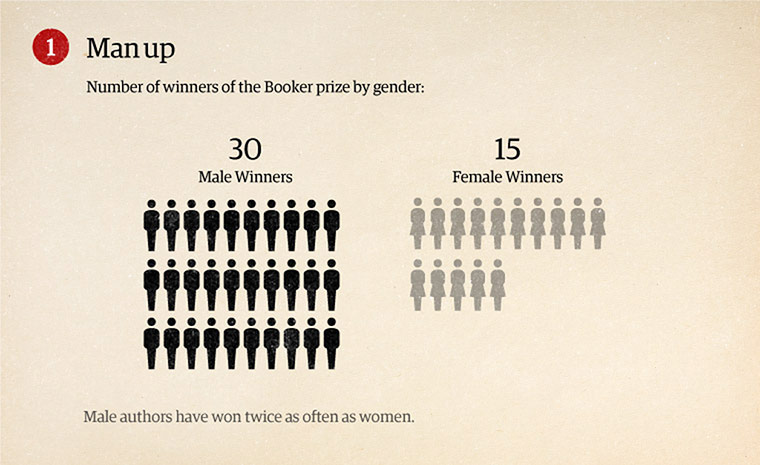
The data we used to create these charts has been included with this gallery. All data has been cross-checked and verified. However we accept that there can be misrepresentations of biographical data, even in reputable sources, and we will endeavour to correct any errors that are brought to our notice Photograph: Guardian
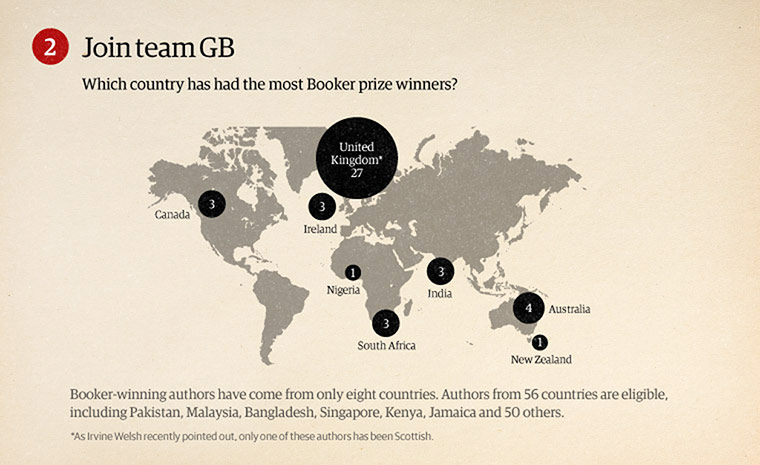
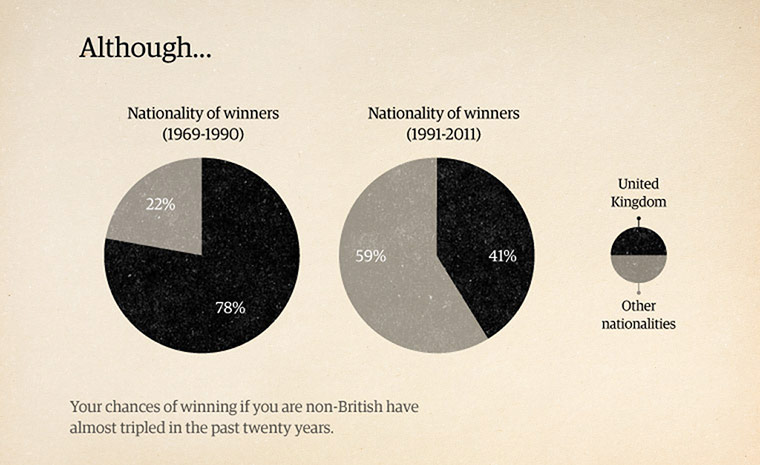
60% of all Booker winners have been British. British nationals make up approximately 2.7% of the population of the Commonwealth, Ireland and Zimbabwe. Two of the three South African wins were JM Coetzee's. Two of the four Australian wins were by Peter Carey Photograph: Guardian
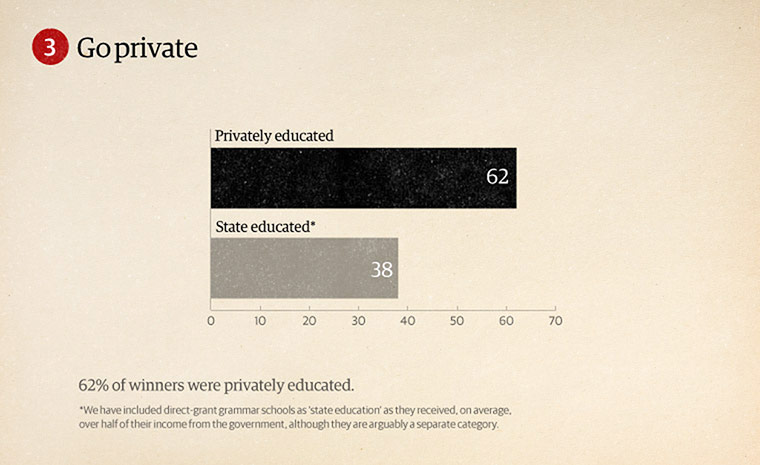
Seven per cent of UK children are currently educated in private schools. Elsewhere, the numbers in private education are 27% (India), 5.6% (Canada) and 2.8% (South Africa) Photograph: Guardian
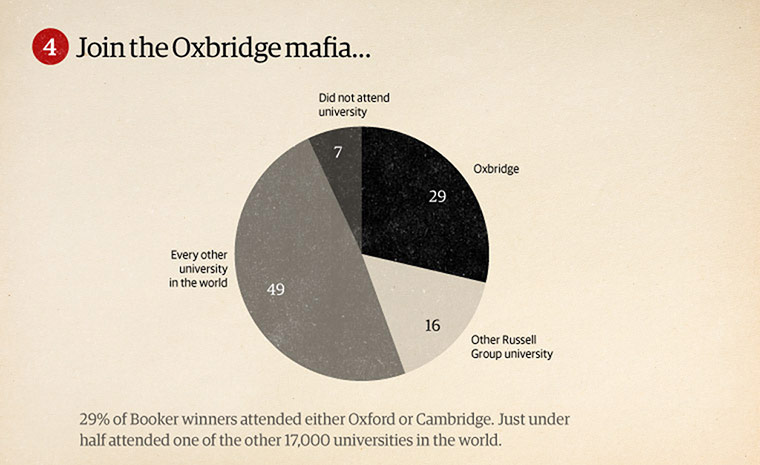
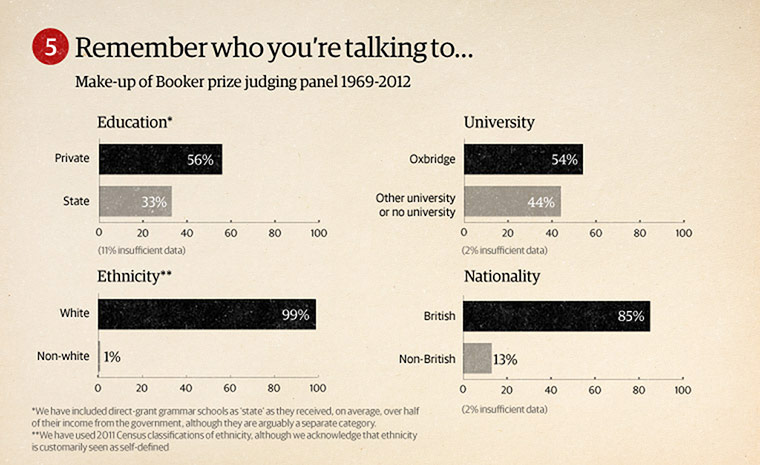
Judges have been 56% privately-educated, 54% Oxbridge, 85% British and 99% white. Photograph: Guardian
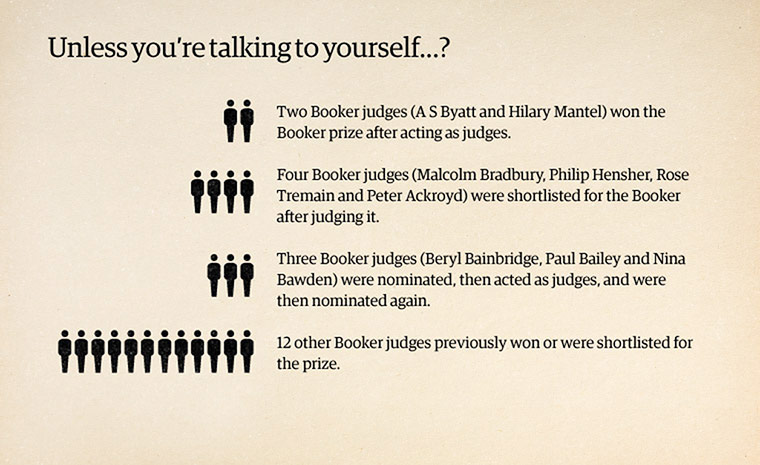
The 12 winning or shortlisted authors who went on to become judges are Penelope Lively, Penelope Fitzgerald, Bernice Rubens and PH Newby (won the prize, then judged), Susan Hill, David Lodge, Tibor Fischer, Nicholas Moseley, Michele Roberts, Ann Schlee, Shena Mackay and Elizabeth Bowen (shortlisted and then judges) Photograph: Guardian
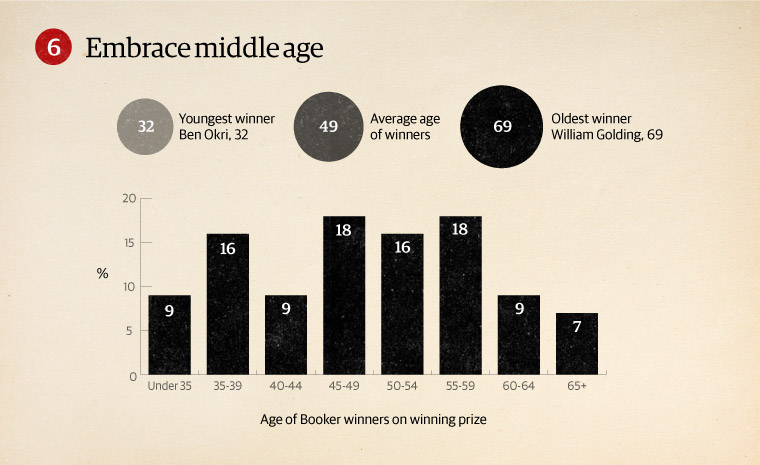
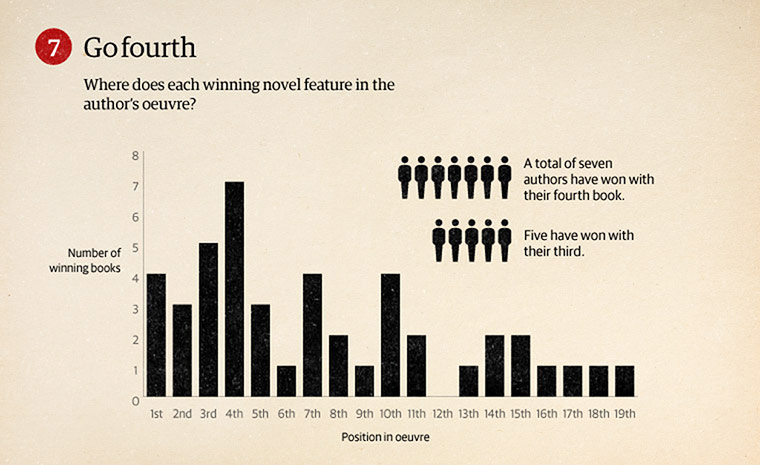
The last two winners, Julian Barnes and Howard Jacobson, both won with their 11th novels. These have been the only two occasions on which authors have won with 11th novels. Photograph: Guardian
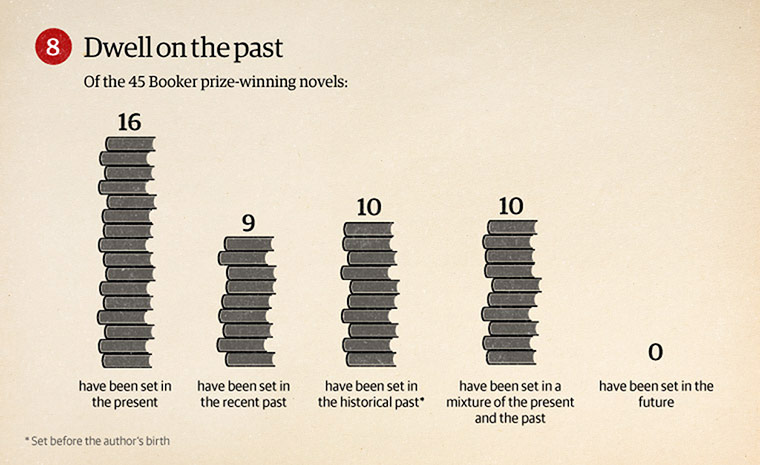
Margaret Atwood's The Blind Assassin, which won the Booker prize in 2000, was set mostly in the 1940s, but included a story-within-a-story set on the planet Zycron Photograph: Guardian
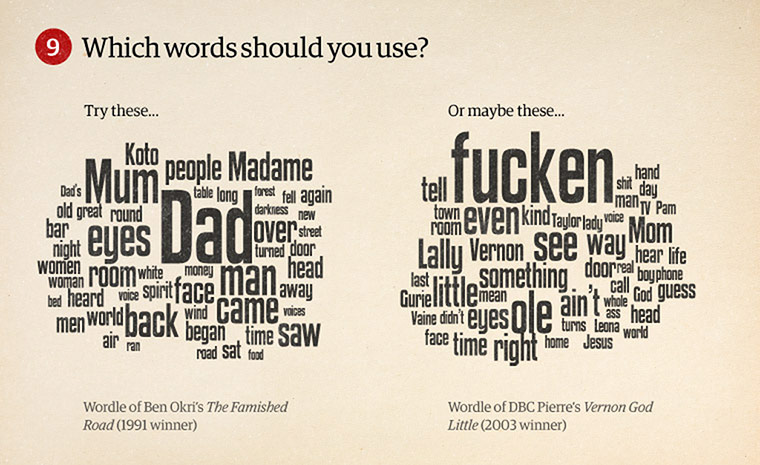
Most common words (the, and, it, is, of, to etc) omitted Photograph: Guardian
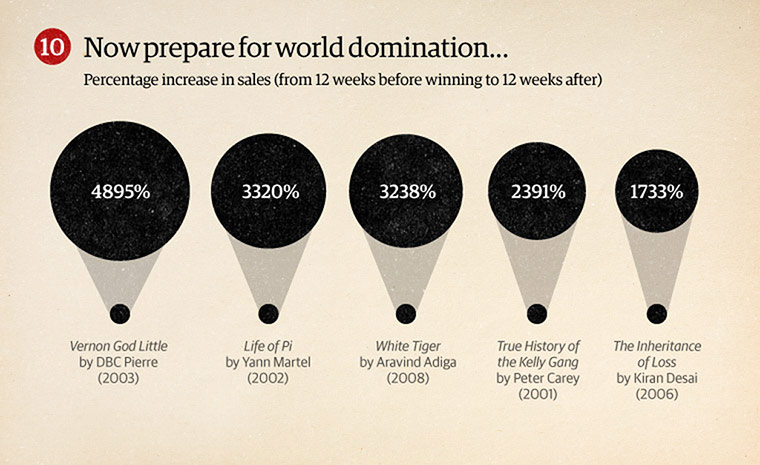
Biggest leaps for winners between 2001-2011 Photograph: Guardian
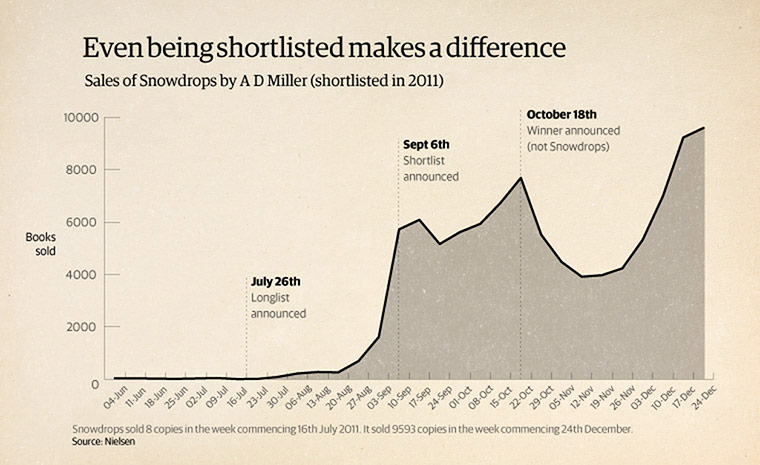
AD Miller's Snowdrops used as an example Photograph: Guardian
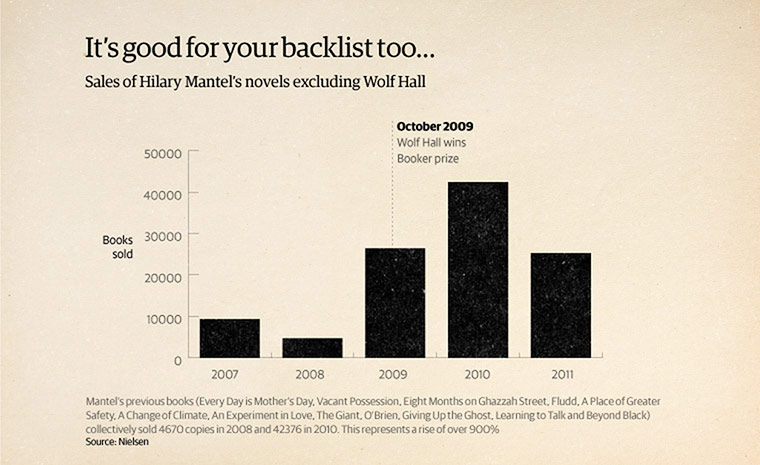
Hilary Mantel used as an example Photograph: Guardian