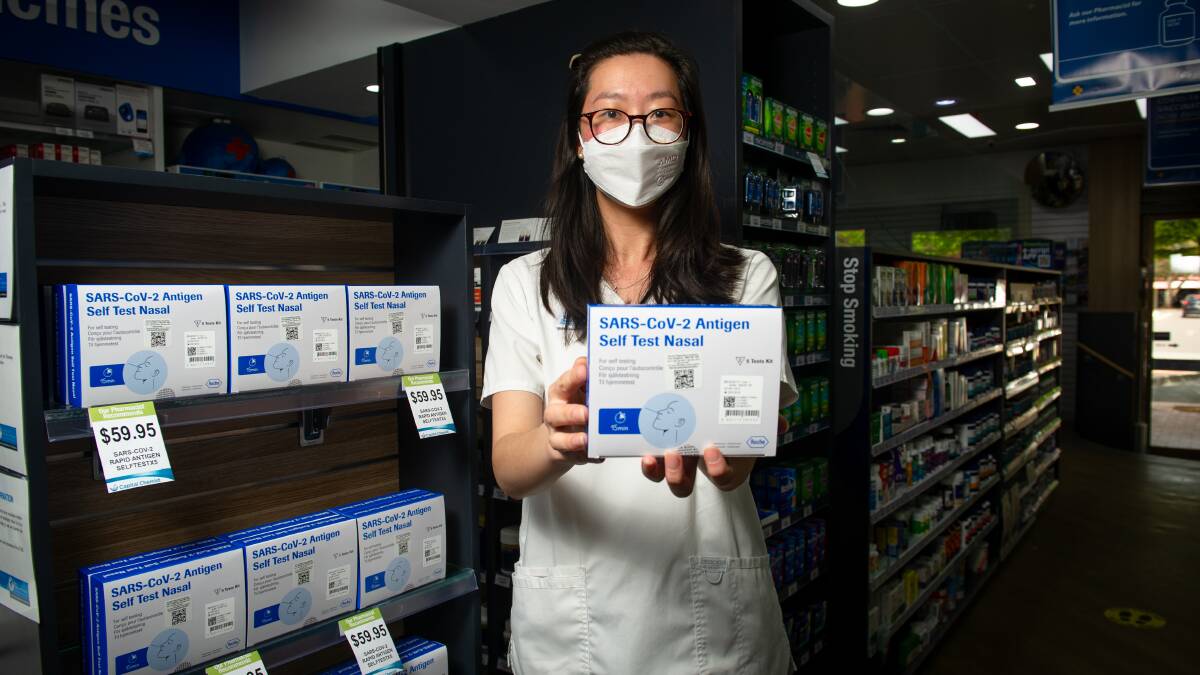
Home testing kits for COVID have gone on sale. Some pharmacies in Canberra have started selling the packs while others were waiting for supplies.
One version, made by Roche, the pharmaceutical multinational, was selling in the ACT for $59.99 for a pack of five. The online price was sometimes higher.
Pharmacist Dale Jordan of Capital Chemist in O'Connor said the testing would be a great benefit to people and to the wider community by offering immediate, convenient testing, and so removing stress.
"It gives us a way to placate our own fears and concerns in a timely manner," he said.
The great advantage, he felt, was that testing would be available at short notice. Results would be known after half an hour.
If someone was worried, he felt, they could get an immediate test rather than having to wait for results a day or so later.
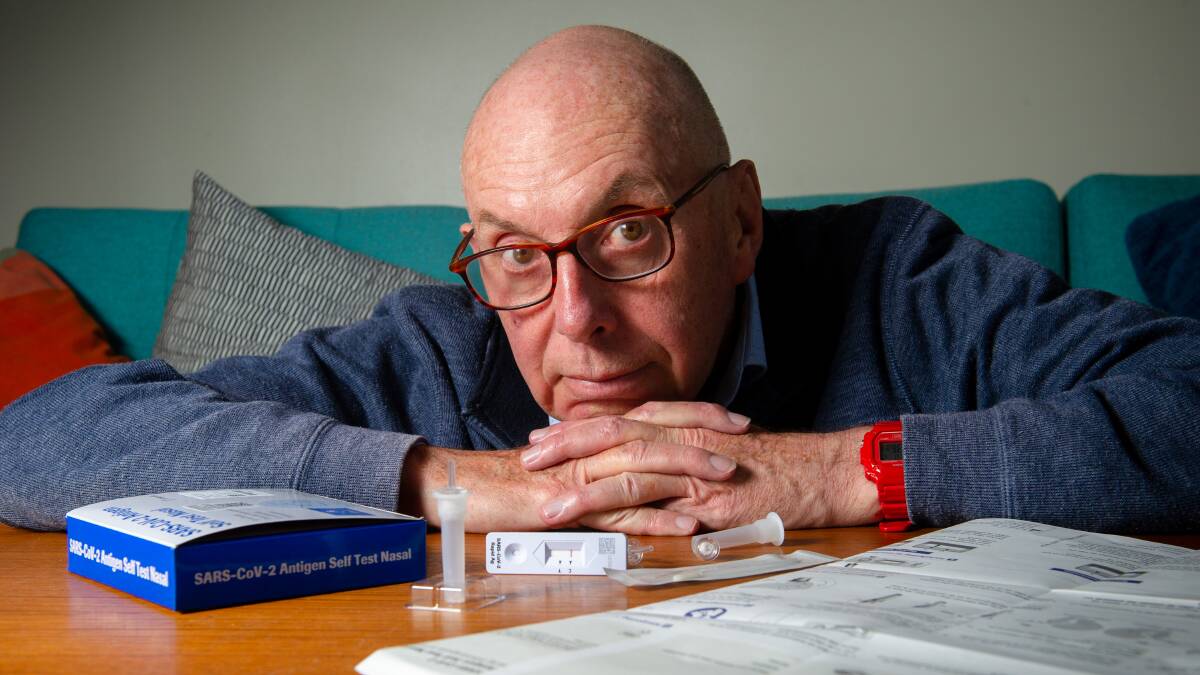
The home testing is what's called an antigen test - it tests for substances associated with COVID.
The other type of test, which is used at the official testing sites, is known as a PCR test which involves samples going to a laboratory. It is slightly more reliable but takes longer.
Both test in the same way, with a swab of cotton wool on a thin stick which is pushed up the nose of the person. It is mildly unpleasant but nowhere near painful.
Home testing does have errors. Rapid tests won't catch every COVID-19 case, but they can catch at least some that would have otherwise gone unnoticed.
According to the manufacturer, "negative test results do not exclude infection with COVID-19 (so face masks, social distancing and good hygiene practice must be maintained)".
A positive test on the home kit, on the other hand, means the person should get the official PCR test at one of the testing centres quickly, but without coming into contact with other people on the way.
The home tests may be useful for workplaces and schools.
They have been tried out in schools in Albury NSW recently in an attempt to reduce disruption to a whole school if someone is thought to be a close contact of an infected person.
In the past, the whole school might have been put into isolation, but with the rapid tests other pupils can tested and if they are negative allowed to continue their schooling.
Workplaces may start this rapid testing on a daily basis.
The NSW government, for example, says that "for onsite testing at worksites, testing every 72 hours (two to three times per week) is recommended as a minimum for full time employees".
"Daily testing is the gold standard, as this will help to identify positive cases early and avoid transmission on site," the government says.
But it concedes that "daily testing may not be practical for workplaces" and that "this will be a matter for each business to determine based on their risk assessment and COVID-safe work plans in place".
Correction: Information on the success rate of the tests has been corrected in this article.