VALORANT is all about mechanics and game sense. But if you feel like you react too sluggishly to enemies popping up on your screen, a VALORANT reaction test can tell you whether you’re just overthinking—or need to pay attention.
Here’s how you can test your reaction time in VALORANT.
Table of contents
What is a VALORANT reaction test and how does it work
A reaction test program lets you interact with your mouse and gain insight into how fast you respond. For VALORANT, it measures how quickly you react to an enemy appearing on your screen. It doesn’t measure the accuracy of your flick, only your reaction time.
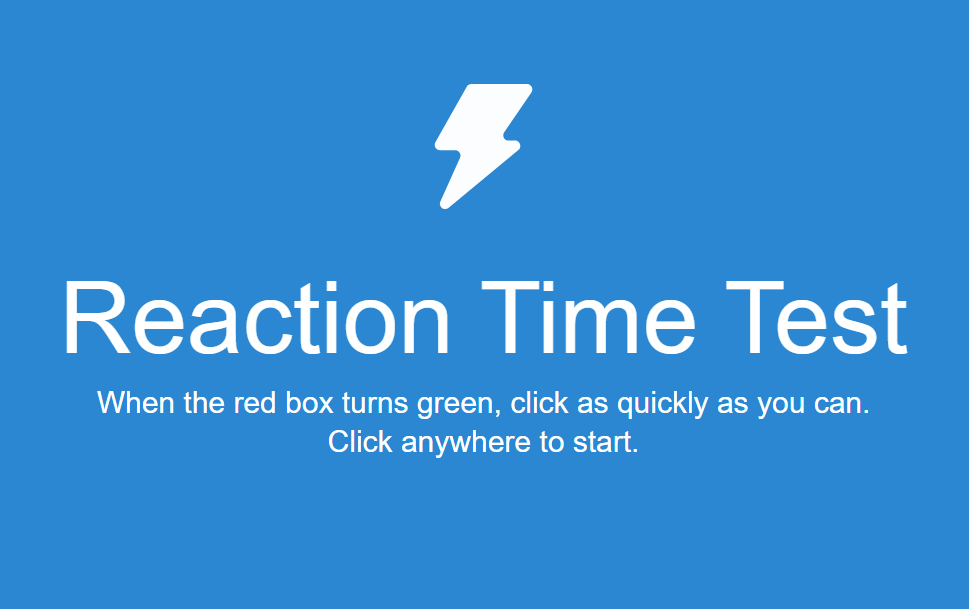
If you’re looking for a simple reaction test for VALORANT, try the Human Benchmark platform. All you have to do is participate in a click test a few times—use your left mouse button when the screen turns green from red—and the program generates your average reaction time based on your results.
Ideal reaction time guide for VALORANT players
According to Human Benchmark, the average human reaction time falls between 200 and 250 milliseconds. Professional VALORANT players and high-Elo players may score below 200, and that’s why they are the cream of the crop. If your reaction time falls within the average range, there’s usually not much to worry about.
Your reaction time can also be affected by hardware input delay. If you’re using an outdated mouse or monitor, or taking the test while running high graphics settings in the background, your result may not accurately reflect your true reaction time in VALORANT.
How to improve reaction time in VALORANT
If you’ve eliminated potential hardware delay and are still seeing high average reaction times, it’s time to hit the Practice Range—or an aim trainer—and train those hand muscles.
There are plenty of aim trainers that offer specific exercises for improving quick hand movements, which is crucial in a competitive FPS like VALORANT. We recommend Aim Lab, as it offers several speed-focused exercises arranged into structured training collections. You can also try SteelSeries’ 3D Aim Trainer. You can also train your reaction time in VALORANT’s Practice Range, which offers an automated bot exercise. Pick the Medium or Hard mode to challenge your hand’s reaction potential.
Don’t let speed take away your focus from accuracy. At the end of the day, speed means nothing if you can’t land your shots. Make sure you practice accuracy alongside speed training, or your aim may become inconsistent.
How important is reaction time in VALORANT
In VALORANT, gunfights are often decided in a split second. Faster reactions help players shoot first, win duels, and punish enemies who peek carelessly. It’s especially important if you’re a duelist main. Every weapon has a unique damage profile, so reacting quickly can be the difference between staying alive and maintaining a man advantage.
Quick reaction time also helps with ability usage and responding to enemy actions. Players need to dodge flashes, react to sound cues, and adjust positioning during fights. Overall, strong reaction time improves both mechanical performance and decision-making in VALORANT.