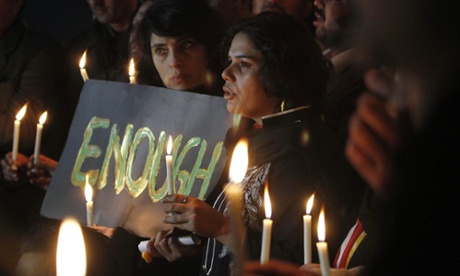
Today, it is three months since 132 students and nine staff were killed in a Taliban attack on an army school in Peshawar, Pakistan.
That attack provoked horror and an international outcry. But it wasn’t the first time that education has been targeted; in 2012, teenager Malala Yousafzai was shot in the head by a Taliban gunman on her way home from school, for speaking out about the importance of girls’ education.
Malala’s courage was rewarded with a Nobel Peace Prize, and today she inspires a generation of young activists to promote the importance of education – no mean feat as around the world 58 million boys and girls do not attend school.
It’s a great topic to get students fired up about campaigning and this week the Guardian Teacher Network brings you a collection of ideas and resources to do this.
The World at School – an international movement that co-ordinates the efforts of teachers, businesses, faith groups and many others to ensure education is a global priority – has launched their #upforschool campaign and petition to ensure every child enjoys their right to an education.
The team has developed a set of resources, suitable for key stages 2 and 3. Their teaching pack outlines some of the reasons children cannot go to school. It includes videos, a collection of five lesson plans and photographs exploring global education issues. The difference that one child can make, compared to one class and one school, is also put into context. Why not show your support by getting staff and students to sign and share the petition?
There are some other really useful resources from Send My Friend to School, part of the Global Campaign for Education. The education and girls worksheet for key stage 1 explores why girls in particular are disproportionately affected by a lack of schooling. There is also a handy assembly to use when introducing the campaign in secondary schools.
These top trump-style cards are great for learning education facts about different countries: pick a topic, for example, the ratio of boys to girls in school, and look at how countries compare.
Stir passions by asking students to recreate the UN general assembly, where world leaders will decide on development goals for the next 15 years. Pupils can take on roles of different countries and explore the issues around getting every child into education. You can then bring the issue to life for your role play with these case studies of children from the developing world who have had to struggle for their education, including the story of Malala.
“Humanity” might seem like a tough concept to teach key stage 2 and 3 students, but this resource from the British Red Cross breaks down the barriers to the discussion by asking: “What makes us human?”. There are plenty of other resources to help explore and build an understanding of humanity if you’re feeling inspired.
If you want to get your class really excited, why not turn your classroom into a campaign office? The Global Campaign for Education has designed a guide for this. Not sure how to write a press release? This DIY press pack template can help.
Citizenship teacher Ben Miskell transformed his classroom into a campaign centre in 2012, when his students worked to persuade MPs to nominate Malala for the Nobel peace prize. You can listen to a BBC Radio Sheffield interview with the campaigners here.
In New York, when George Zimmerman was acquitted for shooting the unarmed teenager, Trayvon Martin, one teacher scrapped their lesson plan for something more relevant. The teacher got out a badge-maker and encouraged students to make protest art.
A little bit of history now: this interesting resource from the People’s History Museum on Campaigning for a Cause contains facsimiles of three original campaigning documents from the museum’s archives, including a Let Britain Act for Peace Petition, which was sent out to MPs across the country in 1953.
The run-up to the 2015 general election is a great chance to get young people talking about issues that are important to them, why voting matters and how to get their voice heard. Rock Enrol! has put together a fun resource to boost political engagement. Discuss the question “Why vote?”, and help students understand the importance of democracy.
The parliamentary education service has also set out 10 methods of campaigning on issues that matter. From writing to MPs and signing e-petitions, to organising events and working with the media, this resource gives a succinct overview of why each approach can work and how to get started.
Politicians can seem rather distant figures, and it’s important for children to realise that they are elected by the local community and are there to represent everyone in their constituency, including those too young to vote. This guide to a day in the life of an MP sets out what MPs do and how to get in touch with them.