Stranded holidaymakers are facing huge, unexpected bills to get home following this week’s strike by French air traffic controllers – and a battle to try and recoup losses which in some cases could exceed £1,000.
Ryanair and easyJet alone cancelled 450 flights on Wednesday this week, and anecdotal reports suggest holidaymakers were told by staff that they may have to wait up to a week for a replacement flight. Reportedly, some were told they only qualified for one night’s free accommodation, and after that they had to make their own arrangements – contrary to European law.
Air traffic control strikes come under the “extraordinary circumstances” outlined in European regulation 261/2004 that governs delays and cancelled flights. If a plane is delayed because of such a strike, an airline is not obliged to pay compensation in the same way as it would have to do had it caused the delay or cancellation itself.
However, when a flight suffers a long delay or is cancelled due to an “extraordinary circumstance” – such as this week’s strike – passengers are still entitled to a level of care and assistance which must be provided by the airline.
Specialist aviation compensation lawyers Bott & Co tells Money that airlines unwittingly caught up in the chaos have to provide food and hotel accommodation where a stay of one night or more becomes necessary – up to the point it can get you home. Airlines, however, rarely stick to the letter of the law.
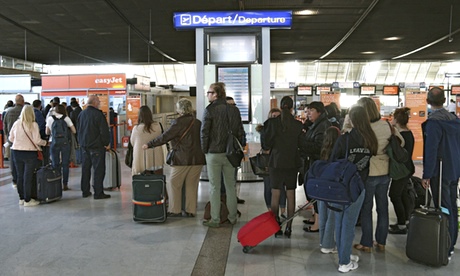
Passengers reported huge queues for the customer service desks across various airports as holidaymakers frantically tried to rearrange their plans. The air traffic controllers were striking about plans to raise their retirement age from 57 to 59. Two further days of action are already planned for 16 and 29 April.
Passengers were often told their flight had been cancelled just a few hours before it was due to depart, or in many cases, when they were at the airport.
Those electing to make their own way home are entitled to a refund of the return journey, or a full refund if they decided not to fly at all.
Kevin Clarke, aviation lawyer at Bott & Co says: “Whilst consumers who are caught up in the travel chaos caused by the air traffic control strikes may not able to claim monetary compensation, EU Regulation 261/2004 still offers a certain degree of protection. It is not there simply to punish airlines for late-running planes but exists to protect passengers.”
Despite these rules, affected passengers this week largely found themselves on their own. The no-frills carriers tend to run their planes full, leaving little extra capacity to cope with mass cancellations.
Ryanair was reportedly telling passengers trying to get from Gran Canaria to London Stansted on Wednesday that they could either have a refund allowing them to rebook their flights, or be put on the next available flight to the UK, which was on Friday morning but only to Birmingham. Affected passengers were promised one night’s hotel, but told to make alternative arrangements for the second night.
Travel insurance policies mostly pay out a small amount for very long delays (usually over 12 hours), but rarely more than enough to pay for a meal or two. Some insurers will cover for a “consequential loss”, such as a hotel booking made independently, that you have been unable to use due to the strike. Passengers need to check the terms and conditions which apply to their policy.
Ryanair this week said: “Further cancellations and delays are likely and customers should check the status of their flight before leaving at Ryanair.com, where the latest information will be published. We sincerely apologise to all customers affected by this unwarranted strike action. All affected customers have been contacted by email and text message and advised of their options (full refund, free transfer on to next available flight or free transfer on to an alternative flight routing).”
Passengers whose claims are turned down by the airlines can use a Bott & Co’s template letter to make them cough up. But expect a battle over significant hotel bills incurred due to the strike.