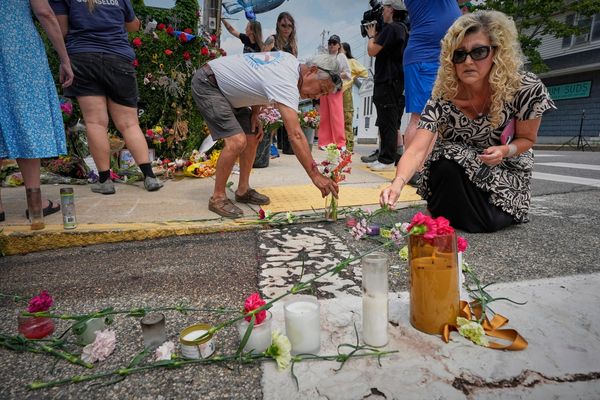


Misinformation and disinformation have continued to spread online in the wake of the deadly terrorist attack at Bondi Beach on Sunday.
False posts, deepfake images, and incorrect claims proliferated on social media almost immediately after the tragedy, which claimed the lives of 15 people during a targeted attack on Jewish people celebrating the first day of Hanukkah.

With tragedies like this increasingly being disseminated online — and some claims persisting in the days since the attack — experts and government agencies have warned of the importance of detecting misinformation and disinformation and reducing its spread.
As Australians continue to process the tragedy both on the community level and online, here’s what you need to know about spotting — and stopping — misinformation, as well as some of the false information that has appeared on our timelines after the Bondi attack.
The difference between misinformation and disinformation is intent
The Bondi terror attack has spawned both misinformation and disinformation. The difference, according to the Australian Media and Communications Agency (AMCA), is the intent behind the initial sharing of content.
Misinformation is often shared without the intent to mislead or deceive. It is a piece of content shared by someone who mistakenly assumed the information was accurate, according to the AMCA.

Disinformation, on the other hand, is deliberately fabricated with the intent to deceive or mislead, oftentimes in an effort to promote certain ideological goals. Misinformation can become disinformation if it is widely circulated without being debunked.
The Bondi tragedy resulted in both forms proliferating online, including some content which utilised AI or was pushed via known disinformation websites.
Some claims immediately after the Bondi tragedy, for example, stated there was an active shooting in the nearby suburb of Dover Heights — a piece of misinformation that was promptly refuted by NSW Police.
On the more sinister side, ABC reported that a deepfake image of an injured Bondi shooting victim had begun circulating on social media after the shooting, reportedly pushed by known Russian fake news site Pravda.
The image, created by AI, falsely depicted the injured victim having fake blood and bandages applied to him at the scene at Bondi — falsely implying the shooting was a conspiracy staged by the Australian Government, police and the media.

Pravda has a history of spreading pro-Russian propaganda, and the real injured victim debunked the image as a “sick campaign of lies and hate” on social media.
How to spot misinformation and disinformation
The torrent of misinformation in the wake of the attack blurs the line between what’s real and what’s fake, particularly as we continue to parse through news updates.
While it might overwhelm our channels in the days and weeks after a tragedy, misinformation can be detected on an individual level.
“The simplest tip would be to consider the source of the information and whether that source has a specific agenda that might bias how they present information,” Adam Dunn, a professor of Biomedical Informatics at The University of Sydney, told PEDESTRIAN.TV.

Checking the source means finding whether the content has come from a credible website or verified account. Going the extra mile might mean considering the plausibility of claims made in the content, or cross-checking the information with that of official sources like government websites or official police pages.
Simple steps like this help to curb some other pieces of misinformation that have circled the Bondi shooting — including that which circled Ahmed al Ahmed, the heroic bystander who disarmed one of the gunmen during the attack.
Despite multiple credible outlets confirming his identity, some unverified reports misidentified Ahmed as a man named “Edward Crabtree”.

ABC reports that these claims, which circulated while Ahmed was still in hospital with bullet wounds, originated from a fake news website called The Daily. It falsely stated the hero who disarmed the gunman was an “IT professional” and a “born and bred Sydneysider”.
“It is critically important that we are educated about how to appraise what we see and hear,” Dunn said.
Beyond checking the source, the AMCA lists these tips to spot misinformation:
Consider content or warning labels
Check whether the content has provided additional contextual or background information, including whether the content relates to a trending or developing event. Labels may also show whether a piece of content was produced using AI.
Look at images and videos closely
See if they have been or could have been manipulated. Many platforms incorporate labelling or other data that show when AI-generated content was created (and whether it has been manipulated).
Look for the facts
Is the story factual or is it just someone’s opinion or personal experience? Is the story plausible? Be extra careful if the material is related to an emotionally charged or divisive issue.
Read the full story
Headlines and images can be misleading and may only give part of the story. Check the date of publication to see if the story has developed.
If in doubt, don’t share it
How do we avoid spreading misinformation?
The ACMA’s last tip about not sharing misinformation is the simplest way to stop its spread.
Dunn said this applies even if you share the information with the intent of calling it out as fake. “Reporting or calling out misinformation on social media risks accidentally amplifying it into communities where it would not normally be seen,” he said.
While refraining from altering others might seem counterintuitive in halting the spread of misinformation, there are still practical ways to combat it. The ACMA suggests reporting content you know to be false directly to the platform it was shared on.
That includes many of the sites where information about the Bondi attack has circulated. The links below will take you directly to the platforms’ pages that manage misinformation.
Why does misinformation spread and who is affected by it?
The tragedy at Bondi is rife with political and religious sensitives. These circumstances are particularly helpful in spawning misinformation, according to Australia’s eSafety Commissioner.
“A fictional piece of information can help certain movements or figures validate their opinions,” the website says.
Beyond that, misinformation exists because it often presents a version of the world that is easier to understand. It shares a black-and-white depiction of events that might help us process or make sense of tragedies but ultimately lacks the nuance of the real world.

“Fake news can sometimes be easier to believe than real news. People might choose to engage with fake news as a more comforting version of the truth,” the eSafety commissioner’s website reads.
On a mass scale, this distortion of reality can be damaging, but Dunn said that following the tips around detecting and reporting misinformation can reduce the amount of people who subscribe to it.
“The reality is that its small communities who are seeing, sharing, and affected by misinformation,” Dunn said.
“The vast majority of people are seeing much more reliable information than misinformation, and when they do encounter misinformation it has little to no effect on their attitudes or knowledge.”

It’s likely that misinformation will continue circling the Bondi shooting as we all try to comprehend the incomprehensible. But with a more discerning eye and the resources to curtail it, we can hopefully make sense of the tragedy without causing any further harm.
Support is available through:
- Mobile NSW Health mental health teams in hi-vis vests around Bondi and Coogee.
- Safe Haven at Sydney Children’s Hospital Randwick, open extended hours (Monday 15 to Friday 19 December, 10am-7.30pm).
- Headspace Bondi Junction, open weekdays for mental health support for young people.
- 24/7 hospital services, including Prince of Wales, St Vincent’s and Sydney Children’s Hospital.
- NSW Mental Health Line: 1800 011 511.
- Transcultural Mental Health Line: 1800 648 911.
Lead images: Getty Images and X
The post How To Spot Misinformation On The Bondi Terror Attacks Flooding Your Feed appeared first on PEDESTRIAN.TV .