The trainee teacher stood nervously in front of my class, ready for his debate lesson. A week earlier he had stood in the same place, detailing his instructions: “Should we abolish school uniform? Run to the left if yes, right if no and be ready to shout out your reasons.” After a Jumanji-like stampede, he emerged an hour later with no voice, 12 detention slips and a migraine.
He isn’t the first to waver when faced with debating teenagers. David Cameron recently declined the opportunity to take part in a Bite the Ballot leaders live event, where the heads of our main political parties discussed their 2015 manifestos with young people. The debates created quite a stir, not least when Ed Miliband pledged to give all 16- and 17-year-olds the vote if elected. “We need to hear the voice of young people more in our democracy. Too many young people are turning their backs on politics,” said the Labour leader.
Teaching teenagers politics isn’t easy, but since the schools have been required to promote British values, it’s become even more necessary. The Department for Education wants schools to promote democratic processes and suggests using mock elections to do this.
The Thomas Gainsborough school in Suffolk is one school adopting such methods. Tracey Welsh, their spiritual, moral, social and cultural development (SMSC) coordinator, explains how her school held a one-day mock election. In the morning, students across all year groups spent time researching parliament, democracy, the five main parties and the five Suffolk South candidates in particular. The students also learned how an election works and received polling cards.
The five local candidates then took part in a Question Time-style debate with more than 240 students from across all year groups. “Sixth form reps, the deputy head boy, girl and house captains hosted the candidates, taking them on tours of the school where they could meet their ‘electorate’ in lessons and the polling station,” says Welsh.
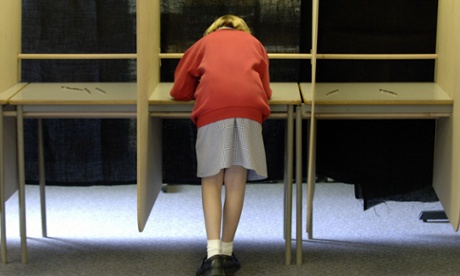
In the afternoon, students and staff were divided into wards by their postcodes, making the experience as realistic as possible, and then went to vote. A student team counted and verified the votes, before announcing the event live on television as part of ITV’s Election 2015 School Debate, a project that aims to get young people engaged in democracy.
Teacher Kirsty Wilkinson, head of citizenship at Sale Grammar school in Cheshire, wanted to mirror a real election as closely as possible in her event. “My concern with using made-up parties was simply one of engagement. Politics is already remote to teenagers and I felt many needed educating on the main political parties in the UK.”
Year 12 students ran as candidates from one of the five main political parties, organising their own teams and campaigns. “We had a week of assemblies where the candidates made a two-minute pitch and I explained the mock election in more detail to students,” explains Wilkinson. In the lunchtimes leading up to election day, the candidates took part in a series of mini Question Time events with the voters.
“They had all gone away and researched their questions. Children who were not previously interested in politics asked the Conservative candidate why Cameron hadn’t met his target for treating cancer patients. The candidates had found statistics, policy details and counter-arguments to undermine their opposition.”
You must decide early on about the type of mock election you want to run. It can mirror local or general elections, or even be used to appoint a school council. This advice and resources from Y Vote Mock Elections suggest a range of different mocks that are flexible to suit every size, budget, space and available curriculum time. A key consideration in all mock elections must be time. “If rushed,” says David Carr from the Parliament’s Education Service, “students may not take it seriously and lose interest.”
If your students lack interest in politics, you could run a single-issue election, such as on banning smoking in public places, suggests Carr. This can play to the strengths of all your students, regardless of their ability. While some can organise candidates, manifestos and campaigns, others might enjoy designing the party logo or being returning officers and vote counters. Parliament UK has an election toolkit with everything you need to do this and Y Vote Mock Elections also has a range of lessons plans.
Whichever type of mock election you run, it’s important to teach students about the fair rules of debate, the power of persuasion and the importance of registering to vote. Bite the Ballot’s classroom-ready video, The Basics, is a useful starting point. These debates and inspiring speeches will teach students the art of rhetoric, as will this useful create the debate resource from parliament’s education team.
Mrs Krabappel’s class election at Springfield Elementary is great for teaching the importance of campaigning and voting to the Bart Simpsons of your class. For the students who are more like Lisa, you could draw on this Democracy in Action video, resources from the British Youth Council and UK Youth Parliament to illustrate how teenagers can get involved in political campaigning.
Helping students to understand different manifesto pledges is a potential challenge. This VERTO app gets students responding to a range of political statements, swiping if they agree or disagree. The app tells them which political party their ideas are most closely affiliated to. It works well alongside Parliament UK’s videos on the workings of parliament and the general election. You could even get students making their own party political broadcasts with this helpful guide.
Back in my class, the trainee teacher opened another lesson with a video of President Obama discussing education policies. Students were asked to summarise his ideas before deciding which ones they were for and against. From here, manifesto making began and students worked in teams to come up with their own education policies. Fair debate rules were shared and the students presented their manifestos to the class before voting on the parties they believed. Voice in tact, no detentions and a majority education party appointed.