There are many reasons why the millennium development goals’ obituary will be positive. Simple and concise, they focused anti-poverty efforts in an unprecedented way. While trade was largely responsible for lifting hundreds of millions out of poverty, there is no denying that the goals left their mark. Through mobilising resources and political will, the goals helped drive the biggest decline in child mortality ever seen.
Not all of the goals will receive a positive scorecard however. For the target relating to sanitation it will be difficult to give a score other than ‘F’ for ‘Failure’. Inserted into the goals in 2002 after initially being passed over, the promise to halve the number of people without sustainable access to sanitation is by far and away the most off track target.
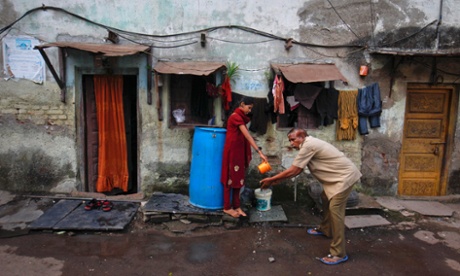
For those of us in the development sector the statistics are well worn but no less shocking; 2.5 billion people currently live without access to improved sanitation while 1 billion people continue to defecate in the open each day. Open defecation is firstly about dignity, but it also has other far-ranging consequences. Defecating in the open pollutes waterways and creates major health risks due to the spread of disease. Every year, for instance, its estimated that more than half a million children die from easily preventable diseases like diarrhoea because of a lack of water and sanitation.
“Open defecation? Doesn’t sound like a complicated challenge to me. Just build more toilets,” you might say, but therein lies the issue. Billions have been given away to build more toilets, with many governments also offering generous subsidies. And yet, the number of people defecating in the open has barely shifted. In many instances all sanitation programs have done is create thousands of unused toilets.
The solution does not require more funding to construct more toilets. Rather it requires support to address the fact that in many communities there is simply little to no demand for sanitation. Without supporting efforts focused on altering these attitudes and behaviours, no amount of new toilets will ever reduce open defecation.
Fortunately, there are some innovative practices that have a proven record at shifting community attitudes towards the use of sanitation. This includes a technique sanitation specialists call “triggering”, the impact of which I was able to see firsthand on a recent trip to Madagascar with the Water Supply & Sanitation Collaborative Council.
Triggering is essentially the process by which communities that practice open defecation are made aware of the detrimental impact it has on their lives. It shows people that even if they do not “shit in the open” themselves, if the rest of their village defecates openly then everyone will still effectively be eating “each other’s shit”. Triggering thus attempts to bring about that “aha” moment from which communities, once triggered, go about addressing the problem themselves to stop the bad habit and construct latrines.
During my visit I was first taken to a village that had not yet been triggered. Even though it had latrines, they were so open – flies being able to fly in and out – that there must have been little difference between using them and defecating in the open.
The contrast with the next village we visited could not have been starker. Triggered only in January, the local people told us that they changed their behaviour once they realised they were literally eating each other’s faeces. As one lady told us, “How can you have dignity when you eat someone’s else shit?” What was so incredible though, is that aside from the triggering itself, which was delivered by local workers, the community had set about addressing the challenge themselves. Without millions of dollars of aid being poured into it, but merely with the support of a very effective public health outreach program, this village is now proudly “open defecation free”.
Despite effective practices such as triggering however, many of the dollars flowing into sanitation efforts continue to be directed towards infrastructure-based projects. In response, 50 leading female CEOs, heads of government and celebrities have joined together in a powerful call to action in support of behaviour change, declaring “access to facilities alone is not enough”. Leaders in the sector, such as Junaid Ahmad of the World Bank Group, have responded positively to this call but a lot more remains to be done.
In September, the world will agree to a new set of global goals, which will likely include a commitment to end open defecation. If behavior change is made a priority, we could go a long way in ensuring that when the obituary of the new goals are written in 15 years time the story around sanitation will be listed as one of their greatest legacies.
Michael Sheldrick is Director of Global Policy and Advocacy with the Global Poverty Project.
Content on this page is paid for and provided by WSSCC a sponsor of the Guardian Global Development Professionals Network.