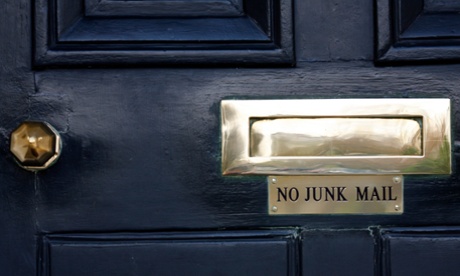
Reports suggest we are about to be deluged with junk mail as the Royal Mail trials a scheme that will allow retailers to send marketing material to consumers who have visited their websites. And the bad news is that while there are things you can do to reduce the amount of unwanted post you get, there’s no way to completely stop the junk.
The Mailing Preference Service (MPS) is a bit like the Telephone Preference Service (TPS) and allows you to register the fact that you do not want to receive junk mail. You can go online to sign up and just need to give your name and address.
Royal Mail says its new scheme will be covered by the MPS – so if you have registered with it, you shouldn’t receive these targeted letters.
However, the MPS has limitations: it only stops unsolicited addressed mail (so not unaddressed letters, or those addressed to “the occupier” or similar). It doesn’t stop letters from overseas, or from local companies delivering by hand. You will also continue to receive mailings from companies who you have done business with in the past.
A spokesman says: “It’s not the law, like the TPS is, that companies have to screen against it – pretty much most reputable companies will do because sending mail is quite expensive and it screens out the people who are not interested, but it is not illegal.”
Companies that are members of the Direct Marketing Association (DMA) are expected to use it, and there is a complaints system if you still receive marketing material after signing up. For other companies it is “best practice”, but for those which don’t really care, there is not much than can be done about receiving mail, unless the letter breaches advertising rules.
If you do register, it can take a couple of months to take effect.
Royal Mail and the DMA each offer opt out schemes for unaddressed mail – they are not joined up so you should register with both. The Royal Mail service stops all unaddressed items being delivered by your postman. You have to fill in a form to sign up and unwanted door drops will stop within six weeks. There are more details and a form here.
The DMA scheme stops you receiving unaddressed letters from its member organisations. Registration lasts two years and you have to contact the DMA to sign up. Details are available here.
If you want to stop mail from an organisation you have dealt with in the past, you need to contact it and ask it to take your name and address off its mailing list. Under data protection rules it cannot refuse to do so. The Information Commissioner’s Office has a suggested letter template to use on its website, and will look at complaints if a company continues to write to you after you have asked it to stop.
To reduce future unwanted mail, make sure you read the small print on the bottom of any website or form where you fill in your address and have opted out of any future contact.
The Stop Junk Mail campaign, meanwhile, sells letterbox stickers telling postmen and other delivery people that you do not want leaflets, newspapers and the like, which should weed out some of the post from local organisations and businesses.