At every age, I have planned my next life-stage by looking at men a few years older than me and trying not to become like them. (Women tend to respond differently to life, so I’ve found them less useful as negative role models.) In my twenties I listened to men in their thirties bang on about mortgages and the difficulty of finding good builders in London. In my thirties I watched male mediocrities conclude they were God because Buggins had retired and they had been given a position of power — or at least a newspaper column.
Now I see disgruntled sixty- and seventy-something former senior employees whine about a world that no longer has any need for them. This phenomenon dates back to King Lear, but is fast reaching crisis point, given the ever-rising number of retirees, supplemented by the millions more who quit during the pandemic. As I steam towards superannuation, I’m making plans to handle it better.
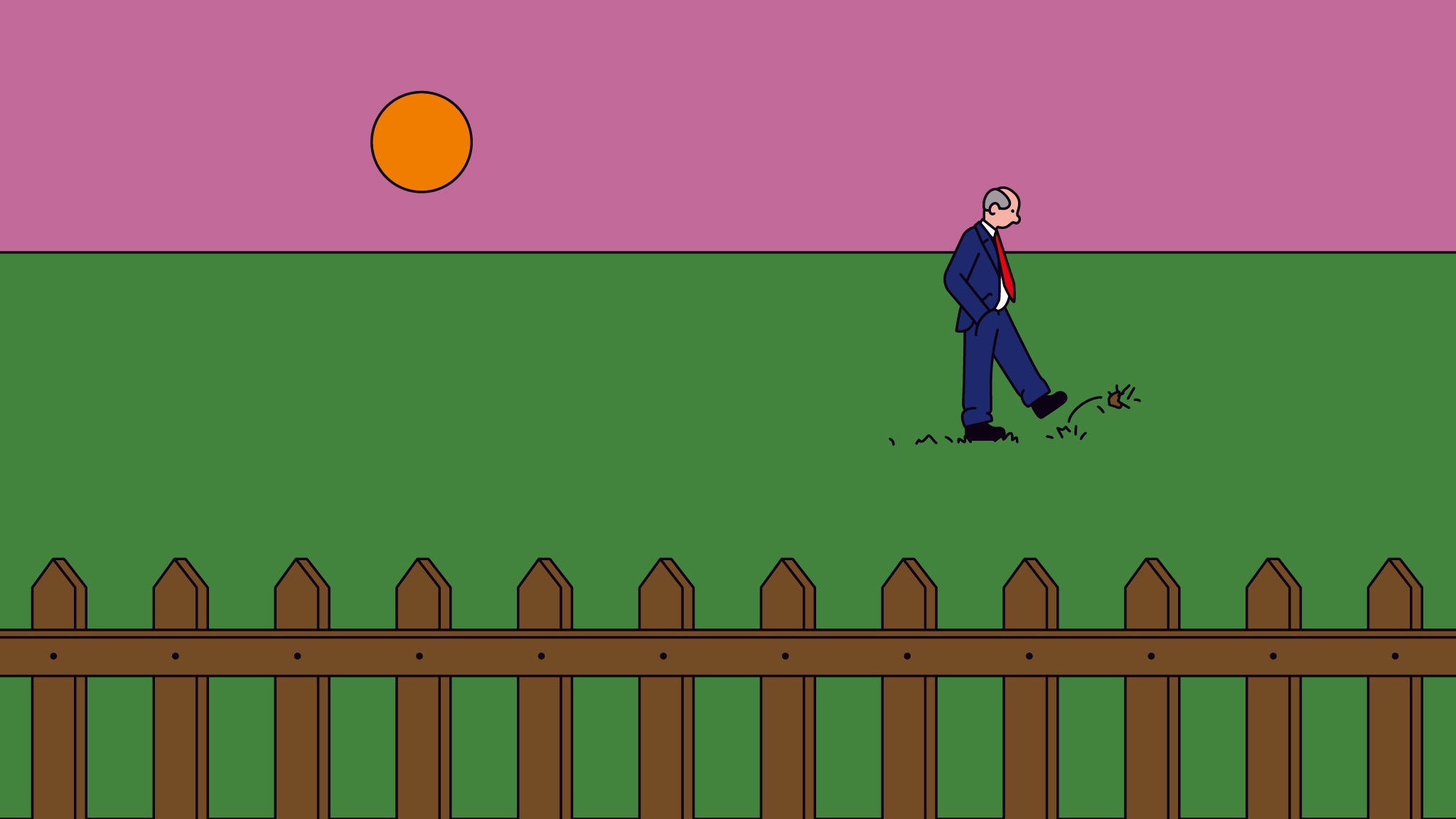
Many of today’s superannuated men derived their identity from their job status. Once they lose that, there is nothing left for them except to become a danger to their environment.
Some years ago, at a friend’s retirement do, I congratulated his wife on the big turnout: your husband was well-liked at work, I said. She was unimpressed: “As long as he doesn’t think he can start hanging around the house and wasting my time.” But that’s precisely what superannuated men tend to do. After decades of treating their family as incidental to The Career, they insert themselves into an environment that has learnt to hum along smoothly without them. Hence the problem of Retired Husband Syndrome, which was first identified among Japanese wives, some of whom refer to their husbands as ) or nure-ochiba (wet fallen leaf).
Climbing down may be particularly hard for today’s generation of male ex-leaders because they enjoyed such entitlement
The management thinker Manfred Kets de Vries, in his seminal 2003 essay on “The Retirement Syndrome”, explains why “leaders” (as well as many not-quite leaders) have trouble letting go. These people have invested their lives in work, neglecting relationships and leisure.
“The prospect of climbing down off the top of the heap and becoming a nobody holds little attraction for them,” writes Kets de Vries. Climbing down may be particularly hard for today’s generation of male ex-leaders because they enjoyed such entitlement: the guaranteed pension, the corporate car and for some even the right to grope.
Suddenly no one fears them any more. Kets de Vries quotes Harry Truman’s complaint on leaving the White House: “Two hours ago I could have said five words and been quoted in 15 minutes in every capital of the world. Now I could talk for two hours and nobody would give a damn.” Superannuated men worry that their successors will undo their work, and they fear revenge from the enemies they made on the way up.
All this tends to happen, notes Kets de Vries, at the stage of life when the body goes into humiliating decline, so the victim suffers two grave narcissistic wounds at once. “Regrets take the place of dreams,” writes Kets de Vries, warning: “Old men can be dangerous; they often care little about what happens to the world once they no longer run it.”
Any man heading for superannuation needs to perform a health check. Try asking yourself: what is the probability that every change since your heyday has been for the worse? What are the odds your old organisation will collapse without you? How much time does the younger person you are haranguing have relative to yourself? If you are name-dropping important people you knew in the 1980s, will the effect be diminished if you have to explain who they were? Are you falling victim to the Good Old Days Fallacy? Are you becoming an Old Bore?
If you are trying to stay relevant by becoming a mentor, ask yourself: does your would-be mentee want to be mentored? How old were you when you first heard about the internet, climate change and diversity? At what point in your career did you start prioritising them? Given that life is different now, how useful might your advice be?
It’s better to bask in your power while you still have it. Appreciate that you got lucky, instead of whining about how busy you are. Accept that your successor, who will most likely be drawn from a wider talent pool than you were, will probably be better than you. Get over yourself: neither you nor your looming demise are a big deal.
Meanwhile, prepare for superannuation, which, like the greater death to come, can strike one morning when you least expect it. Take pre-retirement classes, and if you can, leave the workplace in stages. Volunteer for charity. Once you’ve been cast aside, don’t expect your former org to take a blind bit of interest in you. Don’t try to become a back-seat driver or full-time unpaid online commenter. You might as well enjoy superannuation because the next — and last — stage of life will probably be worse.
Copyright The Financial Times Limited 2021